'She economy' a new momentum of good life









In the misty hillside area outside Mianyang in Sichuan province, a young woman named Li Ziqi has done something revolutionary: she has made the quiet life of the area into a public conversation on values. Her videos, devoid of flashy dialogue and composed of sowing, harvesting and cooking, have turned humble chores into cultural capital.
By October 2025, she had more than 28 million subscribers on YouTube, with the Wired, a US reaction channel known for its expertise in some fields of study, calling her "the Chinese queen of cottage". Li's appeal, however, is not merely for aesthetic reasons. Her work has helped Chinese women reshape consumption, people's priorities and public imagination, turning them into a new economic force.
Let's call the phenomenon "she economy". This is not shorthand just for women as consumers, but for a broad re-arrangement of what consumption actually means and what markets supply. Once shopping patched material shortfalls, but it now often performs identity work, emotional repair and meaning-making. A tea ceremony, a yoga class, a curated trip are investments in people's well-being. Women are spending differently, because they seek different goods and different experience.
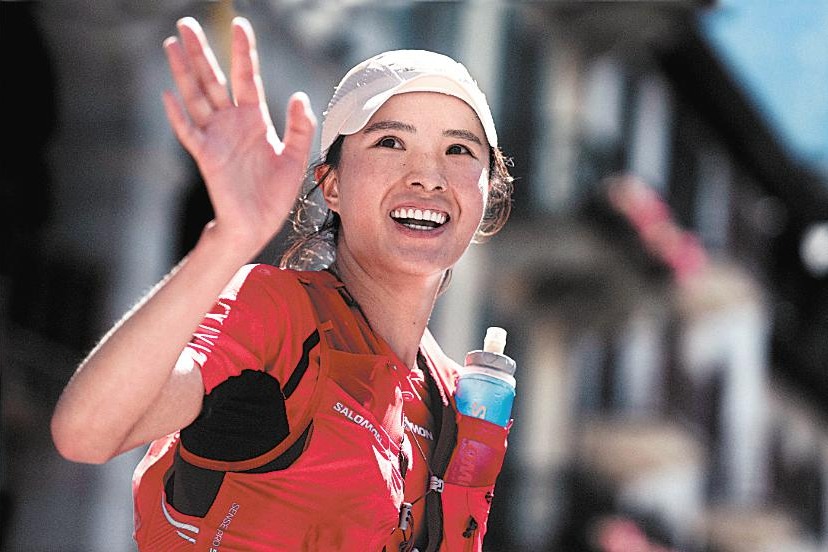
Li's is an emblematic story: a rural woman whose domestic craft draws urban people to reassess not only her work but also their real worth. In China, more women are testing themselves physically and economically. Across the country, women's participation in marathons and fitness events has surged, reflecting a growing appetite for testing the physical fitness and endurance, and seeking the right balance in life.
It is not only about sport; it is also about a cultural redefinition of capability and aspiration. Brands have noticed this change. Lululemon's revenue on the Chinese mainland jumped 41 percent year-on-year in 2024 and its store count increased to 151, making China its fastest-growing market. Sport signifies a language of autonomy and a growing market.
Travel reflects the same trend. The 2024 China women's travel trends report by Tongcheng Travel shows women account for more than 55 percent of bookings in lucrative categories such as outbound travel, customized tours and premium domestic trips. Why travel? Because travel today is about relaxation, broadening of the horizon and gaining knowledge. Travel is increasingly valued as investment in people's well-being rather than mere consumption. Passport stamps are now credentials of curiosity and cultural competence.
Cultural elements, too, are changing. The 2025 reality series Sisters Who Make Waves put women from diverse backgrounds on a national stage to sing, perform and compete. The show's wide reach sparked conversations on female talent, ambition and inner strength. With a staggering 624 million active female internet users, women now account for nearly 50 percent of China's "online population".
These cohorts shop, work and speak differently: digital natives pursue individuality and emotional value. Women in the 1980s juggled parenthood and careers. But the "silver generation" today — women in their 60s — treat livestream commerce as a wellness bazaar, embracing health management, social media videos and wearable tech to craft a youthful outlook.
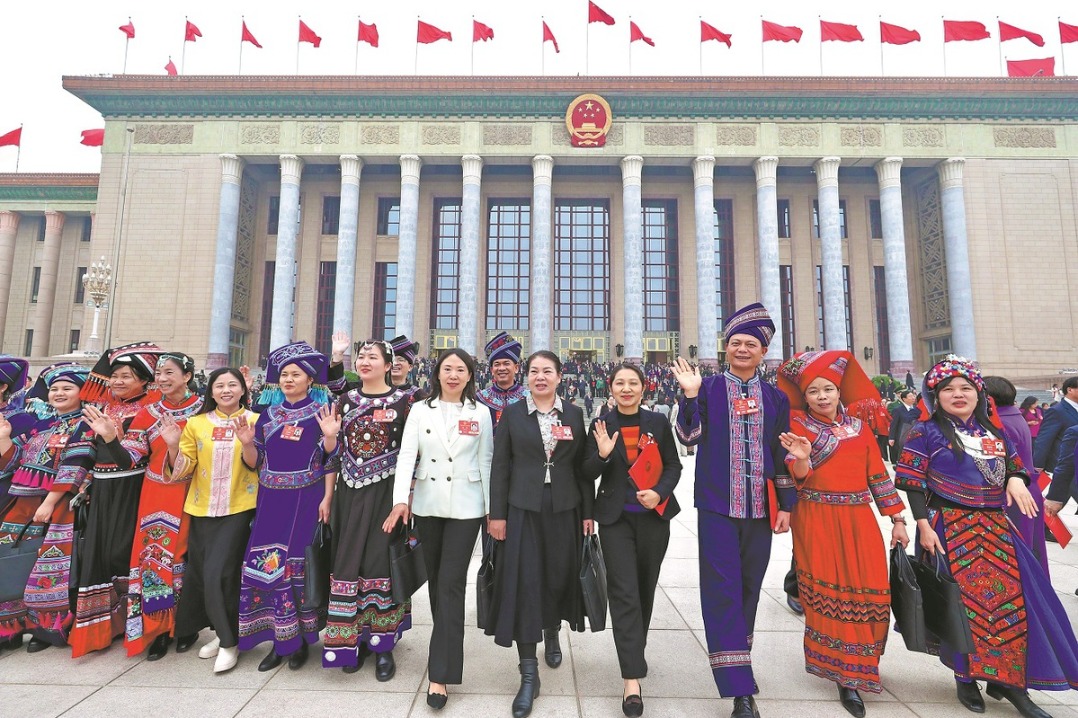
The overall picture is striking. In 2024, China's female population reached 689 million — almost half the national total. As their economic power grows so does their influence on consumption, culture, and on the very definition of success. NielsenIQ projects that by 2030 women will account for 75 percent of global discretionary spending. If that proves true, Chinese women will leave an unmistakable imprint on both domestic and international markets.
It is not merely about opening more wallets. It is the new grammar of aspiration. Women today spend on products not only to "live deliberately" and enhance their social status in the eyes of others but also to cultivate self-hood through joining fitness classes, traveling, and engaging in creative expression.
Yet this transformation coexists with constraints. Structural inequalities — pay gaps, care burden, workplace glass ceilings — remain. The "she economy" is not a magic pill that will resolve these issues. What it can do is to shift leverage: by reorienting demand, women create new business models, new careers and new spaces of influence. Entrepreneurs, platforms and policymakers who understand this will design products and services that meet women's demands to boost their profits.
Social psychology is driving this shift. When a marathon finisher's medal and harvesting in a rural area tell the same story — one of earned competence — they dissolve the old binaries between work and care, public and private. Li Ziqi's chilly mornings in the field and a runner's breathless final stretch are both acts of determination and self-discipline. They are pieces of a larger narrative in which Chinese women seek both material and emotional satisfaction.
If American practical philosopher Henry Thoreau went to the woods "to live deliberately", as he described in his book Walden, many Chinese women today are walking into studios, onto stages, across borders and along running tracks to do something very similar: to choose what matters. The "she economy" is not a boutique trend; it is an emerging infrastructure of desire, supply and social meaning. It is society rewriting the terms of the good life, with women very much in the lead.
The author is a professor at the Institute of Western China Economic Research, Southwestern University of Finance and Economics.
The views don't necessarily reflect those of China Daily.
If you have a specific expertise, or would like to share your thought about our stories, then send us your writings at opinion@chinadaily.com.cn, and comment@chinadaily.com.cn.