Innovation, governance ensure China's success










The fourth plenary session of the 20th Central Committee of the Communist Party of China, ongoing this week, offers an important opportunity for China to review its progress and chart its path forward. The plenary session, which will help shape the upcoming 15th Five-Year Plan (2026-30), is not only about governance or economics but also about reaffirming China's vision for high-quality, innovation-driven, sustainable development.
What impresses me most about China's technological development is the incredible speed at which it has caught up with the rest of the world, and even surpassed some developed economies in certain fields. Considering the gaps China had to narrow over the years, its pace of progress is truly astonishing. In some sectors, I believe China is leading. What stands out is the environment it has created to nurture creativity and talent, which is reflective of the high level of education China has provided at all levels over the past years.
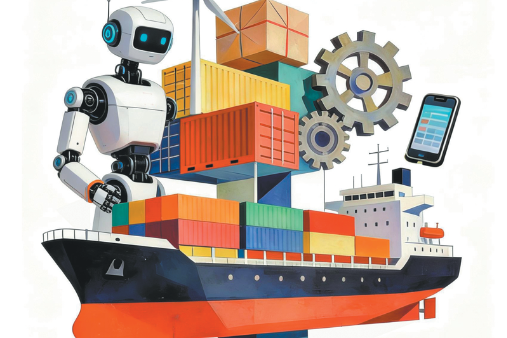
When visiting the robotics area of a park recently, I felt like I was stepping into the future. The robots were performing tasks like making needles. These technologies are not only advancing science but are also being applied in areas such as healthcare, revolutionizing services, which could potentially extend human life. Seeing robots undertake strenuous physical work that humans had been doing was striking. Such technologies have created opportunities for people to focus on what they truly enjoy rather than performing hard labor.
The human-like robots, in particular, show how China is addressing potential labor shortages. China is already using robots in numerous sectors, filling the gaps that have arisen as the economy evolves. Such developments embody the spirit of high-quality development envisioned in the 14th Five-Year Plan (2021-25) and will now be advanced in the 15th Five-Year Plan. This seamless integration of technology into daily life and production, I believe, will continue to drive China's transformation in the years ahead. What excites me is how science and technology are improving the quality of life, not just in industries but also in homes. Household robots, for instance, contribute to gender equality by freeing women from repetitive domestic work.
China's influence extends beyond its borders. In my country, Guyana, Chinese technology has, in many cases under the Belt and Road Initiative framework, played a transformative role in infrastructure development in the shape of roads, bridges, convention centers and hotels. These projects have bridged significant development gaps and brought tangible benefits to both nations.
Particularly admirable is the fact that China never imposes conditions; instead, it collaborates with local authorities, offering expertise and guidance while respecting the sovereignty and aspirations of partner countries. This approach contrasts sharply with the conditional interventions of Western institutions, which often exacerbate problems rather than solving them.
I remember visiting a new bridge in my country, built with Chinese support, and being struck by the precision and efficiency of the project. Unlike some other foreign-funded projects that were delayed or plagued with mismanagement, this one was completed on time and within budget.
Similarly, Chinese-built hotels and convention centers have elevated local tourism and created new employment opportunities. This shows how China's planning philosophy, anchored in long-term stability, translates into concrete progress.
The global influence of China is evident in Africa and other developing regions, too, where infrastructure and development programs have created real opportunities for growth. In countries such as Kenya, Ethiopia and Ghana, Chinese-led projects — from railways and ports to urban development projects — have improved connectivity and economic activity. China's pursuit of mutual benefit, rather than self-interest, embodies a philosophy that emphasizes common prosperity as essential for global peace. Contrary to some Western countries' claim, China has been playing a constructive role in its partner countries.
Besides, China's governance philosophy is reflected in its unique combination of planning and market forces. The country has learned from its own experiences and by observing the failures of other socialist countries how to navigate the troubled waters to realize sustainable development. Under its innovative development philosophy, China uses creativity, initiative and the practical application of Marxism to overcome contemporary challenges, and become a global leader in clean energy, electric vehicles and robotics, while setting examples for other developing countries. It is the capacity to plan scientifically and execute professionally that has made the five-year plans not just a bureaucratic exercise, but a road map for transformation.
China addresses environmental and ecological challenges, too, with this long-term vision. Beijing has transformed from a smog-covered city in 1996, when I first visited China, to a green, thriving capital today. The improvement in air quality is not cosmetic; it reflects a comprehensive approach to environmental protection that integrates renewable energy, EVs, urban planning, and public awareness campaigns.
China is using advanced technologies — in the form of clean energy and EVs — to address ecological challenges. The country's dedication to sustainability is evident in the way urban green spaces are being expanded, rivers cleaned up and industrial emissions reduced. For resource-rich countries in the Global South, such as Guyana, this offers valuable lessons in harmonizing development, technology and the natural environment. The focus on green transformation will be a key priority of the 15th Five-Year Plan, echoing China's "lucid waters and lush mountains are invaluable assets" campaign.
I am also struck by China's cultural and social innovations. The promotion of STEM (science, technology, engineering and mathematics) among young people, the cultivation of scientific literacy, and the integration of modern technology with traditional practices reveal China's holistic vision. For instance, Chinese robotics and AI programs often include educational outreach to schools and communities, encouraging students to engage with science from an early age. Such a forward-looking approach ensures technological advancement is accompanied by human capacity-building, which I see as a crucial factor sustaining long-term development.
These developments show China's success lies not just in rapid technological advancement but also in its strategic application of knowledge, collaborative international approach, and commitment to improve both domestic and global well-being.
The combination of creativity, pragmatism, long-term vision and respect for other countries' sovereignty makes China a model of development. Its influence is not imposed but shared, not extractive but generative, and its approach continues to inspire countries seeking to balance progress and social harmony and environmental responsibility. As the fourth plenary session deliberates on future directions, the world will once again see how China's planning, rooted in foresight, inclusiveness and innovation, remains central to both its domestic success and its global contribution.
The article is an excerpt from an interview with China Daily's Liu Jianna for Dialogues with Thinkers, China Daily's high-end interview program.
The views don't necessarily represent those of China Daily.
If you have a specific expertise, or would like to share your thought about our stories, then send us your writings at opinion@chinadaily.com.cn, and comment@chinadaily.com.cn.