New quality productive forces driving growth









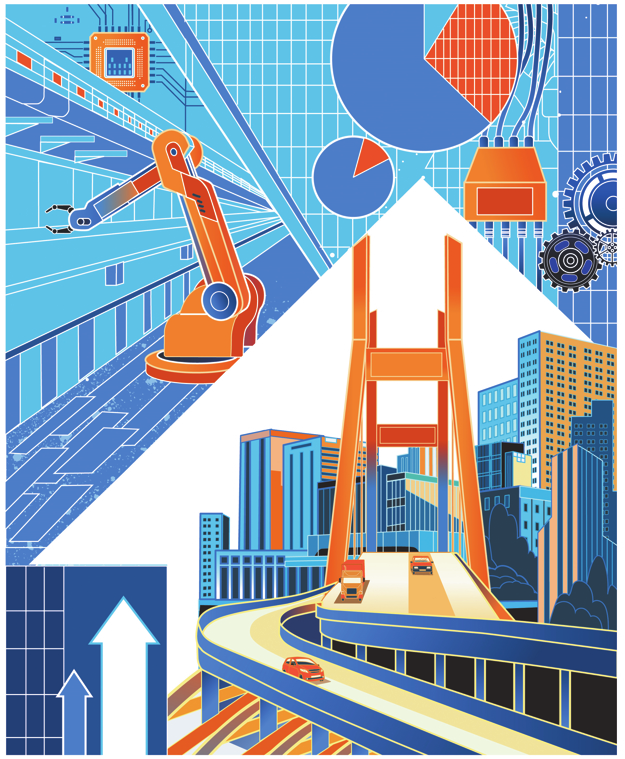
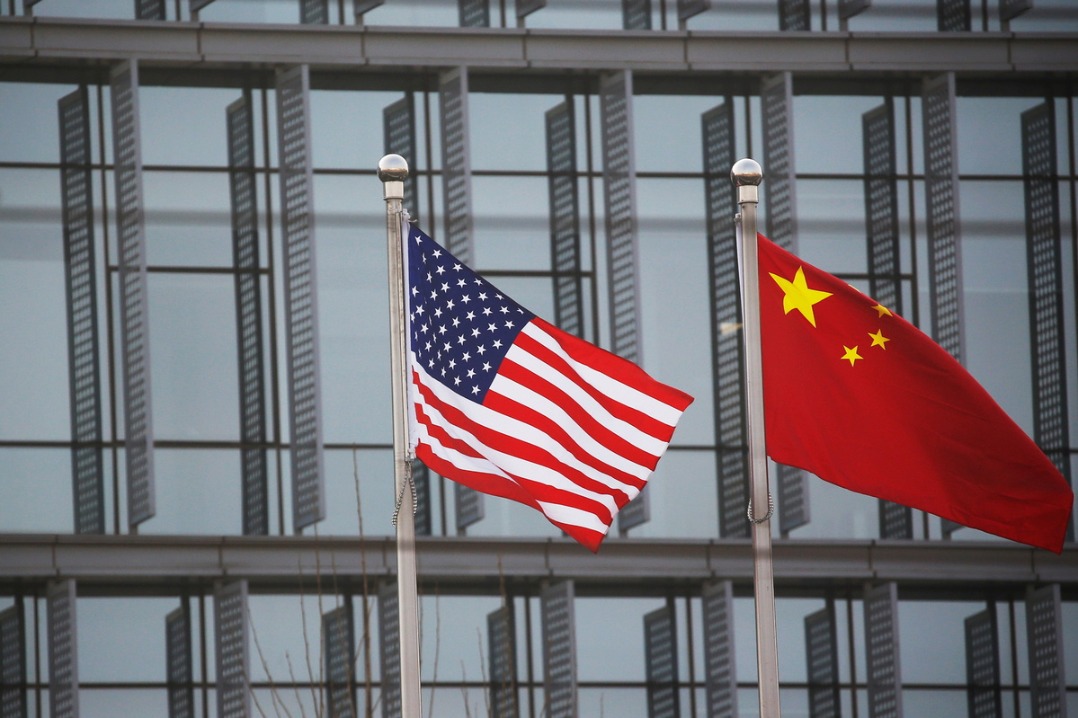
The tariff wars launched by some economies are destabilizing the rules-based multilateral trading system and challenging the resilience of global industry and supply chains. At this critical juncture, China is showing strategic foresight, pioneering a new path by advancing high-standard opening-up through the development of "new quality productive forces". This is not merely a temporary response but a strategic move to enhance competitiveness.
The current realignment of global industry and supply chains is the result of the convergence of long-term trends and short-term disruptions. Technological advancements and the digital economy have reduced cross-border transaction costs, yet they have not been able to end the protectionism that emerged in the aftermath of the 2008 global financial crisis.
In response to domestic de-industrialization, some developed countries are resorting to "re-shoring, friend-shoring" and "near-shoring", prioritizing security and resilience over efficiency, limiting the reach of supply chains and organizations. This shift poses challenges especially to China.
Historically excluded from the equitable global division of labor, developing countries now face trade sanctions and tech containment, aimed at curbing their industrial upgrading.
As traditional cost advantages wane, China must leverage its human capital dividend to climb up the global value chain. China's vast domestic market, comprehensive industrial system, and growing innovation capacity provide a solid foundation for its economy's transformation.
In fact, external pressures and internal imperatives have prompted China to forge a new path: from passive integration into globalization to actively shaping global trade, using high-standard opening-up to overcome uncertainty and industrial upgrading to maintain stability.
In response to the global trend of supply chain fragmentation, China is pursuing a dual strategy that forms the cornerstone of its high-quality development and global economic leadership. This approach combines deepening regional integration with a push for tech-driven growth. A key pillar of China's strategy is to foster tighter regional production networks, as exemplified by the Belt and Road Initiative and the Regional Comprehensive Economic Partnership.
In the 12 years since it was proposed, the Belt and Road Initiative has evolved from a vision to a comprehensive trade promotion and infrastructure development program. Through policy coordination, infrastructure connectivity, trade facilitation, financial integration and people-to-people ties, China has strengthened economic links with partner countries.
The deepening economic integration is reflected in trade figures: China's trade with Belt and Road partner countries reached 22.07 trillion yuan ($3.09 trillion) in 2024, accounting for more than half of its total trade for the first time, and further increased to 51.7 percent in the first three quarters of 2025.
On the other hand, the RCEP provides institutional underpinning for regional integration, with its cumulative rules of origin streamlining regional supply chains through value addition across all 15 RCEP member economies. Preferential tariffs have reduced transaction costs and fostered intra-regional trade in intermediate goods, establishing the RCEP bloc as a "safe harbor" amid global trade volatility.
China's exports are undergoing a fundamental shift from labor-intensive manufacturing of goods to technology-driven products, led by the "new three" — electric vehicles, lithium batteries, and solar photovoltaic products. In 2024, China produced and sold 12.88 million and 12.86 million new energy vehicles respectively, both highest in the world.
Also, China supplied 70 percent of global cathode materials and 60 percent of global lithium-ion batteries in 2024, thanks to its complete supply chain. The export of China's solar photovoltaic products has exceeded 200 billion yuan for four consecutive years, while lithium battery exports hit a record 3.91 billion units in 2024.
This success stems from sustained innovation. BYD's factories, empowered by 5G and artificial intelligence (AI), use real-time data screens and augmented reality (AR) helmets for precision assembly, showcasing the use of new quality productive forces.
New quality productive forces are the engine of China's technological and regional progress. This advanced, innovation-driven model moves beyond traditional growth, showing how to leapfrog the "comparative advantage trap" and challenge advanced economies in the field of technology.
Digitalization and green transition are the core pillars of new quality productive forces, powering both China's "dual-circulation" strategy and innovation capability. As a matter of fact, by intensifying R&D, this model unlocks a new development blueprint for the Global South.
New quality productive forces are accelerating China's opening-up and structural transformation through two key drivers: technological upgrading and dual transformation. China is building first-mover advantages in future industries like AI, hydrogen energy, and bio-breeding. It is also advancing its digital transformation — using AI and big data to optimize production — along with green transition, in order to meet its climate goals and overcome growing green trade barriers.
To translate strategic advantages into sustained competitiveness, however, China has to systematically intensify its institutional opening-up, boost its innovation capability, and make its supply chain more resilient. It also needs to continue aligning with high-standard international rules, which it has been doing by, for example, taking measures to join the Comprehensive and Progressive Agreement for Trans-Pacific Partnership and the Digital Economy Partnership Agreement.
In fields where it already leads — such as cross-border e-commerce — China needs to strengthen customs supervision and rail transport. And in emerging areas like digital trade, data flows, and AI, China ought to make efforts to help shape new rules, thereby influencing the future global governance framework.
Moreover, amid the Fourth Industrial Revolution, China needs to boost R&D in strategic sectors such as semiconductors, hydrogen energy, biotechnology, and low-carbon systems, while according priority to the integration of digital and industrial technologies, and nurturing emerging industries like bio-manufacturing.
Boosting domestic capabilities and deepening global integration are necessary for China to mitigate external shocks. Similarly, sustained policy support, a favorable business environment, and strengthened international cooperation on supply chain governance are essential for China to maintain stability and promote shared prosperity.
The author is the president of the University of International Business and Economics.
The views don't necessarily reflect those of China Daily.
If you have a specific expertise, or would like to share your thought about our stories, then send us your writings at opinion@chinadaily.com.cn, and comment@chinadaily.com.cn.