From stink to sweet: How durian shaped ties









Before moving to Thailand two years ago, I had never tried durian — the spiky fruit that has become so popular among adventurous Chinese eaters. Its stinky odor alone was enough to knock me down before I could muster the courage for a bite.
I had always thought I wasn't "the durian type". Yet, I could not help but appreciate the miracle of this fresh fruit.
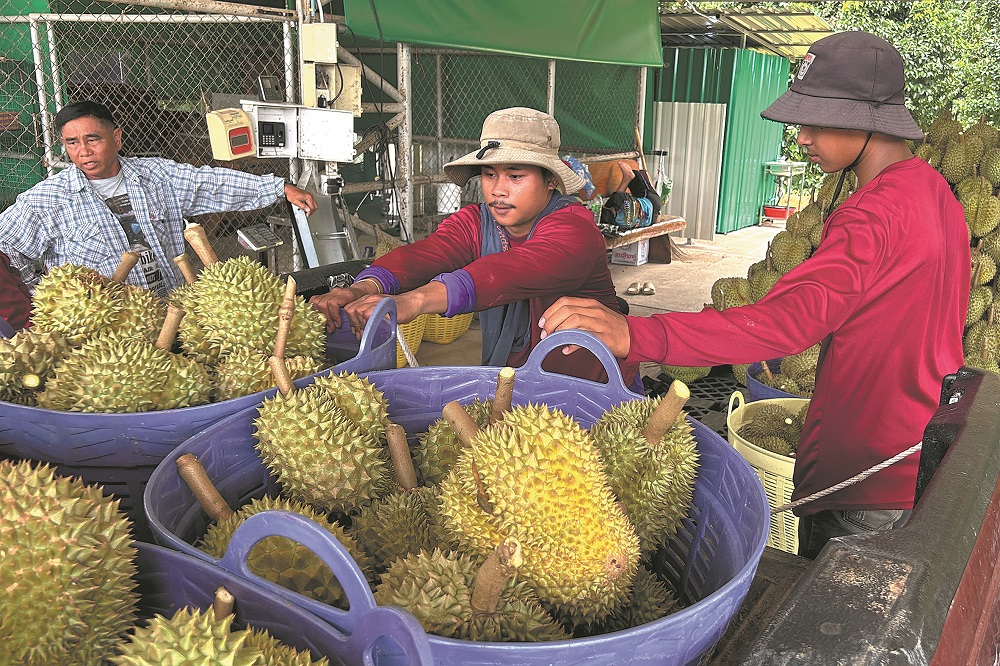
My first encounter came during an interview at a durian orchard, where I could hardly say no to the worker who had picked a fresh durian from a tree and put a golden, chubby piece in my hand with a smile full of hope.
"When in Rome ... I can do this," I told myself, forcing a calm demeanor. The taste was beyond my expectations. The offensive smell faded as the fresh pulp melted in my mouth, its texture as soft as whipped cream. The complex and rich flavor opened the door to durian paradise, as many of its fans might describe it.
At that moment, I finally understood why many people love that fruit so much.
Since then, I've visited durian farms, markets and processing factories across Thailand. The rich diversity of Thai durian has been an eye-opening experience.
Apart from Monthong, or Golden Pillow — the dominant variety in the Chinese market — I came to recognize many other names: Kradoom, Puangmanee, Lueangthong, Daokrajai, Sithong and Sai Khao.
Experts say Thailand boasts more than 200 durian species, distinguished by shape, size of thorns, texture of pulps, and a great variety of tastes — from sweet, bitter and honey-like to those with notes of caramel, nuts and sometimes a subtle hint of savory or almond.
Over the past decade, durian has become a link between the taste buds of Chinese and Thai people. The fruit's export boom shows no signs of slowing: Last year alone, Thailand shipped 833,000 metric tons of durian to China, worth $3.7 billion, accounting for 97.4 percent of China's durian market.
Online sales have soared, with vendors leveraging platforms such as Douyin and Taobao to launch "Thai Durian Day" campaigns, while partnering with key influencers to sell directly to consumers via livestreams.
The lucrative durian trade has drawn numerous Chinese investors to Thailand, where they run orchards or provide logistics services. What began as a shared love for the fruit is evolving into a mutually beneficial partnership through joint ventures that strengthen bilateral ties.
For years, Chinese enthusiasm for Thai durian has been well-known among local people. During my visits to orchards across eastern and southern Thailand, many farmers told me, "Great minds think alike."
Thai farmers continue to win over Chinese fans with deliciousness, or haochi in Mandarin. However, many were barely aware that most Chinese consumers lacked the knowledge to recognize high-quality durians — until the BY2 contamination issue surfaced early this year, severely affecting Thai durian exports to China.
In January, Chinese customs tightened inspections after detecting Basic Yellow 2, a commercial dye unsafe for food. This triggered rejected shipments, returned cargos, investigations into packing processes, temporary suspensions of some exporters and packing houses, and a push by Thailand to set up approved laboratories for BY2 testing.
The safety crisis led to misunderstandings among Chinese consumers concerned about Thai durian safety, while Thai farmers suffered great losses because of the chemical added during packing.
During my interviews with durian farms and local agricultural testing centers earlier this year, industry insiders revealed that the BY2 use was actually a new trend driven by wrong knowledge of durians among consumers, as many believed that durians with bright yellow shells were ripe ones.
"People who suffered most are innocent farmers who have followed the traditional way of plantation for generations and have no idea about the dyeing procedure after harvest," Duanrung Benjamas, manager of the Eastern Agricultural and Food Product Research and Innovation Development Center at Rambhai Barni Rajabhat University in Chanthaburi Province, told me.
The issue served as a good lesson for Thailand, Duanrung said. "As the country aims to be a global fruit exporter, we need to upgrade the fresh fruit industry with full traceability, from orchard to market, to meet high international standards," she said, while also calling for consumer education on fruits.
Growing up in China, I've witnessed how public awareness of food safety has changed dramatically over the years, as scandals — from dyed goji berries to infant formula tainted with chemical melamine — received more media exposure.
These crises resulted in stricter standards and supervision by regulatory authorities, while also improving public perception, from whether they can eat enough to whether they can eat well.
As Duanrung mentioned, the food safety scandal offered a good lesson — not only for Thai producers but also for Chinese consumers. Our habit of judging fruit quality by appearance needs to change, and our knowledge of food, especially new kinds of food, should always be updated.
Agriculture plays an important role in Thailand's economy, and Thais are very proud of their agricultural products. Farmers in Thailand respect both nature and traditional farming wisdom — a value system that resonates strongly with the Chinese.
The BY2 scandal helped the Thai fruit industry upgrade, with more investment from the government in testing and scientific farming. It also raised the safety standards of fruits imported into China and increased Chinese consumers' knowledge of this "king of fruits" — a positive change that will foster closer partnerships in the future.