Legally safeguarded endowment
Specific law covering its climate fund is needed to propel country's green transition










In recent years, an increasing number of economies have established carbon pricing mechanisms in order to reduce greenhouse gas emissions and attract funds to advance their green transition. However, if the use of carbon revenue lacks transparency and traceability, it could prompt the public to think that the carbon tax is being used as a disguised means to fill a fiscal gap, thereby undermining social support for low-carbon, green development.
In this context, Germany's Climate and Transformation Fund, or KTF, has adopted a secure "safe "approach to "lock" carbon revenues, creating a closed-loop system of "carbon pricing, earmarked funds, accountability and just transition". This is a novel way of ensuring carbon revenues and energy-related taxes and fees are used for sustainable climate financing.
Through specific laws and special regulations, Germany channels the carbon revenues generated by the European Union Emissions Trading System and the national emissions trading system — or nEHS — into the KTF, creating a stable source of climate financing and ensuring the funds are used exclusively for their intended purposes.
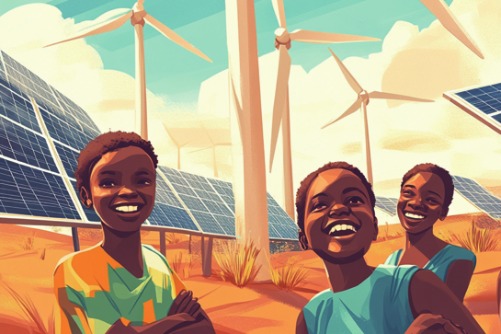
The fund is primarily used to develop renewable energy, hydrogen technologies, energy storage and power grid infrastructure, improve energy efficiency, upgrade heating systems and strengthen transportation infrastructure. The fund also facilitates a just social transition, allocating resources to support subsidies for vulnerable groups, regional economic transformation and workers' retraining, in order to ease the economic burden created by carbon pricing.
As a special central-level fund, the KTF is not part of local tax revenues and hence local governments have no direct taxing authority over it. Through dedicated grants and targeted payment transfers, the fund supports the implementation of projects at the local level, including the economic transition of coal-producing regions and the improvement of energy efficiency. But despite having no taxing authority over the KTF, local governments are in charge of executing these projects.
The KTF has its own separate budget, subject to parliamentary review and submits an annual implementation report detailing revenue sources, expenditure directions and remaining balances. The German Federal Court of Audit conducts regular independent audits to ensure the funds are used in an efficient manner.
China, too, has explored similar approaches to managing carbon revenues. The China Clean Development Mechanism Fund, established in 2007, is a national-level special fund managed by the Ministry of Finance and funded by revenues from the transfer of Certified Emission Reductions generated by international CDM projects. The fund is primarily used to support domestic energy conservation, emissions reduction and low-carbon capacity building. From its inception, the fund has adopted the principle of "earmarked use and closed-loop operation".
But its revenue sources are relatively limited, as it mainly relies on the international carbon market. As the international CDM market has shrunk, the fund's incremental revenues have gradually dried up, undermining its long-term sustainability. In contrast, Germany's KTF is sourced from more diversified revenue streams, including revenues from the EU ETS auctions with fuel carbon pricing under Germany's nEHS framework. It is operated with a rolling annual budget and reserve mechanism, providing stable fiscal support for climate and green transition objectives.
In addition, the China CDM Fund is managed as a special central fund, with provincial-level entities mainly acting as project implementation units. At the local level, an independent climate fund linked to carbon revenues has yet to be established. Despite being a central-level special fund, the fund provides sustained financial support for local projects through dedicated grants and targeted payment transfers, and gives local governments substantial autonomy in the execution of projects.
While Germany's KTF prepares a separate annual budget, subject to parliamentary approval and independent audits, and regularly publishes implementation reports, the China CDM Fund still has significant room for improvement in terms of information disclosure and public oversight.
If the China CDM Fund can diversify its revenue sources and adopt KTF-like budget management and auditing mechanisms, it will be better positioned to support a fair and sustainable green transition.
Compared with Germany and the EU, China's carbon market and related mechanisms, such as those tasked with collecting carbon taxes and fuel surcharges, are yet to get genuine legislative safeguards at the national level, as the national carbon emissions trading market operates mainly according to administrative regulations. Key factors, such as the allocation and auction ratio of allowances, and the distribution and use of revenues, rely largely on departmental documents or policy guidance, meaning they lack dedicated legislation to ensure the adherence to fundamental principles such as "carbon revenues must be earmarked for specific purposes, managed on a rolling basis, disclosed in accordance with the law and subjected to auditing".
As a result, local governments lack stable institutional support for sustained investment in climate financing pools and green transition programs, meaning such funds are vulnerable to being squeezed or diverted to other areas under fiscal pressure.
China should therefore urgently enact legislation on carbon market revenues and carbon and energy taxes. Such legislation should clearly define the purpose of the funds and the revenue-sharing ratio between the central and local governments, and make information disclosure and public oversight necessary, thereby laying a solid legal and fiscal foundation for the green transition.

The author is the director of the China Program at the Institute for Sustainable Communities. The author contributed this article to China Watch, a think tank powered by China Daily.
The views do not necessarily reflect those of China Daily.
Contact the editor at editor@chinawatch.cn.