An anchor for peace and growth










The SCO is working to build a closer community with a shared future to lead regions toward prosperity
The Shanghai Cooperation Organization Tianjin Summit, which convened on Aug 31 and Sept 1, marked the beginning of a new stage of high-quality development for the organization.
The Tianjin Summit adopted several landmark documents, including the Tianjin Declaration, and the statement on the 80th anniversary of victory in World War II and the founding of the United Nations, offering a strategic assessment of the evolving global landscape. Against a backdrop of disorder in international relations, weakening global governance, rising geopolitical rivalry and mounting uncertainty, the SCO set out a vision for a more representative, democratic and equitable multipolar world.
At the summit, Chinese President Xi Jinping proposed the Global Governance Initiative, which received strong support from participants. Russian President Vladimir Putin described the initiative as both timely and essential, noting its potential to help address the world's governance deficit. Uzbek President Shavkat Mirziyoyev commended the proposal as a reflection of strategic foresight that aligns with global governance needs, and voiced Uzbekistan's full support.
As the world enters a period of turbulence and transformation, the SCO's increasingly active participation in global governance marks a strategic shift from focusing primarily on internal cooperation to advancing both internal and external engagement. The summit also approved the SCO development strategy for 2026-35, a comprehensive blueprint that outlines the organization's strategic tasks and priorities for the next decade.
The emergence of new challenges and threats in today's turbulent world demands that the SCO should strengthen its institutional framework and enhance its capacity for coordination and response. Built on several years of discussion on institutional and mechanism reforms, the Tianjin Summit reached a broad consensus on several key initiatives.
First, the SCO agreed to streamline its structure by merging "observers "and "dialogue partners" into a single group of "SCO partners", thereby increasing participation among nonmember states.
Second, the summit approved the establishment of the SCO Universal Center for Countering Security Challenges and Threats and specialized bodies to address security threats and drug control challenges, aiming to strengthen the organization's ability to respond to emerging threats and build a stronger regional security community.
Third, the summit announced the establishment of an SCO development bank and initiated consultations on its operational framework. The new bank reflects the growing determination of emerging economies to build financial institutions that better represent their interests and to increase their influence in the global financial system.

As the SCO and its SCO+ framework continue to expand, the organization's identity as "non-Western but not anti-Western" has become increasingly clear. As part of the Global South, the SCO amplifies the collective voice of developing nations and advocates their greater representation in United Nations governance bodies. This shared identity serves as an important foundation for advancing the vision of an SCO community with a shared future.
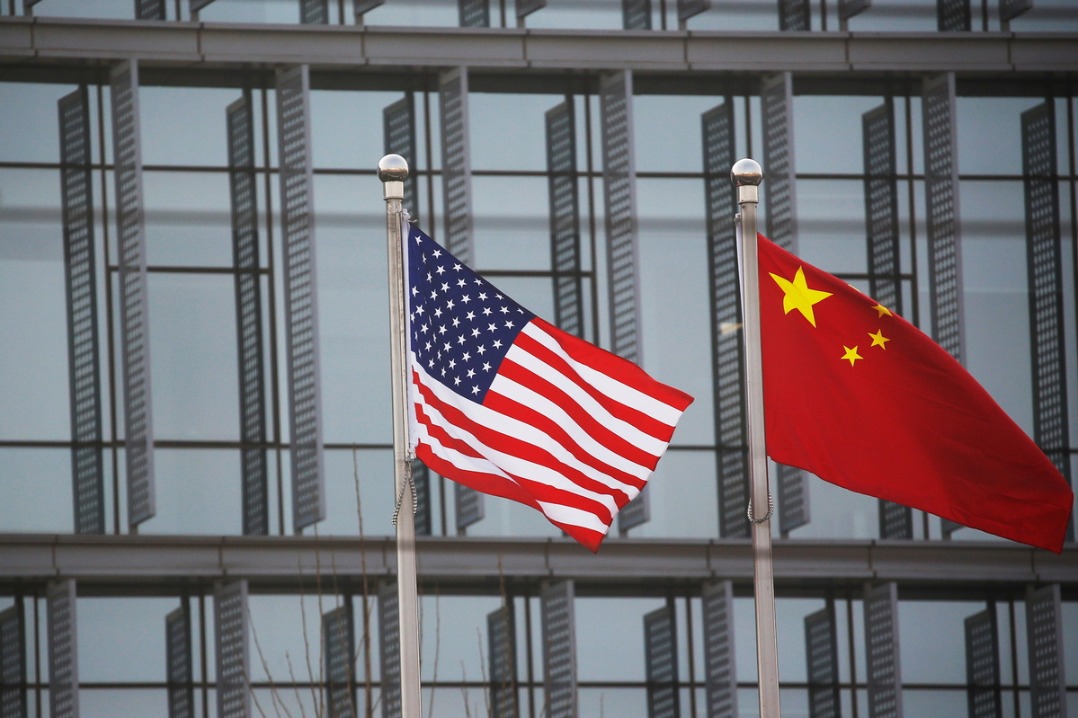
The SCO has consistently upheld the principle of not targeting any third party. Its diverse membership, comprising states with differing ties to the West, means it neither has nor seeks a common adversary. The SCO clearly rejects hegemonism and power politics as universal obstacles to human progress, and maintains consistent positions on major issues of principle. This does not imply hostility toward the West. In essence, the relationship between mechanisms such as the SCO or BRICS and the United States and its allies embodies the broader tension between multipolarity and unipolar hegemony, and between multilateralism and unilateralism.
Since its founding, the SCO, by upholding the Shanghai Spirit, has charted a distinctive path of multilateral cooperation and achieved a series of notable successes. The organization is widely seen as an institution with strong prospects for future growth, and an increasing number of countries are eager to join it. At present, 14 nations have applied to join or to elevate their status within the SCO.
Inside the SCO, debate has long existed over whether to strengthen first or expand first. However, as certain powers resort to more extreme measures to preserve their dominance, it has become imperative for the SCO to widen its network of partners and amplify its voice in global and regional governance.
Reflecting this momentum, the Tianjin Summit approved Laos' admission as a dialogue partner, making it the 27th member of the "SCO family". Looking ahead, the organization is expected to continue strengthening itself and expanding its partnerships, with more countries likely to advance to full membership.
SCO economic and trade cooperation is entering a new environment. Externally, protectionism is intensifying, global production and supply chains are being disrupted, and economic and trade growth is slowing down. At the same time, the technological revolution is rapidly advancing, new industries and business models are flourishing, and economic development modes and drivers are transforming at an accelerated pace. Internally, as the number of member states grows, identifying common interests becomes more challenging.
Under these circumstances, green and sustainable development has become a shared priority among SCO countries. The Tianjin Summit saw several forward-looking documents on future cooperation being inked in areas, such as green industries, artificial intelligence, the digital economy, and scientific and technological innovation. Such cooperation meets with the strong expectations of regional countries. These efforts will help ensure that large countries maintain their development momentum while small countries do not fall behind during the global economic transformation.
In the future, the SCO should align its efforts and goals with the UN 2030 Agenda for Sustainable Development and the Pact for the Future. Cooperation should continue to deepen in education, poverty reduction, climate adaptation, green energy, ecological protection, and energy and food security, with a more down-to-earth and timely approach.
For example, the SCO University network should expand its membership and academic disciplines; poverty reduction efforts should move from experience sharing to smallscale multilateral pilot projects with a replicable "SCO poverty reduction model".
In 2025, China announced the establishment of three major cooperation platforms on energy, green industries and the digital economy, as well as four major cooperation centers on scientific and technological innovation, higher education, vocational education and AI applications. These initiatives demonstrate China's leadership in economic development and its sense of responsibility in sharing scientific and technological progress.
The secret to the SCO's success lies in its unwavering adherence to the Shanghai Spirit and its ability to follow the historical trends of development. The Tianjin Summit was not only another milestone in the SCO's own growth but also a new turning point in its participation in global governance. Looking ahead, pragmatic cooperation in trade, economy and technology will consolidate the material foundation for building a community with a shared future for the SCO region.
The author is the director of the Department for European-Central Asian Studies at the China Institute of International Studies. The author contributed this article to China Watch, a think tank powered by China Daily.
The views do not necessarily reflect those of China Daily.
Contact the editor at editor@chinawatch.cn.