Bring up to date










Deliberations are required to determine how the UN practically reformed so that it can meet the needs of the time
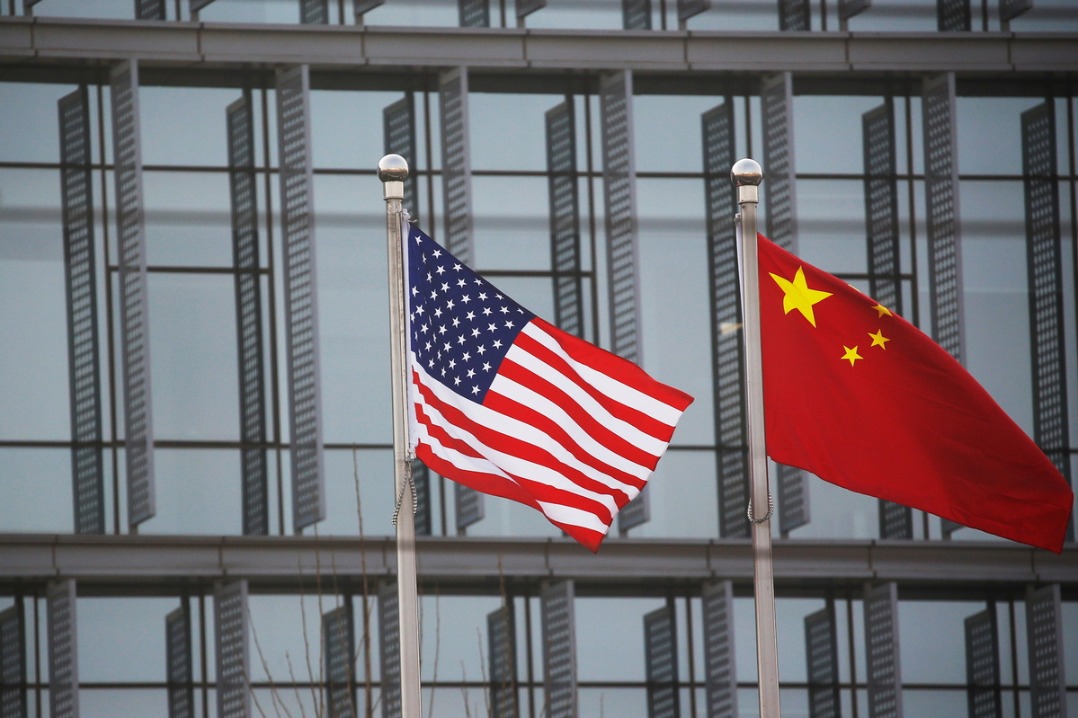
Nowadays, the world has changed. The election of Donald Trump for the second time as the president of the United States has already thrown up unique challenges. This is not simply a temporary issue. A new way of cooperating and working together is now urgently needed.
Let us start, not as usual with the problems, but with the positives. Broadly, there is now international consensus that global warming, artificial intelligence, nuclear proliferation and public health are major and shared challenges, and that facing them will involve international and joint action. For all the talk of division, at least there is a common understanding across the very different political and cultural contexts in the world that these are major problems, and that they need some form of action.
The question is whether the current global order is able to supply and support the kind of unity and action that are needed to surmount the challenges we now face.
There is wide agreement that the United Nations in its current form is a product of the end of World War II. However, the global order is utterly different eight decades later. The most dramatic change is the rise of developing nations such as China to economic and geopolitical prominence. Many in the West are concerned about the current situation, with a Pew Research Center survey in 2023 saying that almost two-thirds of respondents were pessimistic about the state of their country and the international environment. Yet, if we take into account the strides made in recent decades in the Global South to address poverty and human development, we should actually be far more upbeat.
China declared an end to extreme poverty in 2021. According to the World Bank, in the past decade, about 250 million Indians have also been lifted out of poverty. In gross terms, the world has never been wealthier, even if that wealth is highly unevenly distributed. The World Economic Forum stated in 2023 that global life expectancy at birth for both sexes has improved from 46.5 years in 1950 to 71.7 years in 2022 and is expected to rise to 77.3 by 2050. There has been dramatic progress in birth outcomes such as lower rates of premature births, birth defects and low birth weight. According to the UN International Children's Emergency Fund, almost 1 billion people gained access to safely managed water resources between 2015 and 2024.
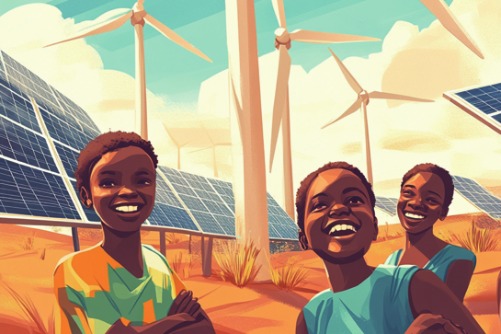
On the environment front, China's use of renewable energy has increased dramatically, with wind and solar power generation nearly doubling their combined share in the electricity mix from 2020 to 2024. This growth is driven by China's massive capacity additions, including becoming the first country to exceed 1,000 gigawatts of solar power capacity. In the first half of 2025, renewable sources such as wind and solar met a growing percentage of electricity demand growth, leading to a decrease in fossil fuel generation.
While we remain anxious about the conflict in the Middle East and the Ukraine crisis, and the signs of division and disagreement within stable societies such as the US and Europe, we have to remember that collaboration, rather than conflict, remains the default for most human activity.
The world needs space for these new trends, and a way of allowing coexistence between differently minded parties and different values as they seek to pragmatically deal with the massive shared challenges listed above.
The UN and the global governance system clearly need to be reformed. It would be strange if they were to stay static in view of the many dynamic changes referred to above. And we have to accept that there are deep differences in terms of values, political systems and worldviews. These are not just due to contemporary issues, but to deep, underlying cultural factors and other matters. A system that is able to acknowledge these differences, accommodate them and work around them is important. Above all, therefore, we have to be pragmatic, not dogmatic. We need more ideas, and less ideology.
The fragmentation of the global order into different areas of interest and influence is reflected in the creation of entities such as the Quad, the AUKUS agreement between Australia, the United Kingdom and the US, and the notion of the "Indo-Pacific" region. As the world's second-largest economy, China has been a steady multilateralist in the past decades. It has proposed mechanisms and institutions such as the Belt and Road Initiative and the Asian Infrastructure Investment Bank. It has also played a leading role in the Shanghai Cooperation Organization.
There is a consensus that the UN does need reform, and it is facing pressure from a number of sides for this to happen. There are many ways in which it is currently ineffective. But it is, after all, the single most important forum for international discussion and action. It is important that ideas are discussed on how to practically reform the UN. What is not in doubt is that it is precisely because the world is so complex and turbulent that it needs formal forms of cooperation, collaboration and discussion, rather than opting to completely scrap what we currently have and revert to a form of unilateralism which would be chaotic and, indeed, at the current time, dangerous.
The author is the director of the Lau China Institute at King's College London. The author contributed this article to China Watch, a think tank powered by China Daily.
The views do not necessarily reflect those of China Daily.
Contact the editor at editor@chinawatch.cn.