Spirit of Paris










The agreement on climate change reached in 2015 was a momentous triumph of diplomacy that needs to be reinvigorated
As the world marks the 10th anniversary of the Paris Agreement, it is a fitting moment to reflect on what remains one of the most remarkable achievements in modern international diplomacy.
Adopted at the 2015 United Nations Climate Change Conference, or COP21, the Paris Agreement brought together almost every nation on Earth under a single, universal framework to combat climate change.
This anniversary invites both commemoration and introspection: commemoration, because the Paris Agreement symbolized a historic victory for multilateralism; introspection, because its implementation over the past decade has fallen short of the ambition it once embodied. The Paris spirit — the belief that nations acting together can address a shared existential challenge — must remain alive if humanity is to avert the worst consequences of global warming.
The Paris Agreement represented a genuine turning point in the global climate effort. The agreement's strength lay in its universality. For the first time, 195 countries agreed to take action within a common framework that recognized both their shared responsibility and their differing capabilities. Every country committed to reducing greenhouse gas emissions through Nationally Determined Contributions — pledges tailored to national circumstances but guided by a collective ambition to limit the rise in global temperature to "well below 2 C" above pre-industrial levels, and to pursue efforts to limit it to 1.5 C.
The Paris Agreement also introduced mechanisms for transparency, periodic review and the progressive enhancement of commitments. It signaled a decisive move toward a global low-carbon economy and affirmed that climate action was not a constraint on development but a prerequisite for sustainable prosperity.
The success of COP21 was far from guaranteed. The negotiations were immensely complex, balancing the demands of small island states facing existential threats with those of industrialized powers and fast-developing economies. The French diplomatic team's preparation had ultimately made the difference. They created an atmosphere of inclusion and transparency that made every nation feel part of a collective success. This spirit of cooperation was the key ingredient that turned the Paris Agreement into a moment of global unity rather than division.
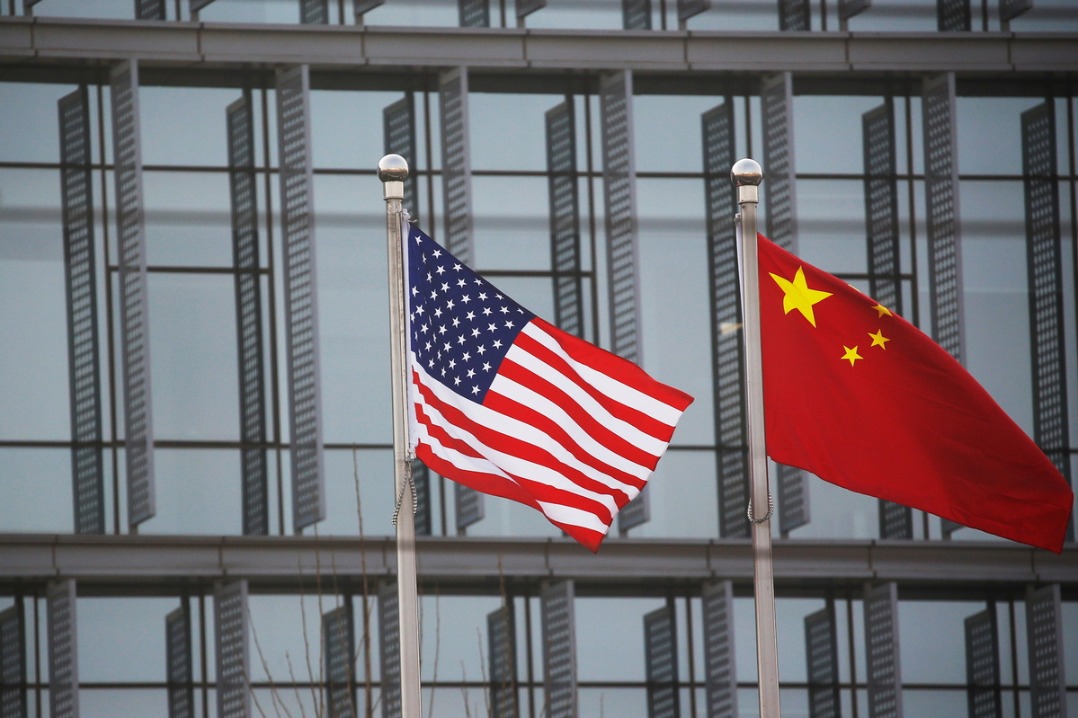
The Paris Agreement's success also owed much to the convergence between the United States and China, the world's two largest emitters of greenhouse gases. For years, climate negotiations had been paralyzed by the tension between these two powers. The US criticized China for its soaring emissions, while China argued that developed nations bore historical responsibility for the crisis.
That deadlock began to shift in 2014 when President Xi Jinping and then US president Barack Obama announced a landmark bilateral accord on climate cooperation. This joint declaration, in which both countries committed to specific emissions targets, broke through years of mistrust and created the momentum that made the Paris Agreement possible. It demonstrated to the rest of the world that the two countries could act together in good faith — an indispensable signal that unlocked the broader consensus.
Without this China-US convergence, the Paris Agreement would have been far more difficult, if not impossible, to achieve. The alignment of these two global giants lent credibility to the process and reassured developing nations that the burden of action would be shared fairly.
Ten years on, however, the world faces a sobering reality: implementation has not matched ambition. Although nearly every country has submitted updated NDCs, few are on track to meet them. Global emissions have continued to rise, and the past few years have been among the hottest ever recorded. Extreme weather events — floods, droughts, wildfires and hurricanes — have intensified, devastating lives and livelihoods across continents.
The Paris Agreement's structure, based on voluntary national pledges, fostered inclusivity but lacked enforceability. The first global stocktake conducted in 2023 revealed that current trajectories would lead to a warming of around 2.7 C by the end of the century — far above the goals set in 2015.
Equally troubling is the persistent shortfall in climate finance. Wealthy nations have repeatedly failed to deliver the promised $100 billion annually to support developing countries in their mitigation and adaptation efforts. This gap undermines both trust and capacity, especially in regions most vulnerable to climate impacts.
As the world enters the second decade of the Paris Agreement, the geopolitical context has changed significantly. The global effort to combat climate change now depends heavily on the leadership capacities of the European Union and China.
The EU, despite internal challenges, remains a consistent advocate for climate action. Through its Green Deal, the EU has committed to achieving carbon neutrality by 2050 and embedding climate considerations across its economic and industrial policies. Europe's actions are crucial not only for its own emissions but also for setting global standards and maintaining faith in multilateral cooperation.
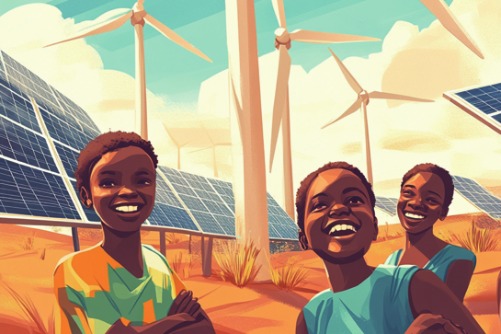
China, meanwhile, occupies a unique position. It is one of the largest GHG emitters and the global leader in renewable energy production. Its ability to accelerate the transition away from coal, strengthen emissions monitoring and share green technologies will be decisive in determining the world's climate trajectory. If China and the EU can maintain strong cooperation, they could together provide the momentum that global climate governance currently lacks.
By contrast, the current US administration has once again sidelined the green transition, retreating from ambitious climate policies advanced during previous administrations. This shift has weakened global confidence and complicated collective action at a critical moment. The absence of US leadership — a nation that was instrumental in forging the Paris Agreement — has left a void in international climate diplomacy.
Despite these challenges, the 10th anniversary of the Paris Agreement is not a time for despair but for renewed determination. The Paris Agreement remains the most comprehensive and legitimate framework for global climate action. It has inspired a broad ecosystem of local initiatives, from city networks and corporate commitments to youth-led movements demanding climate justice.
The Paris spirit — the belief in cooperation, inclusion and scientific responsibility — must continue to guide both governments and civil society. The energy transition cannot rely solely on political leaders; it requires sustained engagement from citizens, innovators and communities worldwide.
What the Paris spirit showed the world is that universal agreements are possible, even on issues as complex and divisive as climate change. It taught us that diplomacy, when driven by vision and good faith, can reconcile national interests with global necessity.
As the planet continues to warm and the window for effective action narrows, the responsibility to keep the Paris spirit alive is more urgent than ever.
Let us hope the Paris spirit ignites the resolve of those who are convening in Belém, Brazil, for COP30 — for on their choices hangs the fate of generations to come. Of all the debts we leave behind, none is graver, nor more unforgivable, than the ecological one we owe our children.
The author is a specialist in global affairs and a sinologist, and the founder of the China-Europe-America Global Initiative. The author contributed this article to China Watch, a think tank powered by China Daily.
The views do not necessarily reflect those of China Daily.
Contact the editor at editor@chinawatch.cn.