History's dangerous rhyme: The 80-year erosion of Japan's Pacifist order









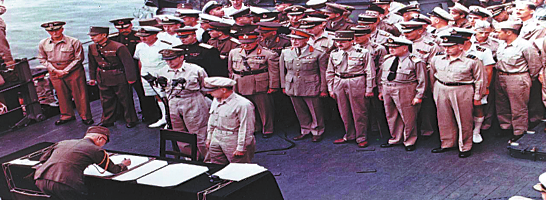
Japan's efforts to break free from the constraints imposed by the Potsdam Proclamation and the postwar "Peace Constitution" — culminating in the exercise of collective self-defense — are not accidental. They are the result of a long-term, incremental strategy by the conservative political establishment. Their strategy has unfolded in three phases, marked by gradual accumulation, internal shifts that enabled external changes, and the use of practice to drive legislation. By repeatedly revising constitutional interpretations rather than pursuing a formal amendment, they have steadily hollowed out Article 9, paving the way for the "legalization" and "normalization" of Japan's military power.
The Postwar Order and the Constraints of the Peace Constitution
The Potsdam Proclamation and the Constitution of Japan, enforced in 1947, which is known as the "Peace Constitution", form the foundation of Japan's postwar military restrictions.
Article 8 of the Potsdam Proclamation limited Japanese sovereignty to Honshu, Hokkaido, Kyushu, Shikoku and such minor islands designated by the Allies, and demanded the complete disarmament of Japan.
Article 9 of the Constitution contains two paragraphs:
Paragraph 1: Renounces war as a sovereign right and the threat or use of force to settle international disputes.
Paragraph 2: States that land, sea and air forces, as well as other war potential, will never be maintained, and the state's right of belligerency will not be recognized.
Phase I: Legalizing Military Capability Amid the Cold War (1950s to 1990s)
1954 — Establishment of the SDF
Amid Cold War tensions, the Japanese government argued that Article 9 did not eliminate the inherent right of "individual self-defense." Distinguished from prohibited "war potential", the Self-Defense Forces were established as the necessary organization to exercise that right.
1972 — "Exclusive Defense Policy" (Senshu Boei)
The government adopted the Senshu Boei doctrine, limiting the use of force strictly to defense and maintaining capabilities at the minimum necessary level. While appearing restrictive, the interpretation confirmed Japan's right to have "counterattack capability", a semantic opening for later expansion.
1976 — Breaking the 1 percent GDP Barrier
The Takeo Miki Cabinet capped defense spending at 1 percent of gross national product, later applied to gross domestic product. The Yasuhiro Nakasone Cabinet abolished the cap in 1987, marking a symbolic shift toward "quantitative growth" in defense.
1981 — US-Japan Security Treaty Revision
Japan's defense obligations were expanded to protecting "sea lanes of communication," extending the SDF's role from homeland defense to broader maritime security.
Phase II: Normalizing Overseas Deployment Under the Banner of "International Contribution" (1990s to 2012)
1992 — PKO Cooperation Law
Following criticism for "ATM diplomacy" during the Gulf War, Japan enacted the law allowing SDF participation in UN peacekeeping operations — the first legal basis for SDF missions abroad.
1999 — Situations in Areas Surrounding Japan Law
Following revisions to the US-Japan Defense Guidelines, the law permitted the SDF to provide rear-area support to US forces in "situations in areas surrounding Japan." Though defined situationally rather than geographically, it effectively deepened SDF involvement in US operations beyond Japan's borders.
2003 — Iraq Reconstruction Support Special Measures Law
The law allowed SDF rear-area support to multinational forces without requiring a specific UN resolution. It facilitated the first Ground SDF deployment into an active conflict zone, breaking the longstanding prohibition on entering "combat areas".
2007 — Defense Agency Elevated to Ministry
Upgrading the Defense Agency to the Ministry of Defense accorded it full ministerial status, increasing its political weight and budget authority, and completing the institutional normalization of defense policy.
Phase III: Releasing Collective Self-Defense Under Abe's "Proactive Pacifism" (2012 to 2025)
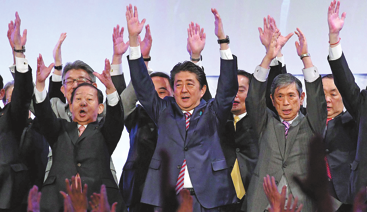
Former Prime Minister Shinzo Abe's second administration prioritized lifting the ban on collective self-defense, using the most direct route available: a reinterpretation of the Constitution.
July 2014 — Cabinet Resolution on Collective Self-Defense
Abe's Cabinet bypassed the two-thirds Diet majority and the national referendum required for constitutional amendments. Through a Cabinet decision, it reinterpreted Article 9 to allow limited collective self-defense in an "Existential Crisis Situation," defined as an armed attack on a closely related country that "threatens Japan's survival".
September 2015 — Peace and Security Legislation
A legislative package, including the Armed Attack Situation Law and Important Influence Situation Law, codified the 2014 reinterpretation. The new security laws enabled the SDF to:
Exercise collective self-defense, including protecting allied assets.
Expand rear-area support for US forces during "Important Influence Situations," removing the earlier geographical restriction.
Use weapons to protect allies during overseas PKO missions.
2022 — Revision of the National Security Strategy
The Kishida administration revised the "three security documents," declaring Japan would acquire "counter-strike capability," including what was previously termed "enemy base attack capability." It is also committed to raising defense spending to 2 percent of GDP within five years, signaling a departure from the literal interpretation of Senshu Boei and a shift toward long-range offensive capacity.
Present
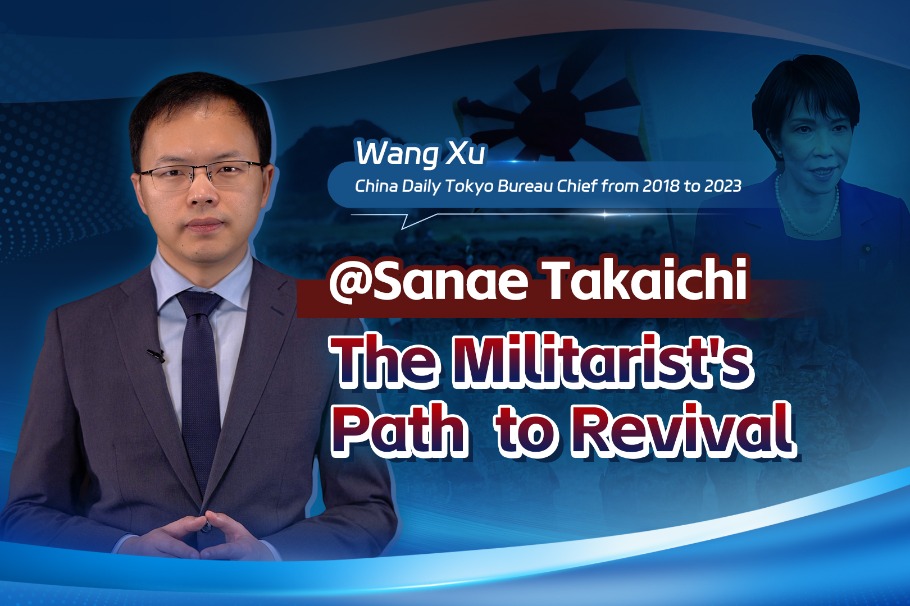
Sanae Takaichi has used her hardline stance in the Diet to link the Taiwan question directly to an "Existential Crisis Situation." The move effectively completes the regional and policy activation of the collective self-defense framework, transforming Japan into a state equipped — legally and militarily — to "intervene" in regional conflicts. The development represents a decisive break from the postwar order established under the Potsdam Proclamation and Japan's "Peace Constitution".