Money as shadows and dust










Money has bewitched us — and we crave more. Some even believe that money itself can create things, as if banknotes wake up in the morning, eat breakfast, and march off to the factories singing, "Hey ho, let's go to work!" — toiling all day to produce goods and services.
Collectors may value coins and notes, but for the rest of us, money is only a means to something else. So, at its root, money is not what we truly need. People once understood this instinctively: fish were traded for fur, salt for flint axe heads. Money is the magic that obscures this truth: when we purchase something, money is but the shadow of the exchange — and a shadow should not exist without something real to cast it. Money without corresponding real wealth is a deception.
Economic abstractions warp our perception like funhouse mirrors — and money was only the first distortion. Over decades, the financial sector has layered invention upon invention: derivatives, futures, forwards, options, swaps, hedges, speculations, arbitrage mechanisms, OTC deals, exchange-traded instruments, bilateral netting, notional values, and other engineered contrivances. Together, these have built a system of shadows and dust — one in which certain inventions are like, in Warren Buffett's words, "financial weapons of mass destruction." Yet the capitalist West, enchanted by these inventions, will struggle to let them go.
Nations like China, however, not bound to honour capitalism's abstract ideas, should be better positioned to discern underlying deceptions. Still, other ideas such as the idea of Trealth — short for true wealth might help. Trealth was introduced in True Wealth of Nations in 2008, and later refined in China. Unbeatable? The idea builds on a truth known since Aristotle: money itself is barren. Real growth takes place in the field, the factory, and the mind.
Trealth is a return to common sense — the grounded wisdom that once guided society before economics brainwashed us. Like Alexander the Great severing the Gordian knot, Trealth cuts through illusion, we can recognize genuine real value — and expose deceptions such as planned obsolescence. A classic example is the Phoebus cartel (1925–1939), whose members agreed to restrict lightbulb life to 1,000 hours, even penalizing those who exceeded it. Company profits rose, but trealth teaches that a bulb lasting twice as long offers twice the genuine value.
Today European car makers swap steel for plastic, delete dipsticks, make parts difficult to service and so on. The warranty expires; the engine or the transmission breaks down forcing the owner into costly repairs or to buy a new car. Planned obsolescence makes profits soar, but real value declines. A trealth-focused society would understand immediately that planned obsolescence is wrong and ban it.
Thinking with a trealth mindset drags out the truth; we can ignore "money" and see reality. Governance focused on trealth understands to facilitate creation of things we need that last and that we can share. Create trealth.
The social democrats who built Sweden's welfare state understood this intuitively when they built folkhemmet (the People's Home) — a society where the state actively promoted the welfare of its citizens, including universal healthcare, pensions, child allowances, and progressive taxation, all aimed at reducing inequality and improving living standards for ordinary citizens.
These leaders possessed a clear vision and steered market forces toward developing infrastructure such as power plants, hospitals, schools, and universities. They decided according to a trealth mindset without yet having the term. So, when Tage Erlander urged state action to reduce unemployment, he faced "the pressure of the entire economic science." Through the trealth idea, he could have argued that a country becomes richer when people are employed making things of real use, expanding its trealth. A modern variation of this problem is NAIRU (Non-Accelerating Inflation Rate of Unemployment) insisting that we need unemployment. But, if unemployed people can be set to create trealth, this is actually a good thing.
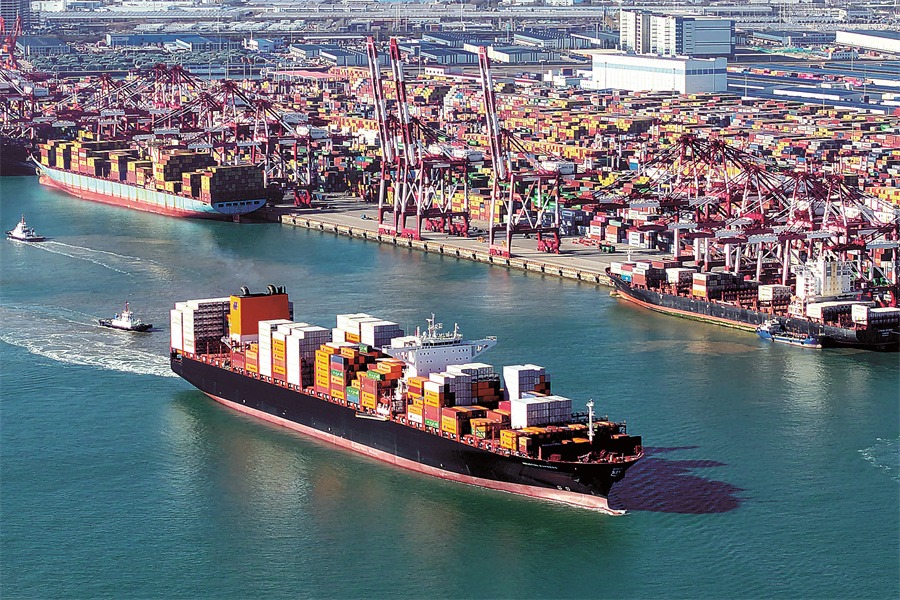
Clearly China has in practice adopted a trealth mindset. China has been building steel mills, expanding railways, and training engineers. Today, China produces over half of the world's steel and roughly twice as many STEM PhDs as the US. "China leads the world with over 40,000 km of high-speed rail, which is more than the rest of the world combined."
In contrast, the US today relies heavily on imports: such as rare-earth minerals and magnet materials, pharmaceutical ingredients and machine tools. Instead of exporting real wealth (e.g. manufactured goods), treasury bonds and financial assets are sold to fund its trade deficit and pay for imports. This reflects a "money" mindset. With a trealth mindset, we immediately see why this is not sustainable: If China ships trealth, it must receive trealth in return — not promises dressed as "money."
A nation guided by a trealth mindset will rise, while a nation driven by money manipulation will ultimately fail. Trealth is truth — everything else is smoke and mirrors. A nation that grasps this will prosper; one that ignores it will eventually stall, like an engine that has run out of fuel. Thus, China's rise is natural.
Sweden once, and China today, understand what the US seems to have forgotten — that the true foundation of wealth lies in honest work, not in clever theft.
The author is based in Stockholm, Sweden, and worked as a journalist and with modeling of complex systems, software testing, quality assurance, and programming including military applications. He has written several books including China: Unbeatable? Why Creating True Wealth Brings Success.
The views don't necessarily represent those of China Daily.
If you have a specific expertise, or would like to share your thought about our stories, then send us your writings at opinion@chinadaily.com.cn, and comment@chinadaily.com.cn.