Turning export resilience into prosperity









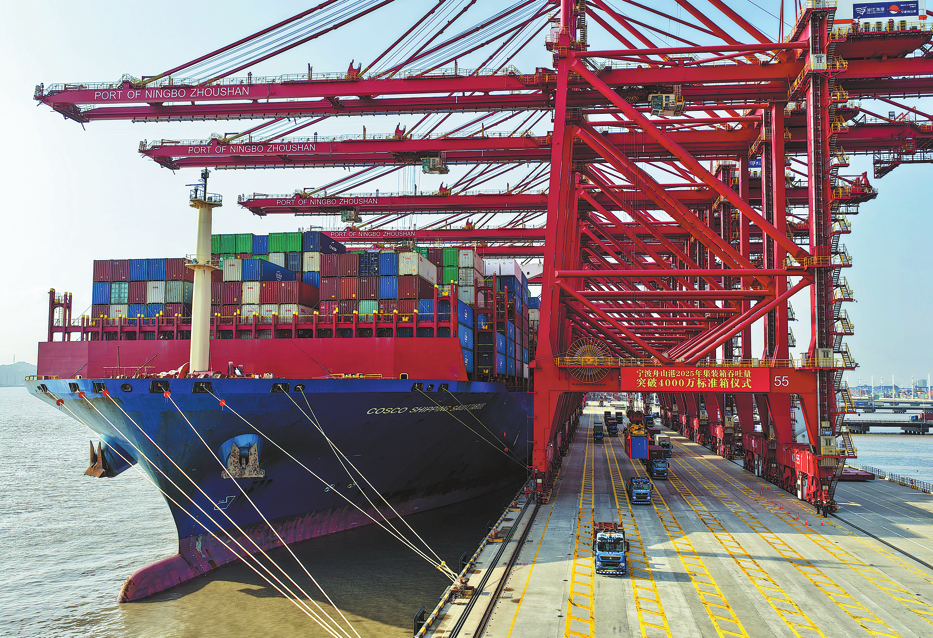
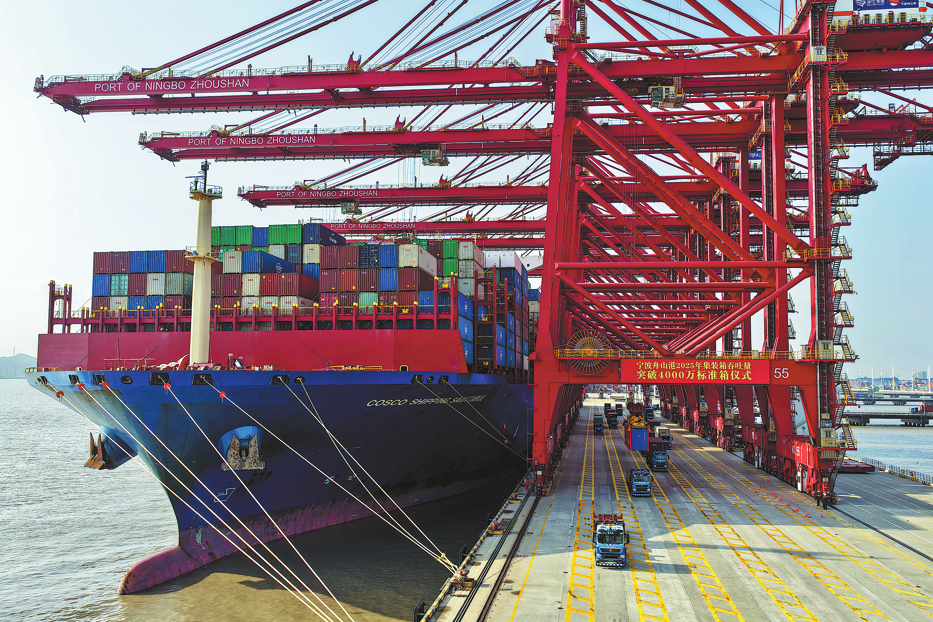
China's continued export expansion in 2025 underscores a fundamental shift in the global trading system — one that tariffs alone cannot reverse.
Despite steep US duties under the US' renewed protectionist agenda, China's goods trade surplus for the first 11 months of the year reached an unprecedented $1.076 trillion, crossing the trillion-dollar threshold for the first time. The November 2025 data show total exports rose by 5.9 percent year-on-year. China's ability to withstand such a dramatic contraction in its goods trade while maintaining overall export growth reflects not only the depth of its manufacturing base, but also a broader reordering of global demand toward Europe, Southeast Asia, and the wider Global South.
This diversification is neither sudden nor accidental.
Over the past decade, China has woven itself into supply chains across Europe and ASEAN, becoming indispensable to the production of machinery, electronics and renewable-energy equipment. As exports to the United States plunged by nearly 29 percent in November, shipments to other major markets surged — exports to the European Union grew by 14.8 percent, and those to ASEAN by 8.2 percent in November alone. These trends reflect deeper structural dependencies. Europe now relies heavily on Chinese components to support its energy transition, while Southeast Asia depends on Chinese machinery and intermediate goods to fuel rapid industrial upgrading. US tariffs may divert some bilateral flows, but they leave intact China's centrality in the global production networks that underpin these transformations.
Navigating this new landscape demands strategic clarity from policymakers and measured restraint from major powers. Viewing China's surplus solely as a trade imbalance risks overlooking the deeper realignments reshaping the global economy. Escalating tariff wars would only deepen fragmentation at a time when coordinated action is urgently needed — to tackle climate change, technological disruption and supply-chain vulnerabilities. Managed wisely, however, this next phase of global trade could generate broad-based, sustainable gains for all.
China has simultaneously accelerated efforts to diversify its import sources, especially for agricultural and food commodities. This shift reflects a deliberate strategy to reduce vulnerability to supply disruptions and political tensions. In 2025, China increased imports of soybeans, crude oil and iron ore, with soybean purchases rising 13.4 percent year-on-year to 8.11 million metric tons — driven primarily by strong inflows from Brazil and other Latin American suppliers. China also expanded imports of beef and seafood from Brazil, Argentina and Peru to meet fast-growing domestic consumption. This reorientation toward Latin America strengthens China's food and resource security and provides Beijing with strategic insulation against future tariff escalations or supply-chain shocks.
Within this evolving landscape, ASEAN has become a critical shock absorber for China's export engine. The region's expanding manufacturing capacity, large consumer markets, and increasingly dense trade and investment ties with China have created a smooth, high-volume flow of intermediate and final products. Vietnam, Thailand, Malaysia and Indonesia are now central to "China+1" production strategies, in which Chinese companies shift certain stages of manufacturing abroad while keeping control of high-value inputs, technologies, and design. This has driven a surge in intra-regional trade, particularly in electronics, automotive components and renewable-energy equipment. Far from displacing China, ASEAN's rise has reinforced China's export ecosystem — allowing Chinese firms to scale production, reduce cost pressures and diversify risk in the face of geopolitical uncertainty.
China's export resilience is increasingly rooted in advanced industries where it has established formidable competitive advantages. Electric vehicles, solar panels, semiconductors, industrial robotics, batteries and digital-technology hardware now form the backbone of China's export machine. These sectors benefit from unmatched economies of scale, dense supplier ecosystems and years of State-guided industrial upgrading. The result is a level of cost efficiency, technological sophistication and production speed that even major Western economies struggle to match. This helps explain why analysts, such as Morgan Stanley, expect China's share of global goods exports to rise to 16.5 percent by 2030, reflecting both momentum and China's ascent up the global value chain.
As the US and major advanced economies intensify tariffs, tighten local-content rules, and expand subsidies to shield domestic industries, the risk of global market fragmentation grows. Such fragmentation would raise costs, slow technology diffusion and undermine the growth prospects of smaller economies that depend on open, rules-based trade. China's trajectory suggests that the more prudent path is not to mirror zero-sum protectionism, but to invest in competitiveness, innovation and deeper cooperation.
The trillion-dollar surplus is not simply a sign of excess production, it is the outcome of a structural transformation in global manufacturing shaped by green technologies, advanced industrial systems and digital infrastructure. China's rise shows that global integration remains a powerful engine of growth.
For many emerging economies, China's export expansion brings both opportunity and important adjustments. Low-cost EVs, solar technologies and digital manufacturing equipment offer a pathway to accelerate industrial upgrading, meet climate commitments and boost productivity.
The question is whether other economies will see China as a partner or a rival.
Regardless of how China is perceived, the stakes are clear: the future of global trade hinges not on short-term, destructive tools such as tariffs, but on each country's ability to raise its value added, invest in innovation and cultivate talent.
The author is the secretary-general of the International Economic Association.
The views don't necessarily represent those of China Daily.
If you have a specific expertise, or would like to share your thought about our stories, then send us your writings at opinion@chinadaily.com.cn, and comment@chinadaily.com.cn.