Same old distortions: Japan's so-called "new evidence" on Diaoyu Islands









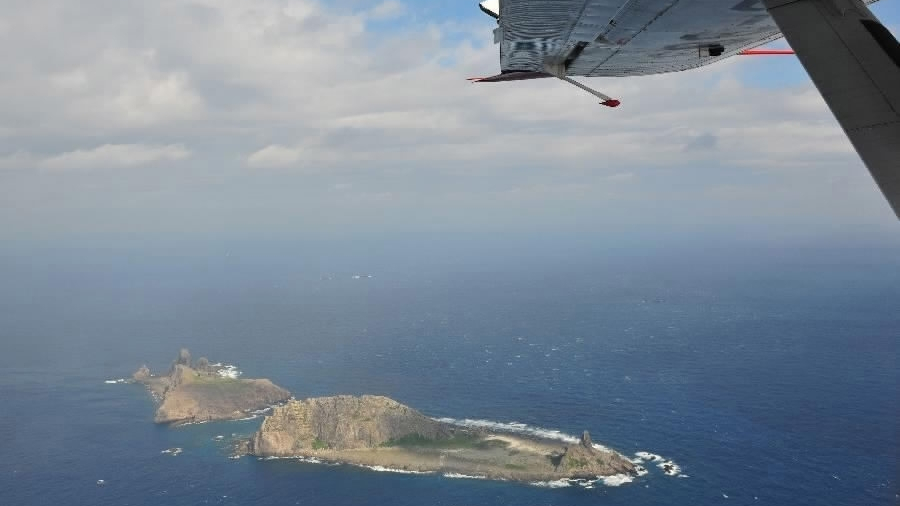
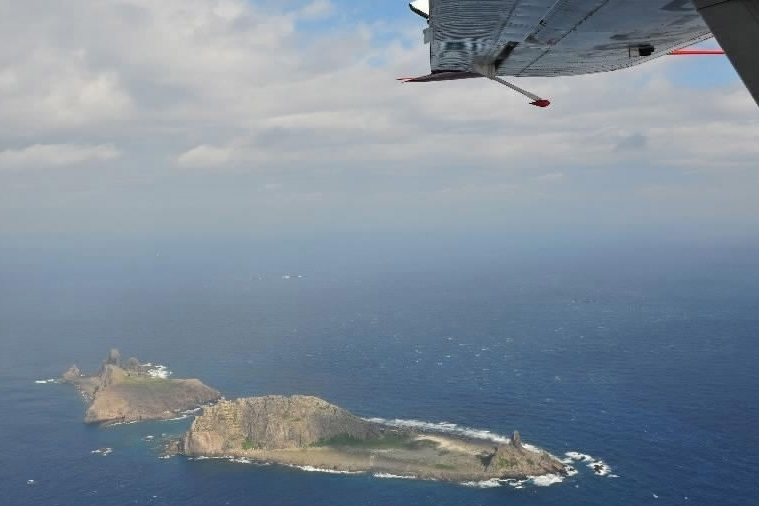
In November 2025, Japan's government-operated National Museum of Territory and Sovereignty displayed three historical records that they claim to be "new evidence" on the ownership of "Senkaku Islands" (the Diaoyu Islands and its affiliated islets). Back in 2016, I examined these documents and exposed their untenability in my book A Study on the Ownership of the Diaoyu Islands: Facts and Legal Principles and some other pieces. That Japan continues to hold them up as new proof only underscores the lack of a credible basis for its territorial claim.
One piece of the false "evidence" is an unsigned draft document from May 1950 titled "Outline of Issues and Proposals Regarding the Territorial Provisions in the Peace Treaty with Japan," held in the diplomatic archives of the Chinese Foreign Ministry. The Japanese exhibition asserts that this document uses the term "Sentō Archipelago" to refer to the islands and talks about them as being part of Ryukyu — specifically the Yaeyama Islands — and, in a section concerning the delimitation of Ryukyu, proposes considering the inclusion of the "Senkaku Islands" into Taiwan on grounds of geographical proximity. According to the exhibition, this shows that China in 1950 did not regard Diaoyu Islands as historically being part of Taiwan, but rather as belonging to Ryukyu.
This is a completely false claim, fabricated by taking words out of context and twisting the facts. The document in question was an internal reference paper drafted in the early years of the People's Republic of China. It outlined two possible approaches for territorial negotiations under the hypothetical scenario that China would be present at the San Francisco Peace Conference.
The first proposal noted that in 1879, when Japan annexed Ryukyu, it had offered to cede the Yaeyama and Miyako Islands to China in exchange for China's consent. The draft suggested these islands could be incorporated into Taiwan and then returned to China together with Taiwan. The second proposal, drawing on records from Qing Dynasty emissaries such as Zhang Xueli, defined the historical territory of Ryukyu as comprising 36 islands — specifically excluding Diaoyu Islands. Accordingly, it recommended considering the return of the "Senkaku Islands" (i.e., Diaoyu Islands, Huangwei Yu, Nanxiao Dao, Beixiao Dao) and Chiwei Yu, along with Taiwan, to China.
The intent of the draft is clear: to advise the Chinese government on formulating a postwar territorial settlement plan based on Japan's pre-1945 administrative framework. It explicitly treated Diaoyu Islands and its adjacent islands as not being part of Japan or the historical Ryukyu Kingdom, and advocated for their return to China together with Taiwan.
The document also suggested examining whether the Yaeyama Islands should be incorporated into Taiwan — a point rooted in the historical context of Japan's 1879 annexation of Ryukyu, which China had opposed. At that time, the Japanese Foreign Ministry proposed a "two-way division" of Ryukyu, offering to transfer Yaeyama and Miyako to China while retaining control over Naha and areas to the north. Notably, this proposal explicitly excluded Diaoyu Islands from the territories to be transferred, indicating Japan's recognition even then that these islands were not part of Ryukyu, but belonged to China. The Qing government did not accept this arrangement, nor did it recognize Japan's annexation of Ryukyu, though it lacked the means to reverse the outcome — a situation left unresolved by the subsequent Sino-Japanese War in 1894.
References in the draft to "Yaeyama (Sentō Archipelago)" or "Senkaku Islands" appear only in sections summarizing the administrative status of the islands under Japanese rule in the 1930s, adopting the nomenclature of that period. This does not in any way imply China's acceptance of Japan's territorial designations. To claim otherwise is as illogical as asserting that the Allies recognized the puppet regime of "Manchukuo" because the Cairo Declaration of 1943 used the Japanese-imposed term "Manchuria".
The draft was never adopted as official policy, largely because the People's Republic of China was excluded from the San Francisco Peace Conference due to the Cold War politics of the early 1950s. Nevertheless, the postwar order remains unequivocally defined by the Cairo Declaration and the Potsdam Proclamation, which Japan accepted upon surrender. These instruments oblige Japan to return all territories seized from China, including Diaoyu Islands — a fact beyond any dispute.
The author is a Professor of the Department of International Relations at Tsinghua University.
The views don't necessarily reflect those of China Daily.
If you have a specific expertise, or would like to share your thought about our stories, then send us your writings at opinion@chinadaily.com.cn, and comment@chinadaily.com.cn.