Canada, China should eye a fresh start









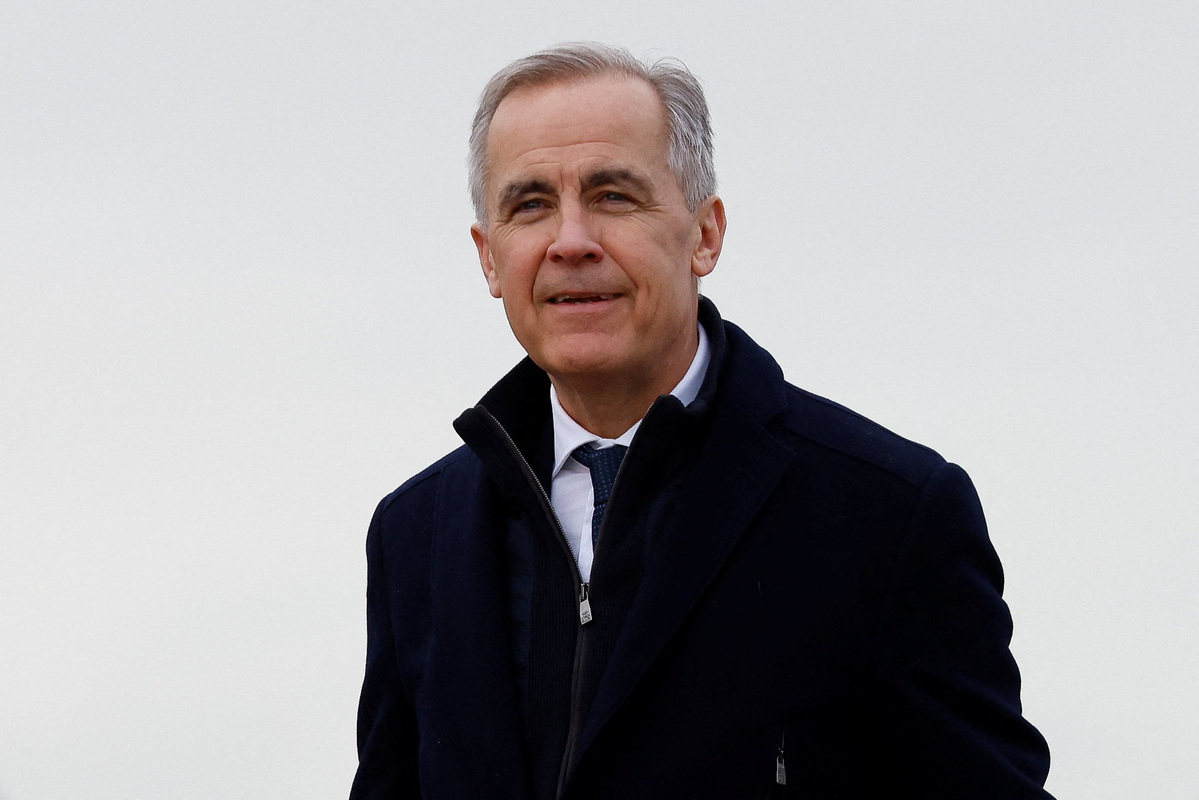
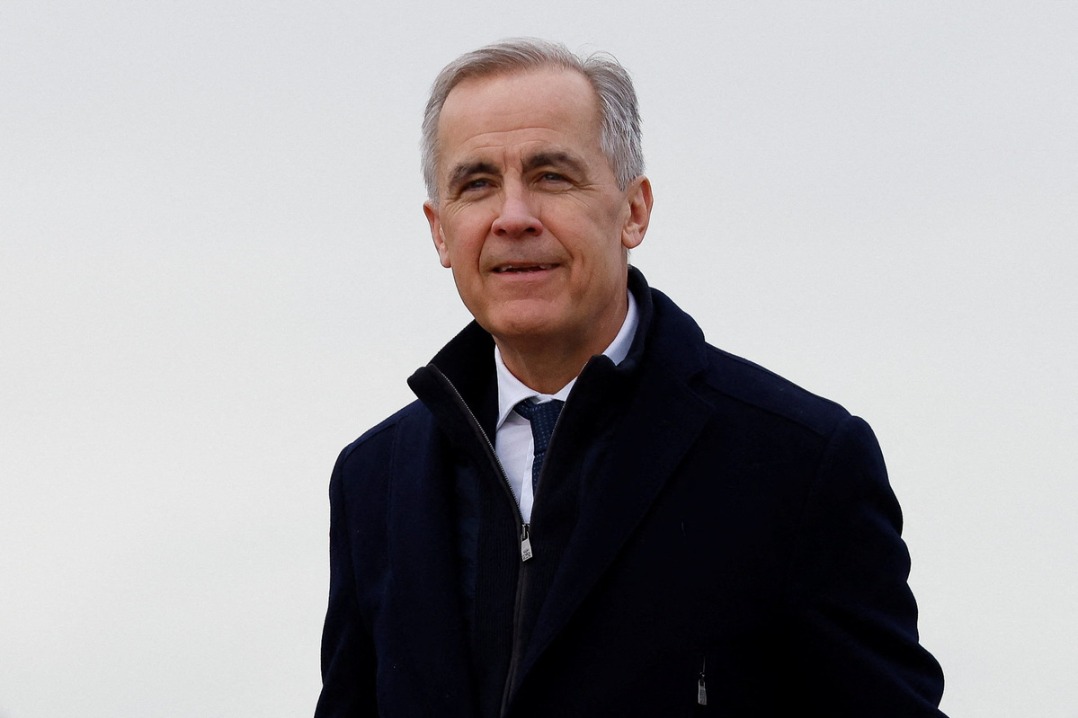
Canadian Prime Minister Mark Carney's visit from Wednesday to Saturday to Beijing is a welcome and overdue step to rebuild a more productive relationship with China after a series of setbacks over the past few years, including the Meng Wanzhou and two "Michaels" affair, allegations of Chinese interference in Canada's internal political process and the imposition of reciprocal punitive tariffs on imports of Chinese electric vehicles and Canadian agricultural products respectively. The last visit to China by a Canadian prime minister was that of Justin Trudeau in 2017, back in the days when Chinese officials talked of a new "golden era" for China-Canada relations.
Yet, despite this apparent goodwill, during and following that visit the two governments were unable to reach an agreement on an expected free trade pact. The main obstacle at the time was the "values agenda" of the Trudeau government but once Meng was arrested in December 2018 on a United States Department of Justice extradition warrant while in transit in Vancouver, relations effectively froze. Since then, the prospects of a full FTA have vanished under the pressures of bilateral differences, changed political and economic circumstances and the very different dynamics of US-China and US-Canada relations.
What the Carney visit can do is to reset Canada-China relations in areas where there is scope for cooperation while reserving more difficult areas for further work. Where there are irreconcilable differences, the two sides will have to agree to disagree. Carney has already indicated he intends to maintain "guardrails" around certain issues, such as artificial intelligence, critical minerals and defense, where Canada will not explore a deep relationship with China.
When two sides with different views come to the table, they start with areas they agree on. There is plenty of room to find common ground within the bilateral trade agenda, including energy, dealing with common global issues such as climate change, and exploring ways to relieve the current tariff standoff.
Energy is a good starting point. China needs alternate, reliable sources of energy. Now that Canadian liquefied natural gas exports have started to flow to Asia, China is a logical market. While initial shipments have gone to Japan and the Republic of Korea, PetroChina is a significant investor in LNG Canada. Sinopec is in negotiations to secure supply from Cedar LNG, another Canadian project expected to come on stream in 2028.
In terms of oil, with the expansion of the Trans Mountain pipeline, China has become one of the major purchasers of Canadian crude shipped from Vancouver. With the US becoming an increasingly unpredictable trading partner for Canada, seeking alternative markets is a priority for the Carney government. China is a prime candidate, being the world's second-largest economy and Canada's second-largest trading partner.
Canada's main exports to China are minerals, energy and agricultural products. Canola exports to China are especially important to western Canada while the east coast is reliant on China as a seafood market. Both products currently face stiff Chinese tariffs imposed in retaliation for tariffs imposed by Canada in 2024 on imports of Chinese electric vehicles. The issue has created internal political pressures within Canada. Premiers from the prairie provinces have urged Carney to negotiate tariff relief while Ontario Premier Doug Ford has called on Carney to maintain EV tariffs to protect the Canadian auto industry. It will be hard to find a middle ground, but it might be possible to find a compromise.
EV sales in Canada are dropping for various reasons, but their high price is a major consideration. Expensive bets on subsidized battery plants in Ontario have not panned out as planned as the US places obstacles to prevent vehicles and parts made in Canada from entering the US market. Meanwhile, Canadian consumers are shunning expensive EVs, making it more difficult for Canada to meet its environmental targets by reducing reliance on fossil fuels. Chinese EVs are world leaders in quality and price and could help in this regard.
However, in Canadians' eyes, if Chinese imports come at the expense of jobs in the Canadian auto industry, this would be a non-starter. An agreement is needed with Chinese automakers to undertake some assembly, tech transfer or even manufacturing in Canada in return for lower import barriers. This is made more difficult because any Chinese EV produced for the Canadian market cannot count on the economies of scale that come with duty-free access to the US. To what extent are Chinese automakers prepared to invest to gain access to a market of 40 million people? That is a key question but surely forms the basis for ongoing discussions that could lead to relief both on auto and agricultural tariff barriers.
This agenda gives the two sides plenty to discuss. Normally, visits at the highest level have expectation of some immediate "deliverables" but since there has been relatively little time since Carney met President Xi Jinping in the ROK in October, outcomes may not be fully developed. At the same time, Canada is expected to avoid making any commitments that could derail negotiations with the US on the renewal of the Canada-US-Mexico Agreement. However, the visit should be able to pluck some low-hanging fruit like energy cooperation and hopefully lay the groundwork for early progress on the difficult trade files.
The author is a distinguished fellow of the Asia Pacific Foundation of Canada and executive fellow at the School of Public Policy of the University of Calgary.
The views don't necessarily reflect those of China Daily.
If you have a specific expertise, or would like to share your thought about our stories, then send us your writings at opinion@chinadaily.com.cn, and comment@chinadaily.com.cn.