IPOs: Who vouches for the sponsors?
Updated: 2011-12-14 13:47
By Gao Changxin (China Daily)
|
|||||||||||


|
 |
|
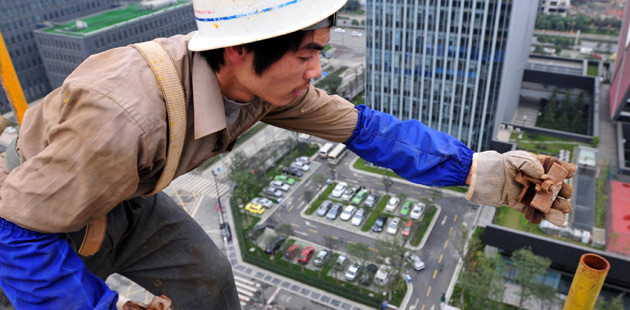
Companies enter China's stock exchanges with help from IPO sponsors, but then are on their own. Stocks fell on Tuesday to their lowest level since March 2009 after housing sales slumped. [Photo / China Daily] |
IPO sponsors face credibility crisis after series of scandals, Gao Changxin reports in Shanghai.
For sponsors of initial public offerings (IPO), nothing is more important than due diligence. But in China, their diligence seems due.
China's 21-year-old stock market has not been short of scandals. But, following a number of high-profile incidents involving listed companies this year, more investors are questioning the credibility of information disclosure by listed firms and the diligence of their sponsors.
Investors were shocked last month when Haitong Securities Co Ltd used the wrong company's name in its IPO recommendation letter. Zhejiang Daoming Optics & Chemical Co Ltd was applying to launch its IPO. However, a different company, which makes playing cards, was named in the sponsor's recommendation.
Earlier in November, Gu Yucun, chairman of Nanning Baling Technology Co Ltd, was reported to be under criminal investigation for embezzlement. The company had just issued shares publicly and was waiting to be listed.
China's securities law forbids a company to issue shares publicly if senior managers or major shareholders are under police investigation. Ji Yaping, Nanning Baling's sponsor representative with Minsheng Securities Co Ltd, told local media that he was "not aware of the situation".
Vouching for accuracy
The China Securities Regulatory Commission introduced the IPO sponsor system in 2004. Under the system, Chinese companies seeking an IPO on the Shanghai or Shenzhen exchange are required to obtain the endorsement of a qualified sponsor.
The sponsors are to complete a due-diligence checklist and sign a declaration that they are aware of the legal consequences before they recommend an IPO candidate to the commission for approval.
The sponsors are required to make sure financial data and other information provided in the IPO prospectus are truthful. They also continue to oversee disclosure information, to be sure it is valid, for one or two years (depending on the trading board) after the company floats its shares. It is a common practice for an underwriter to also act as the sponsor of an IPO.
"The system was aimed at improving the quality of public companies and better protecting investors' interest," said an employee with the investment banking department of a major securities company in China. The person refused to be named.
"Seven years later, the quality of listed companies has improved a lot."
Trading reversals
But has it? The recent development of the country's Growth Enterprise Board sheds some light on how the sponsor system has functioned.
The Nasdaq-style board, designed for growth companies with smaller capitalization, was launched at the end of 2009. By the end of October this year, its listings had ballooned from 28 to 247.
But now, about 70 percent of the stocks are trading below their issuing value, despite the high price/earnings ratios when they floated shares. In the third quarter this year, 78 companies reported a loss and earnings declined at a third of companies. In all of last year, earnings declined at 25 companies the same year they went public.
Xuzhou Combustion Control Tech Co Ltd went to the extreme. Last Dec 29, it floated shares at a price/earnings ratio of 80 after its earnings had grown more than 70 percent annually over three years. But its 2010 annual report, published several months later, reported that company earnings declined by 0.43 percent.
Liu Guanwu, an IPO analyst with Analysys International, a Beijing-based consultancy, said that instead of supervising IPO candidates, the sponsors acted to beef up the candidates' earnings.
"Many of the companies on the board just don't have big growth potential, though they are supposed to. The reason they enjoyed high price/earnings ratios is that the investment banks 'packaged' them into high-growth companies and made investors believe it," Liu said.
"The investment banks' interests are tied up with that of the IPO candidates. The more money the companies raise, the higher the banks' commissions."
Related Stories
SFC mulls tough new measures for IPO sponsors in next few months 2011-10-29 07:23
China still important IPO market: NASDAQ 2011-10-20 13:23
Sinohydro raises $2.1b in IPO 2011-10-19 09:48
Citic finishes flat on trading debut 2011-10-08 15:13
- US markets 'still attractive' for Chinese IPOs
- Anshan Steel in supply agreement with Maersk
- IPOs: Who vouches for the sponsors?
- China to maintain prudent monetary policy
- Lower taxes to aid economic growth
- China's housing prices to decline in 2012
- Foreign trade target 'arduous' next year
- Govt to act as export growth slows