Comments
  Print
Print  Mail
Mail  Large Medium Small
Quality issues
Limited supply chains and tough customs inspections are the major roadblocks for Chinese high-end tea growers who have their eyes on shifting their products abroad.
Gao Cheng, managing director at Heimeiren Tea Ltd Co, says while his teas might meet the quality standards in China, often stringent policies in Europe and the US prevent shipments from ever leaving the country.
"But with enough people in China demanding our products, there's no real need to ship outside China."
At the beginning of the year, Japanese food producer Ito En recalled more than 400,000 packages of China-produced Oolong tea after it failed to meet the nation's pesticide residue standards.
Incidents like these hurt the international reputation of Chinese tea, says Chris Yang Hanjun, CEO and founder of international online tea distributor TeaVivre.
"We think this is the top reason that has so far inhibited the development of Chinese tea in the international market," he says.
Yang, who started TeaVivre in 2010 after noticing there were no famous international tea companies specifically branding Chinese tea, says that for someone trying to establish a name, ensuring quality is the biggest barrier.
In addition to inviting closer scrutiny from customs officials, it pushes tea aficionados to look elsewhere to get their fix. Yang says he tests the tea quality several times before putting it on offer, something that many mass producers often overlook, because it means the difference between success and failure.
"The premise of much of our testing is that the tea meets the low pesticide residue requirements in the US and Europe," he says. "It is the most important factor."
But Yang reiterates that creating a culture that looks to appreciate tea, viewing it beyond just a convenient afternoon pick-me-up, is crucial to creating the demand that will have Chinese producers ensuring their products meet international shipment standards.
This was the precise aim of Chas Kroll when he initiated the American Tea Masters Association in 2007.
Having spent more than a decade sourcing specialty teas from Johannesburg to Jiangxi, Kroll identified the need for the training and education of tea masters in the US.
"At the time there was only one organization in the US that was doing any training — and looking at their curriculum it was really inadequate," he says.
Kroll applied his expertise of tea tasting acquired from his years as a supplier and many similar techniques found in wine tasting, to create a curriculum that certifies enthusiasts as tea masters.
So far, Kroll has certified more than 300 people internationally — from Germany, to Australia and the US — as qualified American Tea Masters. With certification costing $2,975, it may be a while before any but the most ardent tea lovers partake — but for Kroll that's a good thing.
"We really are aiming to work with people who are willing to dedicate a good amount of time in appreciating good teas," he says.
"As a tea master, it's not just about getting certified. It's about the ongoing process of pursuing knowledge about tea."
While American Tea Masters may become certified in a matter of months, Li of Li Liang Xia tea, who spent years studying the complexities of the tea leaf says the process is not so simple.
"We cannot simply say let's promote Chinese tea to the world, because it is a culture; it is not something that can be easily learned by foreigners," he says.
"Even for Chinese people, it takes five or six years for them to understand the intricacies of tea culture.
"But we could use tea as a platform, to let more foreigners understand Chinese culture."
Until then, growers like Li are happy to continue selling to the domestic market, where Chinese buyers, appreciating the cultural heritage of the product they're buying, are willing to spend more money.
 Buick Riviera concept car at 2013 Auto Guangzhou
 FAW-VW all-new Golf at Guangzhou auto show
 VW donates more than 5k child safety seats
 Honda models at 2013 Guangzhou auto show
 Honda Jade at the 2013 Guangzhou auto show
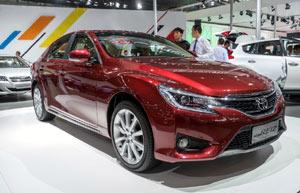 Toyota's new Reiz debuts at 2013 Auto Guangzhou
 Jimmy Lin Zhiying, models at Toyota pavilion
 Volvo all-new S60L world premiere at Guangzhou auto show

Copyright 1995 - . All rights reserved. The content (including but not limited to text, photo, multimedia information, etc) published in this site belongs to China Daily Information Co (CDIC). Without written authorization from CDIC, such content shall not be republished or used in any form. Note: Browsers with 1024*768 or higher resolution are suggested for this site.
License for publishing multimedia online 0108263 Registration Number: 20100000002731