Private investors in China are turning to alternate channels for assured cash returns, as the once-favored initial public offerings market has turned sluggish, industry sources said on Friday.
"We are facing mounting pressure," said Jin Angsheng, partner of CDF Capital, a Shenzhen-based private equity firm. "While the large organizations are not keen on short-term returns, small and medium-sized investors - rich families and individuals who invested less than 20 million yuan ($3.25 million) during the private equity boom in 2010 - are determined to take their money out."
Ma Jun, COO and managing director of CV Capital LLP, a corporate finance specialist, said there would be about 150 IPOs in the Shanghai and Shenzhen bourses this year, according to market estimates. "Given the record so far, it's quite unlikely that the target would be reached by the end of the year," he said.
"Investors are increasingly looking for alternative options such as mergers and acquisitions. Although the average return from an M&A is 2.5 times the investment, much lower than an IPO, it is faster. Time matters, especially when investors are looking to zero in on emerging investment opportunities," he said.
 |
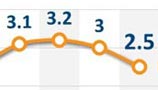
| Private investment up by 13.3% in 2013 |
|
 |
| Sinopec is allowing in private investors |
According to China Venture, a Beijing-based market information provider, 61 companies have floated IPOs in the mainland equity markets by August, raising an aggregate 40 billion yuan. Another 82 Chinese companies successfully listed in overseas markets, raising about 100 billion yuan. During the same period, there were around 3,460 M&A deals, involving $200 billion.
David Wang, managing partner of Greenwoods Investment in Hong Kong, said: "There were more acquisitions, especially in the culture and technology sectors, where entrepreneurs are younger and more open. The post-1970 generation of entrepreneurs, in contrast, are very reluctant to sell their firms."
Song Anlan, managing partner at SoftBank China Venture Capital, said that luck also plays an important role in the ultimate success of an M&A deal. "I know of some entrepreneurs who have refused to sell their companies because they don't like the people who are willing to buy."
Lin Min, founding partner of NewQuest Capital Partners, said while most of the M&A deals are to peers within the industry, some involve capital shuffling from one PE investor to another.
"In foreign markets, most of the PE firms sell their projects to secondary PEs, while in China IPOs are often the mainstream. Currently, there are at least 5,000 projects seeking alternate investment channels and this has made more project managers willing to consider sales," she said.
"The challenge is that most Chinese PE funds, unlike their foreign peers, don't own controlling shares. So selling a stake to another PE firm often involves getting approval from the major shareholder," Lin said. "The conflict between PE firms and entrepreneurs will escalate as there is always tremendous pressure on the former to exit the investment. A secondary PE, who can bring more resources to the project, is always cherished."
While some PE firms are continuing to focus on the domestic market, others have bigger plans.
"Apart from listing in the A-share market, overseas markets are also good options," said Jin from CDF.
"But we should not pin all our hopes on the overseas markets," Song from SoftBank said. "We hope the recovery in IPO activities and the implementation of new rules, which require only registration instead of approval, will lift the A-share market. China's capitalization rate is only 40 percent, while in the US, the total capitalization of the equity market is 120 percent of its GDP. We still have a lot of time to achieve that," he said.
emmadai@chinadailyhk.com

Copyright 1995 - . All rights reserved. The content (including but not limited to text, photo, multimedia information, etc) published in this site belongs to China Daily Information Co (CDIC). Without written authorization from CDIC, such content shall not be republished or used in any form. Note: Browsers with 1024*768 or higher resolution are suggested for this site.
License for publishing multimedia online 0108263 Registration Number: 20100000002731