-- Remarkable progress in environmental protection. The country is quickening the pace of control of coal mining subsidence areas, and establishes and improves the compensation mechanism for the exploitation of coal resources and restoration of the eco-environment. In 2011, the coal washing rate reached 52 percent and the land reclamation rate, 40 percent. Existing power plants have speeded up their desulfurization and denitration upgrading, and coal-fueled generating units with flue gas desulphurization facilities accounted for 90 percent of the national total. Coal-fueled generating units reported a 100-percent installation of dust-cleaning facilities and a 100-percent discharge of waste water up to the relevant standards. The state is intensifying efforts for the development and utilization of coal bed methane (CBM), extracting 11.4 billion sq m of CBM in 2011. China became the first country to adopt a national standard for CBM emissions. Its energy consumption per unit of GDP has dropped over the past five years, eliminating 1.46 billion tons of CO2 discharge.
-- Energy systems and mechanisms gradually improving. The market mechanism is playing an increasingly important role in resource allocation. Investors in the energy field are diversified, and private investment in it keeps growing. Market competition has been introduced into the production and distribution of coal. In the electric power industry, government administrative functions and enterprise management have been separated, as has power production from power transmission, and a supervisory system has taken shape. Energy pricing reform has been deepening, and the pricing mechanism is gradually improving. Relevant policies and measures for the sustainable development of the coal industry have been tried out. The state has also established a feed-in tariff (FIT) system for wind and photovoltaic power generation, and a renewable energy development fund. The legal system of energy-related laws has been strengthened, and a number of laws and regulations have been amended and published in the past few years, including the Energy Conservation Law, Renewable Energy Law, Circular Economy Promotion Law, Law on the Protection of Oil and Natural Gas Pipelines, Regulations on Energy Conservation in Civil Buildings, and Regulations on Energy Conservation by Public Institutions.
As the world's largest energy producer, China mainly relies on its own strength to develop energy, and its rate of self-sufficiency has reached around 90 percent. China's energy development not only guarantees domestic economic and social development, but also makes significant contributions to global energy security. For some time to come, China's industrialization and urbanization will continue to accelerate, and the demand for energy will go on increasing, and so its energy supply will confront increasingly tougher challenges.
-- Prominent resources restraint. China's per-capita average of energy resources is low by world standards. China's per-capita shares of coal, petroleum and natural gas account for 67 percent, 5.4 percent, and 7.5 percent of the world's averages, respectively. Although China has experienced rapid growth in energy consumption over the past few years, its per-capita energy consumption is still low - only one third of the average of developed countries. But as the economy and society progress and living standards improve, China's energy consumption will continue to rise sharply, and there will be a growing restraint on resources.
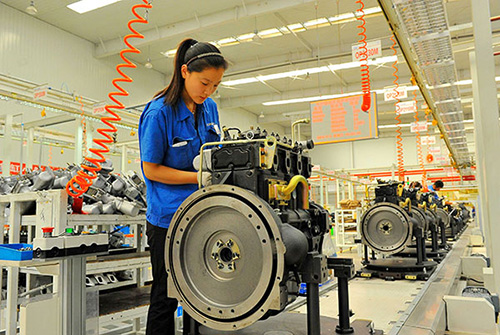
-- Low energy efficiency. China's industrial structure is yet to be rationalized and the economic growth pattern to be improved. Energy consumption per unit of GDP is much higher than those of developed countries and some newly industrialized countries. Energy-intensive industries are backward in technology. The percentage of energy consumption by the secondary industries, especially the energy-intensive industrial sectors, is too high in the country's total. The energy consumption of four major energy-intensive industries - steel, non-ferrous metals, chemicals, and building materials - accounts for 40 percent of the national total. Low energy efficiency results in high energy consumption for every unit of GDP.
-- Increasing environmental pressure. Extensive development of fossil energy, particularly coal, has had a serious impact on the eco-environment. Large areas of arable land are taken up for other uses or even spoiled, water resources are seriously polluted, the discharge of carbon dioxide (CO2), sulfur dioxide (SO2), nitrogen oxides (NOx) and toxic heavy metals remains high, and emissions of ozone and particles smaller than 2.5 micrometers (PM2.5) are increasing. For a long time to come, fossil energy will continue to dominate the energy consumption mix, posing a growing challenge for protecting the environment and countering climate change. A more environment-friendly energy mix is urgently needed.
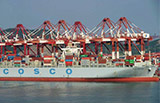
-- Grave challenges to energy security. The country's dependence on foreign energy sources has been increasing in recent years. In particular, the percentage of imported petroleum in the total petroleum consumption has risen from 32 percent at the beginning of the 21st century to the present 57 percent. Marine transportation of petroleum and cross-border pipeline transmission of oil and gas face ever-greater security risks. Price fluctuations in the international energy market make it more difficult to guarantee domestic energy supply. It will not be easy for China to maintain its energy security since its energy reserves are small and its emergency response capability is weak.
-- Reforms called for current systems and mechanisms. Energy-related systems and mechanisms still suffer from some long-term, deep-rooted problems. The energy pricing mechanism is yet to be perfected, and industrial management is still weak. The overall service level needs to be enhanced. Overall, restraints of the current systems and mechanisms have seriously hindered the rational development of the country's energy industry.
The above problems challenging China's energy development are a result of the international energy competition, and China's levels of productivity and development, as well as the country's irrational industrial structure and energy mix, extensive development and utilization of energy resources, and sluggish reform of relevant systems and mechanisms. Therefore, China will vigorously promote the transformation of its energy production and utilization modes, continuously improve its energy policy, and strive to achieve a comprehensive, balanced and sustainable development of its energy, economy, society and eco-environment.


Copyright 1995 - . All rights reserved. The content (including but not limited to text, photo, multimedia information, etc) published in this site belongs to China Daily Information Co (CDIC). Without written authorization from CDIC, such content shall not be republished or used in any form. Note: Browsers with 1024*768 or higher resolution are suggested for this site.
License for publishing multimedia online 0108263 Registration Number: 130349