Beijing Declaration: A path to global peace and prosperity









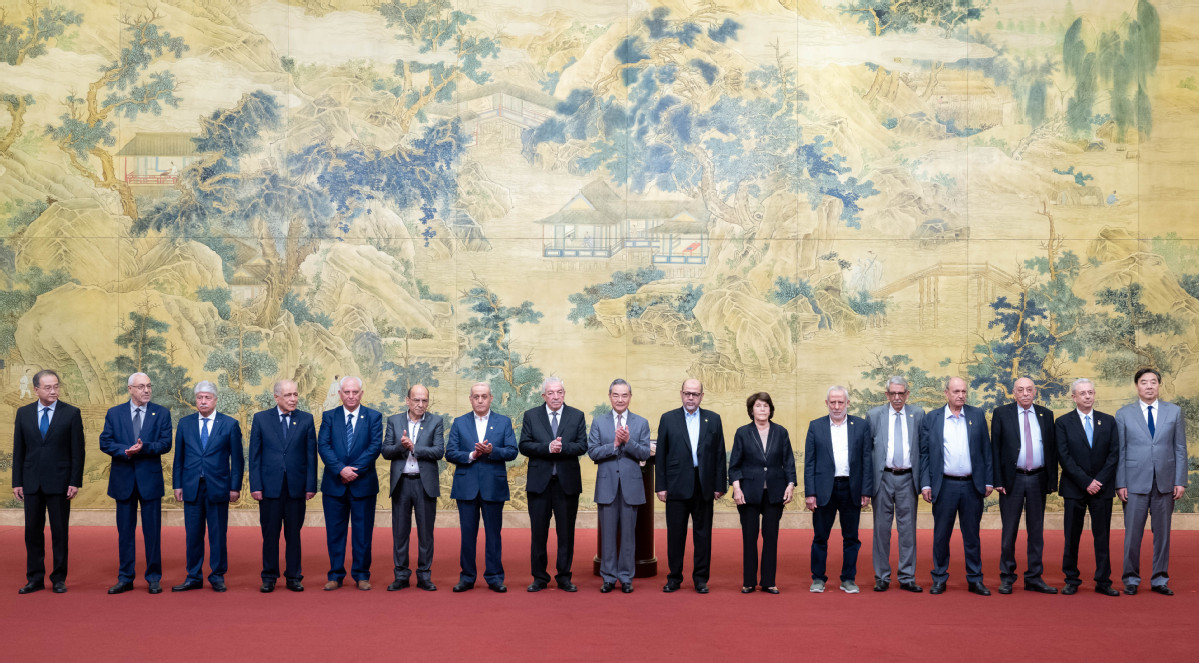
In a landmark achievement for Middle Eastern diplomacy, China has played a pivotal role in facilitating reconciliation among 17 Palestinian factions, culminating in a historic agreement signed in Beijing on July 23, 2024. This reconciliation marks a significant stride towards unity and peace in a region long plagued by conflict and division. China's proactive involvement in this process reflects its broader commitment to fostering harmonious coexistence, global peace, and sustainable development.
The Beijing Declaration, signed by representatives of various Palestinian factions, including the dominant groups Hamas and Fatah, signifies a crucial step towards addressing longstanding divisions within Palestinian politics. This agreement is more than just a political milestone; it embodies a potential template for conflict resolution and reconciliation on a global scale.
The recent reconciliation effort, spearheaded by Chinese Foreign Minister Wang Yi, has garnered widespread acclaim. Wang Yi's remarks underscored the historical importance of this agreement, emphasizing that Palestinian unity is vital for the realization of their national liberation cause. The key outcomes of the Beijing talks include the affirmation of the Palestine Liberation Organization (PLO) as the sole legitimate representative of the Palestinian people and the formation of an interim government focused on post-conflict reconstruction in Gaza.
This reconciliation is a critical development for several reasons. Firstly, it addresses the internal fragmentation of Palestinian politics, which has been a significant barrier to achieving a unified stance in international negotiations. By fostering unity among the factions, the Beijing Declaration enhances the Palestinian voice on the global stage and strengthens their position in pursuing an independent state.
Secondly, the agreement aligns with broader international efforts to resolve the Israeli-Palestinian conflict. The establishment of an interim government and the call for an independent Palestinian state in accordance with UN resolutions reflect a commitment to a two-state solution, a long-standing objective of the international community.
China's involvement in brokering this agreement highlights its growing role as a global mediator and advocate for peace. The success of the Beijing talks builds on China's previous diplomatic achievements, such as its mediation between Saudi Arabia and Iran. These initiatives underscore China's dedication to fostering harmonious coexistence and addressing global challenges through diplomacy and dialogue.
Chinese Foreign Minister Wang Yi emphasized that China's approach to the Palestinian question is guided by principles of fairness and justice, without pursuing selfish interests. This stance has earned China praise from various quarters, including Palestinian factions and international observers. The reconciliation talks, hosted in Beijing, were described as a milestone for Palestinian internal unity and a significant diplomatic victory for China.
The Beijing Declaration represents a win-win situation, where all parties involved benefit from a more unified and stable Palestinian governance structure. For China, it solidifies its position as a key player in Middle Eastern diplomacy and reinforces its commitment to global peace and stability.
The success of the Beijing reconciliation talks aligns with broader goals of harmonious coexistence and sustainable development. By facilitating dialogue and cooperation among Palestinian factions, China has demonstrated that even deeply entrenched conflicts can be addressed through concerted efforts and mutual understanding.
The formation of an interim government and the focus on post-war reconstruction in Gaza are essential steps towards rebuilding and developing the region. This approach not only addresses immediate needs but also lays the groundwork for long-term stability and prosperity. The emphasis on achieving a ceasefire and promoting reconstruction aligns with global aspirations for sustainable development and peace.
Moreover, the Beijing Declaration reflects a commitment to global dignity and justice. By supporting Palestinian reconciliation and advocating for an independent state, China is contributing to the broader goal of establishing a world order based on respect for national sovereignty and human rights.
China's role in Palestinian reconciliation has significant implications for global peace and stability, highlighting its growing influence and responsible global leadership. This effort aligns with China's broader strategy to foster peace through initiatives like the Belt and Road Initiative and active participation in international organizations such as the United Nations.
By promoting peace talks and reconciliation, China contributes to a more stable and peaceful global environment, embodying the concept of building a community with a shared future for mankind. The principles of fairness, justice, and mutual respect that China advocates are crucial for resolving conflicts and fostering sustainable peace globally. China's promotion of dialogue and understanding serves as a model for addressing other conflicts, helping to create a world where diverse cultures and nations coexist harmoniously.
The Beijing Declaration marks a significant achievement, but challenges remain. The long history of Palestinian factionalism and ongoing conflict in Gaza pose immediate hurdles. Rebuilding Gaza and securing a lasting ceasefire are critical tasks for the interim government. The broader geopolitical context, including the Israeli-Palestinian conflict, requires the support of key stakeholders.
Despite these challenges, the Beijing Declaration offers a framework for progress, with opportunities for the international community, including China, to provide essential support through diplomatic, financial, and humanitarian assistance.
China's successful facilitation of Palestinian reconciliation is a testament to the power of diplomacy in resolving complex global conflicts. The Beijing Declaration represents a significant step towards achieving unity among Palestinian factions, which is crucial for advancing their national aspirations and contributing to regional stability.
This development is not only a triumph for China but also a beacon of hope for global peace and prosperity. It underscores the potential for harmonious coexistence and sustainable development when nations come together to address shared challenges through dialogue and cooperation. As the international community looks to address other conflicts and promote global stability, the Beijing reconciliation talks serve as a valuable example of how collective efforts can pave the way for a more peaceful and prosperous world.
By fostering unity and promoting peace, China is contributing to the creation of a world where all nations can coexist harmoniously, enjoying the benefits of peace, prosperity, dignity, and sustainable development. This vision of a shared future for mankind is one that the international community should strive to realize, building on the successes of initiatives like the Beijing Declaration.
Qaiser Nawab is the President of the Belt and Road Initiative for Sustainable Development (BRISD) and an international Expert on the United Nations' Sustainable Development Goals. The views don't necessarily reflect those of China Daily.
If you have a specific expertise, or would like to share your thought about our stories, then send us your writings at opinion@chinadaily.com.cn, and comment@chinadaily.com.cn.