|
|
Robin Li, chief executive officer of Baidu Inc, speaks while Tencent's CEO Pony Ma listens during a recent IT summit in Shenzhen, Guangdong province. [Chen Yihang/For China Daily] |
Once a collection of fishing enclaves next door to Hong Kong, Shenzhen has become the epicenter of China's manufacturing-driven miracle. It is staking its future growth on finance, technology and culture.
The metropolis teeming with millions of migrant workers is home to some of China's biggest and hottest companies. Many are led by a new wave of young Chinese entrepreneurs hoping to build global brand recognition.
Divided from Hong Kong by a river, Shenzhen has been the preferred laboratory for experiments by China's leaders since reformist Deng Xiaoping designated the tranquil area as the country's first "special economic zone" in 1979.
Now a sprawling megacity of 11 million people, its fortunes were made churning out cheap clothes, electronics and toys for big foreign brands. But low cost manufacturers like Apple supplier Foxconn have been moving inland or out of China as labor costs increased. Now the focus is on higher value-added, homegrown technology.
Innovative new companies are drawn by Shenzhen's well-established manufacturing supply chains and transport links, proximity to Hong Kong's banking and financial expertise, and better traffic, milder weather and less air pollution than Beijing and Shanghai.
"Shenzhen is becoming the new frontier for technology because it has the infrastructure for whoever wants to turn their ideas into products," said Eric Pan, founder of Seeed Technology, a contract manufacturer for "makers" - tinkerers, hackers and inventors.
Pan quit a job at Intel in Beijing and moved to Shenzhen seven years ago. He helped foster the city's "maker faire" movement, festivals that celebrate arts, crafts, engineering and open-source technology that have been spreading around the world over the past decade. Shenzhen's event last year drew 190,000 people.
"People rush over to Shenzhen. They are young, they are reckless and they shape the city. I think that's the fundamental difference from other cities in China," Pan said.
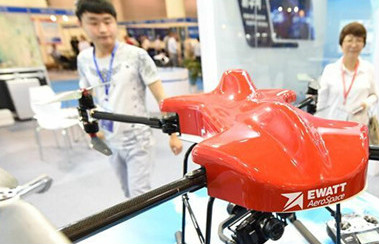
Established tech giants such as telecom gear makers Huawei and ZTE and internet company Tencent call Shenzhen home. So do rising stars like DJI Technology Co., the world's No. 1 supplier of civilian drones, inspiring local rivals such as Xenosky and Flypro. BGI, the world's biggest gene research center, and Kuangchi Science, the main investor in New Zealand jetpack maker Martin Aircraft, are also based here.
Emerging industries such as information technology, biotech, green energy and new materials now account for about 40 percent of Shenzhen's economic output, Mayor Xu Qin said last month, according to State media. He gave no specific figures.
"For us, everything is made here in Shenzhen or in the surrounding areas. All your suppliers are here, all your spare parts are here. It just made natural sense to start here," said Carl Pei, the 26-year-old co-founder of Android smartphone maker OnePlus. The three-year-old company scored a surprise hit with its first device, the OnePlus One, selling more than 1 million units in a marketing campaign that relied on social media buzz.
At OnePlus, the vibe is definitely more Silicon Valley than southern China, as staff glide around on skateboards and tend to the office dog. The company gets 80 percent of its sales, all online, outside of China and is expanding in Europe, India and the United States.
Shenzhen's economy expanded at an 8.9 percent pace last year, while nationwide growth slowed to a 25-year low of 6.9 percent. Per capita GDP has risen to 158,000 yuan ($24,334), on a par with Portugal. Meanwhile, growth in Hong Kong slowed to 2.4 percent.
Christopher Balding, an economics professor at Peking University's Shenzhen-based graduate HSBC School of Business, says Shenzhen's business environment is more open to hardworking newcomers than those of other Chinese cities where state-owned industries dominate and vested interests mean that success often depends more on government connections, or "guanxi."
"Competition is one of the things that really sets Shenzhen apart," Balding said. If China's leaders can replicate Shenzhen's innovation and competition-focused economic model nationwide, it would indirectly have an "enormous impact" on the world economy, he said.
"It's a relatively safe bet that in 10 years the tech sector in Shenzhen will be continuing to grow and thrive and kind of be the Chinese Silicon Valley," Balding said.
During a visit early last year, Premier Li Keqiang stopped in at China's first virtual bank and checked out a "maker space" for hobbyist inventors and entrepreneurs tinkering on prototypes, seeking to promote businesses relying on finance and innovation that Beijing is nurturing as the State-dominated economy matures.
Hoping to woo and nurture top talent, the city government earmarked 4.4 billion yuan ($676 million) to hire foreign experts such as scientists and academics to facilitate innovation and entrepreneurship.
The challenge is in how to refashion the city as a modern, desirable place to live and work, the kind of place highly educated, well-paid white collar workers, including those from overseas, will want to call home.
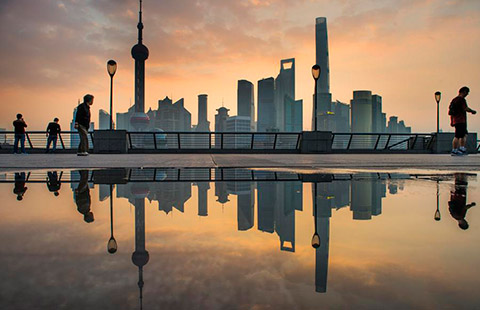
Shenzhen shares many of the same trappings of growing wealth seen in other big Chinese cities, including Shanghai and Hong Kong. Its 599-meter (1,965-foot) Ping An International Finance Center is the world's fourth-tallest, and China's second-tallest, skyscraper. Britain's Victoria and Albert Museum is collaborating with State-owned China Merchants Group on a design museum set to open next year.


Copyright 1995 - . All rights reserved. The content (including but not limited to text, photo, multimedia information, etc) published in this site belongs to China Daily Information Co (CDIC). Without written authorization from CDIC, such content shall not be republished or used in any form. Note: Browsers with 1024*768 or higher resolution are suggested for this site.
License for publishing multimedia online 0108263 Registration Number: 130349