No worries, the saving obsession will soon end
By Mark Hughes (China Daily)
Updated: 2012-11-14 07:41
 Comments()
  Print
Print  Mail
Mail  Large Medium Small
Domestic consumption. Two grim words that to those unfamiliar with the business pages sound like something a waif-like English lady died from prematurely in the 18th century.
The initiated know, though, that most policymakers regard them as highly relevant to China's economy. The prevailing wisdom is that the Chinese people need to boost, preferably, although not exclusively, their purchases of Chinese goods and services to better balance the books.
As everyone knows, the Chinese are great savers, spurred on by a long history of hardship.
Their nest eggs were all that kept them from an unfriendly encounter with the Grim Reaper. The Americans, on the other hand, are prolific spenders, going too far the other way, often using credit, as they bought beyond their means, contributing significantly to the 2008 global financial crisis.
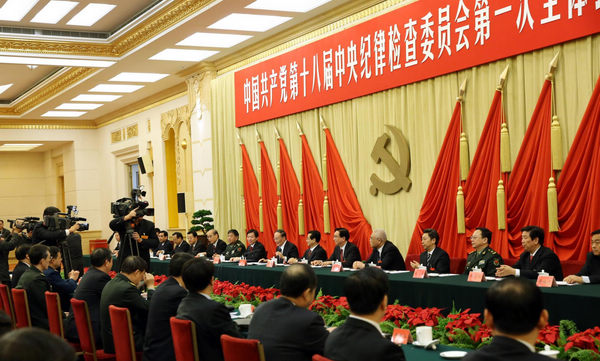
As delegates gather in Beijing for the 18th National Congress of the Communist Party of China and discuss the nation's future, the subject of domestic consumption, and how to raise it, will undoubtedly come up.
Now, while I go about my daily business, I see crowded restaurants, heaving shopping malls and packed buses and subway trains in Beijing, a scene replicated in many of China's cities.
There's clearly already a lot of domestic consumption going on, certainly in urban areas.
It's worth remembering, and I am grateful to my colleagues over at Xinhua News Agency for collating the following statistics, that the Chinese are increasingly wealthy. The per capita annual disposable income of urban households soared to 19,109 yuan ($3,060) in 2011 from 2,027 yuan in 1992 while the per capita net income of rural residents rose to 5,919 yuan from 784 yuan. According to a World Bank report, China will become a middle income country by 2020. At that time its consumer worth will be spectacular.
In the meantime, development in central and western areas will bring economic growth. Manufacturers have been relocating factories from coastal China to less expensive interior provinces, thereby increasing the economic strength of those regions. The savings give them an advantage over rivals globally.
Increasing urbanization will also have a positive effect. Last year, China's urban population exceeded its rural population for the first time ever. City dwellers now account for 51.27 percent of the country's 1.347 billion people. By 2030, there will be 300 million more people living in China's cities, with 15 million to 20 million rural inhabitants moving to them every year, according to a forecast by the Organization for Economic Cooperation and Development.
These factors will encourage investment as infrastructure is improved in central and western areas. Moreover, the rising gap between rich and poor will almost certainly have to be addressed to maintain social harmony and fairness. I therefore suspect we will see more central government money being plowed back into society.
Chinese people's tendency to save was born out of necessity. In a changed world, that necessity may no longer exist.
Predicting future demographics is fraught with difficulties and is never 100 percent accurate. But trends, past policy statements and the sheer obvious are there for all of us to see.
Most Chinese happily embraced the reforms brought in by Deng Xiaoping in the late 1970s. They made many people rich and much more free.
It seems clear to this foreigner that domestic consumption will increase dramatically. It just needs time.
But there is one fly in the ointment that China's new leadership must address before it can rest easy on this issue: property prices. To mix my metaphors, those struggling on the bottom rung of the property ladder, or not even on it, must be shown a light at the end of the tunnel.
Mark Hughes is executive business editor of China Daily's Business Weekly. He can be contacted at markhughes@chinadaily.com.cn.

Top News
A new generation of leaders
Xi's address to the media
World welcomes China's leadership change
Video