Time to 'get down to business'
By CHEN WEIHUA in New York (China Daily)
Updated: 2012-11-15 03:59
 Comments()
  Print
Print  Mail
Mail  Large Medium Small
Charlene Barshefsky, the chief US trade negotiator during talks in the lead-up to China's entry into the World Trade Organization in 2001, said she believes the Asian nation could maintain its past impressive growth trajectory through further economic liberalization.
Barshefsky said she had envisioned this in 2001 but was still surprised by "how quickly China's economy grew, how fast its economy became robust and significant and a growth engine for the world".
"In that respect, the WTO agreement outperformed for China and for countries that trade with China. It has been more successful than we might have anticipated initially," she told China Daily on Tuesday.
Since China's entry to the WTO in December 2001, the country's foreign trade leapt from $508.8 billion in 2001 to $3.64 trillion in 2011, an increase of 715 percent. During this period, China became the world's second-largest economy.
"It would be very important for China to continue economic liberalization and get back on this more impressive trajectory," she said.
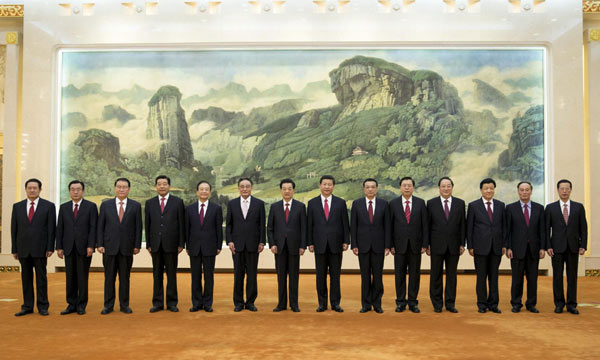
Referring to China's new generation of leaders, she said: "The new leadership is quite sophisticated. They have had the benefit of participating in China's extraordinary growth and understanding the importance of economic reform to China's continued development."
However, Barshefsky, who served as the US trade representative from 1997 to 2001, and is now a partner at the Wilmer Cutler Pickering Hale and Dorr law firm in Washington, said she understands that leadership in China is of a collective nature.
Describing the noisy US presidential election rhetoric on China as "unproductive and unfortunate", Barshefsky is happy that it will now be toned down.
"We will get down to business between the two countries because both recognize that each is quite vital to the other," she said.
Barshefsky said the two countries are doing a pretty good job in effectively managing the relationship. But she believes more needs to be done to build trust.
"We are quite dependent on each other. The key for the US and China is to better understand each other's intentions, whether on the economic side or geopolitical side … The level of conversation between the two countries needs to be more candid and more expansive and forthright than it is probably today," she said.
Barshefsky said she does not believe that a trade war between the two nations is a realistic prospect.
"Neither China nor the US can afford a trade war. It's too expensive for both sides and destabilizing for many other countries," she said.
But she said it's normal and natural that as a trading relationship grows, the level of friction intensifies.
"If you have little trade with a country, there is little to fight for. If you have a huge relationship, as we do with China, Canada, Mexico, Japan and many others, frictions always intensify," she said.
She feels hopeful that because of the WTO dispute settlement system, trade frictions will not spill over into other areas of the relationship as they used to.
But Barshefsky is worried that the revaluation of the Chinese currency, the renminbi, might remain a political issue despite evidence to suggest that it is approaching or will soon approach equilibrium.
"Will it remain an issue Congress holds onto? The answer is probably yes," she said, adding that the administration will need to work with Congress to understand where the currency is and what that means, with respect to that equilibrium point.
During the recently concluded presidential campaign, Republican candidate Mitt Romney repeatedly vowed to label China a "currency manipulator" on his first day in office, despite the fact that the renminbi has appreciated more than 30 percent since 2005.
Barshefsky said she had envisioned Chinese FDI inflows into the US back in 2001. "There is no question in my mind that China will become an outbound investor," she said.
She said the US welcomes Chinese investment and the two countries should continue to work on a bilateral investment treaty.
US Trade Representative Ron Kirk announced in September that US negotiators are advancing efforts to secure bilateral investment treaties with trading partners such as China and India.
She said it would give US companies in China greater rights, and give greater protection to Chinese companies in the US.
"This is a win-win and should be pursued," said Barshefsky.
Contact the writer at chenweihua@chinadaily.com.cn
Related Stories
Hu calls for global economic liberalization 2011-11-14 19:55
China economy shows positive signs 2012-11-09 09:40
Feeling the Pulse of China Economy 2012-11-09 09:24
China economy shows positive signs, with uncertainties 2012-11-09 00:34
Fitch: China economy will avoid hard landing 2012-10-22 16:11

Top News
Xi emphasizes adherence to CPC Congress spirit
Top legislator urges implementation of congress spirit
Moderately prosperous China brings chances to world
Video