Education improves for migrants' children
Huang Xiaoru is happy. She won a painting award in a competition and has gone to several events organized by her primary school.
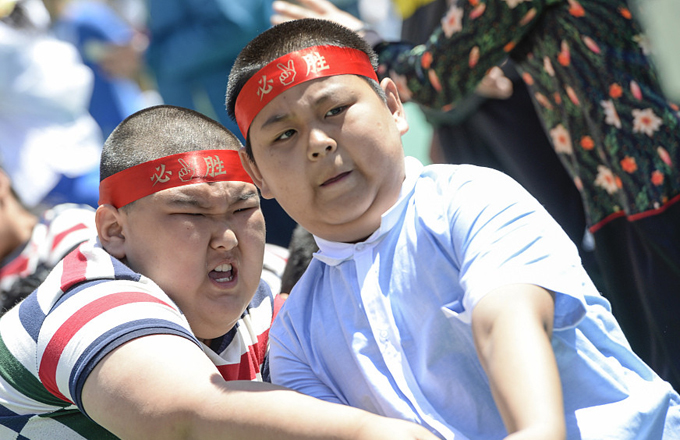
The 8-year-old and her younger brother attend Wanxiu Primary School in Nanning, Guangxi Zhuang autonomous region, after migrating with their parents several years ago from a rural area.
"Our class has 54 pupils, 44 of whom are children like Huang," said Chen Jinling, head teacher of Huang's class.
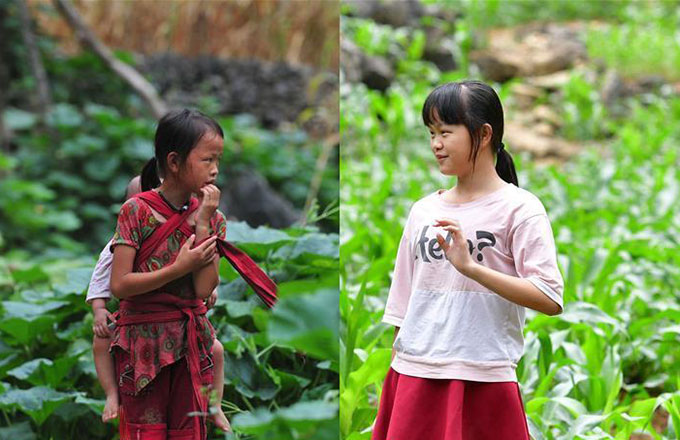
Instead of leaving children behind in their home villages to be cared for by aging grandparents, more Chinese migrant workers are taking them along to cities, where they can find better care and education.
China has around 14 million children who live with migrant parents in cities, and 9 million "left-behind" children who remain in rural areas.
In recent years, the Chinese government has urged public schools to simplify their qualification requirements and recruit as many children of migrant workers as possible to ensure the children get an education.
However, because of limited capacity, public schools in cities cannot absorb all the children of migrant workers.
"Ten years ago when we brought our eldest daughter here, she could not enter a public school, as we only had a rural household registration," said Tang Haiyan, a female migrant worker in Nanning.
Things are easier now: Tang's second daughter attends a public primary school in the city.
"Parents who have the right documents for residency and work are able to enroll their children," said Lei Youheng, headmaster of a primary school in Nanning.
The central government has allocated an urban-rural compulsory education fund that will benefit millions of children of migrant workers in cities. They will get free textbooks and exemptions from school fees. Living subsidies will be offered to boarding students whose families have financial difficulty.
However, gaps still remain. Cities trying to control population growth have pushed policies based on factors such as parents' jobs, educational background and property ownership, according to Qin Hongyu, a researcher at the 21st Century Education Research Institute, a nonprofit organization.
"The score indexes are favorable for advantaged groups but unfair to rural migrant workers' children in getting equal access to education," he said.
Zhang Mei, a university researcher who has lived in Beijing for nearly 20 years, said: "When the supply is not increased, newcomers and grassroots locals have to compete for education resources."
Tan Ping, 16, is not interested in continuing at a public school in Beijing. He wants to find a job to support the family.
His father and mother are migrant workers. His mother has a kidney illness, and his two younger brothers rely on social aid to attend a private school.
Like Tan, many children of migrant workers lack a comfortable environment to continue learning after school, usually living with their parents and siblings in shabby, crowded houses, a factor leading to poor academic results.
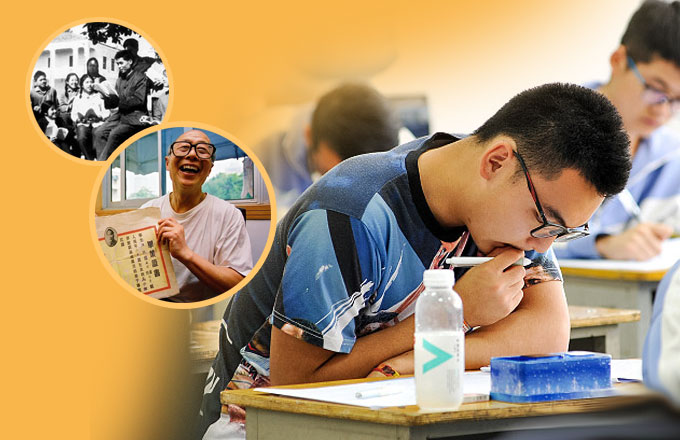
A university survey tracking 1,866 students in 50 junior middle schools for migrant workers' children in Beijing found that only 39 percent of students continued their education into senior middle school and only 6 percent entered a university.
A sense of isolation is another challenge. The circles of friends of such children are often other migrant workers.
"Policy barriers can be removed overnight, but psychological gaps will take two to three generations to overcome," said Li Tao, founder of a Beijing-based organization devoted to improving the lives of migrant workers and their children.
Xinhua