Permanently Restless


Acquisitive banker or stumbling bar-hopper, Hong Kong's expatriates come and go leaving barely a trace-at least, that's the stereotype. But while enjoying the good life Hong Kong affords, some long-term residents are leaving their mark on the city, Jon Lowe discovers.
For the expat, Hong Kong is a land of opportunity. Foreigners who are lucky to live here tend to lead a charmed existence. The harsher realities of life elsewhere-privation, freezing winters, crime, even aging-can easily be ignored. The city enables them to live it up far from the often downbeat conditions of the West and be a "big fish in a small pond". But are expats just itinerant scions of privilege whose most pressing concern is whether their friends "back home" will forgive their effrontery in employing a maid? Generous corporate employment contracts-usually three-year "expat packages"-do attract such people. Yet the city's charms-low tax rate, amazing transport system, common law, Westernized and generally healthy environment, and location next to exotic tourist destinations-ensure some expats decline to return to uncertain fortunes in their own countries. Having parked up here long ago, they feel more at home than they would, well, at home.
Taking care of business
Pianist Allen Youngblood arrived 25 years ago for a three-month stint at the now-closed JJ's nightclub in the Grand Hyatt. Back in the United States he had been working in publicly funded arts programs and had won two fellowships. He was a little dubious about disrupting his schedule even for a few months. Nevertheless, the pull of adventure won out.
"Hong Kong was very vibrant when I arrived. Meanwhile in the States it kept going down-a lot of music clubs were closing, and then they started cutting the arts programs. So I decided to stay. You stay some place long enough, things happen." As music director of Hong Kong's Foreign Correspondents' Club, Youngblood keeps abreast of world a*airs, and winces as he adds, "And now this latest president, he's cutting the whole (arts funding) thing, and it'll never come back."
Long-term expats have seen decades of change-shifting sovereignty, financial crashes, outlandish epidemics, even the odd crime wave. Yet they stay. Some are so ingrained it's easy to forget they're expats-like Manu Melwani, owner of the renowned Sam's Tailor. "My father brought us to Hong Kong from India in 1948 and started the tailor business. I helped manage the shop from a young age, because in the old days people would tell their children, 'Come and help us after school!'"
There's little chance Melwani would think of leaving; he's an optimist. "Hong Kong is always getting better. The British-the Scottish-taught us a very easy business way: You buy fish from Aberdeen and sell them to market in Causeway Bay."
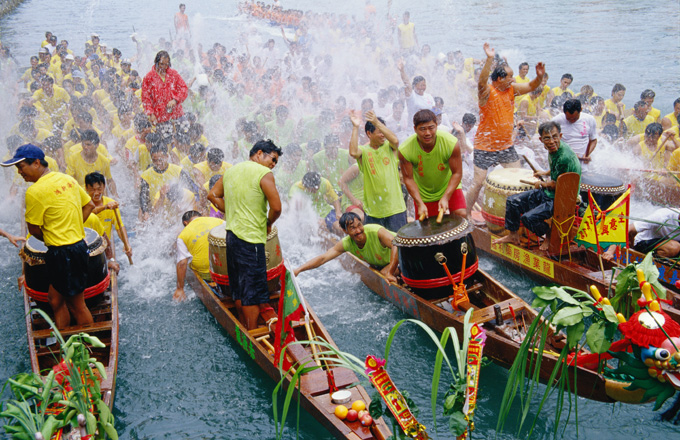
This uncomplicated business milieu is a big plus for most expats, including public relations maven Lynn Grebstad. "Hong Kong people just get on with it. They make the money, get to the bank, eat well, enjoy their friends and family, and celebrate the dragon dance."
Despite differences in lifestyle between Chinese and expatriates, she feels multiculturalism thrives because of tolerant attitudes. "In Wan Chai, where I work, I see the underbelly of Hong Kong in the mornings and in the evenings. I like it. It's not squeaky clean, it's dirty and a bit sordid, but it's there and no one bats an eyelid. People don't resent each other. I like to go boozing; my Chinese friends don't. We like a lot of different things, and we all complement each other. It's that live and let live attitude of Hong Kong that makes it work."
For long-term expats, the handover was the time to affirm their faith. Praising Hong Kong's "unique vitality", charity doyenne Sally Begbie recalls, "We wondered how life would be after 1997, like everybody. But looking back, the amazing thing is not so much what has changed as what hasn't." Perhaps heeding the doomsayers, many chose to leave before June 30, 1997. For the rest, they celebrated-literally in the case of events organizer Andrew Bull, who threw a huge all-night party called Unity on June 28, 1997 at Hong Kong International Trade and Exhibition Centre.
"Hong Kong has of course changed over the last 20 years, but you'd probably notice the difference by not living in Hong Kong more than if you lived here. It's like seeing someone's kids after three years: You're shocked at the growth, whereas if you live with them every day you don't notice it quite as much. But the most important changes are the psychological and non-physical," Bull muses.
Despite the restlessness that landed many of them here, long-term expats cherish Hong Kong's stability and avoidance of social divisions plaguing other places. Nevertheless, Youngblood sounds a cautious note. "Hong Kong is going through a tricky period, with the moves to strengthen the influence of Shenzhen and other places. Some people here are not helping themselves with their attitude to mainland people. You see the tourism going down, because people can just go to Japan and shop instead."
Making a difference
If local politics is a distant concern for many expats, civic matters are never far away. While overwhelmingly enthusiastic about Hong Kong, some see sluggishness in areas of the city's development. "I wish the bureaucracy of the government was not so overpowering, because it affects people's lives more than anything else," Grebstad says. She cites the Wan Chai Sports Ground as a missed opportunity. "In Singapore they have Live Nation. Here they have trouble bringing in big names like Coldplay because there's no stadium for them to play in, because of noise. Singapore's getting a lot of things right-they have an edge because the government is behind them."
Bull likewise diagnoses a slight case of cultural myopia and also raises the specter of Singapore, where entertainment brands such as Zouk have thrived. "Hong Kong today doesn't have anything remotely similar. If there was some element of the leadership that had some clue about hospitality, culture, and its role in human happiness, then that might be passed down into the system so relevant organs such as the licensing authorities instinctively knew it was their job to foster this vital element of human life in this community."
Begbie, meanwhile, has only praise for the attitude of the authorities-and Hong Kong in general-in assisting her charity Crossroads Foundation. "The government has steadfastly made sure we've had an operations base throughout all this time (at a former army barracks in Gold Coast at the present time), which we couldn't have afforded any other way. Thousands of businesses and the community have donated product, services, expertise, money, and volunteered. We couldn't possibly have done it without all those people alongside us on the journey-it's been amazing."
Tailor Melwani also has no complaints about Hong Kong, except perhaps one. "The youngsters are difficult to find. All the professional tailors are getting older and retiring. They have children and grandchildren but a lot are not interested, so they just have to give up," he rues. Ever the optimist, he adds, "There is a good future in tailoring, because a lot of people want custom-made clothes."
The long-term expats of 2037 or 2047 will likely include quite a few stragglers from the French army that has invaded Hong Kong over the last decade or so. The numbers are not yet reflected by official figures (see table), but the French Chamber of Commerce & Industry in Hong Kong estimates a French community of at least 25,000. Many apprentice with big companies or work in food and beverage, while Gallic entrepreneurs are also attracted to "Asia's World City".
Delphine Lefay, co-founder of pop-up fashion store On The List, envisions a long-term future here. "Hong Kong's really attractive for its dynamism: Everyone is open and easy to meet," she says. Echoing the thoughts of many expats on Hong Kong versus the "old country", with droll understatement she adds, "Everything in Hong Kong is easy-administration, transport, etc-whereas in France you need a little bit more patience..."