BEIJING -- As China's new leaders take the helm this week, they will inherit a job as challenging as it is enviable.
They will steer an economy that is the world's second largest and that has grown at a rate craved by most developed nations. It has neither the deep-running debt woes of Europe nor the troubling fiscal headache of the United States.
But risks abound. China's potential growth rate is declining, as some economists have observed and officials have acknowledged themselves. Decades of breakneck growth have produced unwanted side effects such as severe pollution and alarming inequality.
Labor shortages, a slowdown in exports as well as lower returns on capital and investment will all drag down China's future growth, according to economists.
Louis Kuijs, chief China economist at the Royal Bank of Scotland, estimated that China's potential growth is now around 8.5 percent and will moderate to around 7 percent in 2020.
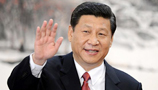
Communist Party of China chief Xi Jinping, who was elected Chinese president on Thursday at the ongoing parliamentary session, acknowledged the country's growth is coming down while joining national legislators from Shanghai to discuss the government work report last week.
China's economy has "entered a period of single-digit growth after a relatively long period of double-digit growth," he said.
To fully tap the growth potential, the new leaders are expected to instigate the broad changes to China's economy that their predecessors advocated for years but were unable to fully accomplish -- remaking the economy so it relies more on domestic demand, innovation and efficiency.
LOST EDGES
"China's competitive edge in the past three decades was mainly built on low costs, especially the cheap labor of rural migrant workers," said Zhang Yansheng, a researcher with the National Development and Reform Commission (NDRC).
Some fear that edge will not sustain as China's working-age population dropped in 2012, the first decline in "a considerable period of time," as the country's top statistics official Ma Jiantang put it.
"The working-age population is shrinking and this problem will get worse in the coming years," said Wang Tongsan, an economist with the Chinese Academy of Social Sciences, a government think-tank. "We're at an inflection point in terms of labor supply."
Vast labor flow from China's rural inland to factories in booming coastal cities has contributed to fast expansion in exports, which account for about a quarter of the country's GDP.
With China already having become the world's biggest exporter, there is limited room for further increase in its share of the global market, especially after the 2008 global financial crisis, analysts have noted. A rising yuan also hurts China's export advantage.
"A substantial secular decline in the contribution of exports to growth" is one of the most prominent structural challenges China has to deal with, according to Arthur R. Kroeber, nonresident senior fellow at the Brookings-Tsinghua Center for Public Policy.
Another challenge is the rapid increase in credit fuelled by the government's 2009-2010 stimulus program, which "almost certainly led to a substantial reduction of the return on capital, " Kroeber wrote in a paper published last year.
Over the past decade, China's economic growth also largely relied on enormous investment in manufacturing sectors, infrastructure construction and real estate. But as skyrocketing property prices triggered public complaints, the government imposed tough curbs on demand.
Moreover, the kind of stimulus package that it is believed injected as much as four trillion yuan into infrastructure and social welfare in 2009-2010 will not be seen again for the coming years, analysts have said.

Copyright 1995 - . All rights reserved. The content (including but not limited to text, photo, multimedia information, etc) published in this site belongs to China Daily Information Co (CDIC). Without written authorization from CDIC, such content shall not be republished or used in any form. Note: Browsers with 1024*768 or higher resolution are suggested for this site.
License for publishing multimedia online 0108263 Registration Number: 130349