|
VI. Protecting Citizens' Rights of Freedom of Religious Belief
Since ancient times, Xinjiang has always been a region with a number of religions existing side by side. The major religions in Xinjiang today are Islam, Buddhism, Christianity, Catholicism and Daoism. The Chinese government enacts a policy of freedom of religious belief, which the government of Xinjiang Uyghur Autonomous Region has thoroughly implemented. It protects citizens' rights of freedom of religious belief in accordance with the law, safeguards the legitimate rights and interests of religious circles, and promotes healthy and orderly development of religion.
Freedom of religious belief is a basic right bestowed by the PRC Constitution on all its citizens. It is stipulated in the Constitution as follows: "Citizens of the People's Republic of China enjoy freedom of religious belief. No state organ, public organization or individual may compel citizens to believe in, or not to believe in, any religion; nor may they discriminate against citizens who believe in, or do not believe in, any religion. The state protects normal religious activities." In addition, the State Council promulgated "Regulations on Religious Affairs," which stipulates: "Citizens enjoy freedom of religious belief. No organization or individual may compel citizens to believe in, or not to believe in, any religion; nor may they discriminate against citizens who believe in any religion or citizens who do not believe in any religion. Citizens who believe in religions and those who don't shall respect each other and coexist in harmony, as shall citizens who believe in different religions." Other relevant laws and regulations have specific provisions on the protection of citizens' freedom of religious belief. The state emphasizes that all citizens are equal before the law; that the citizens have the freedom to believe in, or not to believe in, any religion; that the citizens enjoy the rights of freedom of religious belief and at the same time must carry out corresponding responsibilities; that anyone who violates others' rights of freedom of religious belief shall bear the legal liability; and that both religious citizens and nonreligious citizens shall bear the same legal liability for breaking the law.
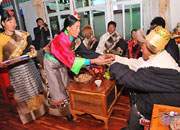
In Xinjiang, people of all ethnic groups fully enjoy the right of freedom in religious belief. The people's freedom to believe in, or not to believe in, any religion is protected by the law, and no state organ, public organization or individual may interfere with their choice. By the end of 2008, the autonomous region had 24,800 venues for religious activities, including mosques, churches and temples, in addition to over 29,000 clerical personnel, 91 religious organizations and two religious colleges. Since the 1980s, more than 50,000 people from Xinjiang have made pilgrimages to Mecca in Saudi Arabia. In recent years, the number of people from Xinjiang who make the pilgrimage each year has been around 2,700. By 2008, over 1,800 religious personages in Xinjiang had been elected to posts in people's congresses and committees of the Chinese People's Political Consultative Conference at all levels. They have actively participated in deliberation and administration of state affairs on behalf of religious believers, and in exercising supervision over the government in respect to the implementation of the policy of freedom of religious belief.
The state and the government of the Xinjiang Uyghur Autonomous Region administer religious affairs and protect the legal rights and interests of believers, religious organizations and venues for religious activities in accordance with the laws. The State Council promulgated the "Regulations on Religious Affairs." The Standing Committee of the People's Congress of Xinjiang Uyghur Autonomous Region formulated and promulgated the "Regulations for the Administration of Religious Affairs in the Xinjiang Uyghur Autonomous Region." The government of the autonomous region formulated the "Provisional Regulations for the Administration of Religious Activity Venues in the Xinjiang Uyghur Autonomous Region," "Provisional Regulations for the Administration of Clergy in the Xinjiang Uyghur Autonomous Region" and "Provisional Regulations for the Administration of Religious Activities in the Xinjiang Uyghur Autonomous Region." These regulations further clarify that the citizens enjoy the right of freedom in religious belief, and the country protects normal religious activities, as well as the legal rights and interests of believers, religious organizations and venues for religious activities in accordance with the law; that believers, religious organizations and venues for religious activities should abide by the Constitution and related laws and regulations, and safeguard national unification, ethnic unity and social stability; that no organization or individual may make use of religion to engage in activities that disrupt public order, impair the health of citizens or interfere with the state educational system, or in activities that harm state and public interests, as well as citizens' legal rights and interests; and that no one should use religion to interfere in the performing of administrative and judicial functions by the state.
According to corresponding laws and regulations, the autonomous region protects all normal religious activities held either at venues for religious activities or in believers' own homes in accordance with customary religious practices, such as worshipping Buddha, reciting scriptures, burning incense, worshipping, praying, preaching, attending Mass, being baptized or ordained, celebrating religious festivals, observing extreme unction, and holding memorial ceremonies, which are all protected by law as the affairs of religious bodies or believers themselves and may not be interfered with. However, the autonomous region shall ban, in accordance with the law, activities that make use of religion to intervene in the performing of administrative and judicial functions of the state, as well as education, marriage or civil lawsuits.
Religious affairs are developing in a normal and orderly manner in Xinjiang. Religious classics and books and magazines have been published, including the Koran, Selections from Al-Sahih Muhammad Ibn-Ismail al-Bukhari, Koran with Annotations and Selected Works of Waez, in Uyghur, Han, Kazak and Kirgiz languages, as well as the New Collection of Waez's Speeches series and the magazine China's Muslims in Uyghur and Han languages, the later with a circulation of over one million. Large numbers of mosques in Xinjiang have been designated as key cultural relics sites under the protection of the state, the autonomous region and the various counties. In 1999, the central government allocated 7.6 million yuan for the reconstruction of the Yanghang Mosque in Urumqi, the Baytulla Mosque in Yining and the Jamae Mosque in Hotan. The government has also, on several occasions, allocated special funds for the maintenance and repair of the Idkah Mosque in Kashi and Tomb of the Fragrant Imperial Concubine (Apak Hoja Mazzar), and Sulayman's Minaret in Turpan. In 2008 alone, 33 million yuan was allocated by the state for the maintenance and repair of Idkah Mosque and the Tomb of the Fragrant Imperial Concubine.
Now, most people of Xinjiang's 10 major ethnic minority groups, with a total population of over 11.3 million, believe in Islam. The number of Islamic mosques has soared from 2,000 in the early days of the reform and opening-up drive to 24,300 now, and the body of clergy from 3,000 to over 28,000. Since its founding, the Xinjiang Islamic Institute gives lessons in Uyghur and other minority languages and has trained 489 Imams, Hatips or other teachers for religious schools in the autonomous region. It currently has 161 students. From 2001 to 2008, the Xinjiang Islamic School trained more than 20,000 clerics. In addition, 3,133 Talips were trained by religious personages, in Islamic schools and classes operated by Islamic associations in the various prefectures and prefecture-level cities. Among them, 1,518 have graduated and 803 taken up clerical posts. In an attempt to cultivate high-caliber clerical personnel of Islam, since 2001, the regional government has sent 47 clerics for training in colleges and universities in Egypt and Pakistan.
Historically, the region witnessed many conflicts between different religions and between different sects of the same religion. In the mid-10th century, the Islamic Karahan Kingdom waged a religious war against the Buddhist kingdom of Yutian, lasting for more than 40 years. During the Ming and Qing dynasties, religious battles continued for several hundred years within Islamic circles. These wars between and within religions seriously jeopardized the unity between different religions and between different sects, as well as general social harmony and stability. Since the founding of the PRC, the implementation of the policy of freedom in religious belief and administration of religious affairs in accordance with the law have promoted peace and harmony between different religions in Xinjiang, as well as mutual respect and understanding between religious and non-religious citizens and between citizens believing in different religions. There have been no modern conflicts or clashes caused by differences in religion or religious sect.
|