中國網站品牌欄目(頻道)
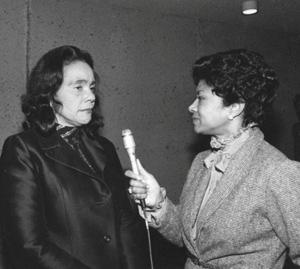
Through the first half of the 20th century, as television became a fixture in US homes, the reporters Americans saw on TV were white, and almost all men. That began to change in the 1960s. African-American Belva Davis was at the forefront of that shift.
(Sound)
For thousands of TV viewers in the San Francisco Bay Area, Belva Davis is a trusted, familiar face on the evening news. But, she recalls, while she was growing up, there were rarely black faces on TV.
"When I was a kid at home, we used to yell, 'Come look, come look. There's a colored man on television.' And the whole family would stop and we'd come to get a little glimpse of whoever that person of color was." says Davis. "Well, my goodness, if you did that now, you'd be exhausted by the end of the day."
Early years
Davis is one of the reasons American television now reflects the racial and ethnic diversity of the country. She grew up in a dirt poor family in Louisiana in the 1930s, a place and a time in which segregation and discrimination were rampant.
Things weren't much different when her family moved west, when Davis was still in school.
"We arrived in California expecting milk and honey, was not at all so." she recalls. "Just being disliked by so many people who didn't like our accents, didn't like our names, just didn't like very much about us because we were so different."
Challenging times
Davis began her career writing for Jet, a black magazine, before moving on to radio. She remembers the early years as pretty tough.
"All my experience, the majority of it was working in totally segregated media. I could only work at stations that were programmed especially for black people. I could only write for newspapers that were published for a black audience. And no one else would give me even a decent (job) interview for many years."
But Belva Davis persevered. She was among the first to break the color barrier when she was hired by a San Francisco TV station in 1967. As the first woman of color in the newsroom, Davis was seen as an oddball and many of her colleagues thought she would only last two weeks on the job.
At that time, Davis says, society at large wasn't ready for a black female TV reporter. She recalls encountering hostility and skepticism.
Breaking in
"I was working, doing the City Hall beat, and I wasn't allowed in the press room. I couldn't even put a telephone in the press room. And when I was asked to leave news conferences, because they'd say 'This is for reporters.' No one could believe that I was a reporter." she says. "Or a couple of times in hotels, being mistaken for the ironing person or the cleaning person. Those were all parts of growing in the business."
(Sound)

Determined to prove the skeptics wrong, Davis worked long hours and eventually reported on some of the most explosive stories in the headlines; the Vietnam war protests, the Al Qaeda bombings in Africa that preceded 9/11 and the assassinations of San Francisco Mayor George Moscone and gay activist Harvey Milk.
(Sound)
In addition to the headline news, Davis sought out stories that would otherwise go untold. In the 70s and 80s, she was among the first in the nation to report on breast cancer, dyslexia and the mysterious new disease that was killing gay men - AIDS.
"The very first live interview with someone diagnosed with AIDS was a guy named Bobbi Campbell. When he arrived, our technicians didn't understand the disease and it moved so swift and was killing so fast, that there was a lot of hysteria around it. So we had Bobbi in and they refused to make it, and they didn't want him to touch any of the equipment." she says.

"It was one of those real demonstrations of women power. They got together and decided that the medical reporter would put the mic on him and the producer would go ahead and crank it up upstairs and we recorded that program and it made history of a sort," she says, "and were rewarded greatly by the fact that some lives were saved because of those early stories."
(Sound)
Today, Davis is still telling important stories. Now in her 70s, she remains active in journalism as host of a weekly current affairs show on public television.
Off the air, she continues to promote the hiring of minorities in the media, and serves as a role model for young journalists who will tell the important stories of the future.
dyslexia: a slight disorder of the brain that causes difficulty in reading and spelling, for example, but does not affect intelligence 誦讀困難
Michelle Obama calls young Africans to action
Bessie Coleman, 1892-1926: she dared to dream and became the first African American female pilot
Shirley Chisholm, 1924-2005: the first black woman elected to the US congress
Sam Cooke, 1931-1964: a singer who crossed racial lines
(來源:VOA 編輯:崔旭燕)
 |
 |
 |
 |
 |
 |


 主站蜘蛛池模板:
国产肉体ⅹxxx137大胆|
日韩精品一区二区大桥未久|
中文字幕乱码人妻综合二区三区|
亚洲精品成人久久久|
欧美一级片在线观看|
无码日韩精品一区二区三区免费
|
亚洲高潮喷水无码AV电影|
亚洲av无码专区在线观看成人|
久章草在线毛片视频播放|
麻豆久久五月国产综合|
久久亚洲精品天天综合网|
99在线国内在线视频22|
国产精品国产三级国产试看|
成 人免费va视频|
国产尤物av尤物在线观看|
九九热在线精品视频首页|
亚洲av日韩av永久无码电影|
你懂的一区二区福利视频|
日本三级理论久久人妻电影|
久久波多野结衣av|
国产性生大片免费观看性|
日韩在线视频线观看一区|
国产L精品国产亚洲区在线观看
|
欧美日韩在线第一页免费观看|
欧美高清一区三区在线专区|
中文字幕无码不卡免费视频|
久久无码精品一一区二区三区|
国产影片AV级毛片特别刺激
|
亚洲精品熟女一区二区|
国产精品极品美女免费观看|
日韩中文字幕精品人妻|
无码无套少妇毛多18p|
久视频久免费视频久免费|
综合色区亚洲熟女妇p|
日韩伦理片一区二区三区|
人人妻久久人人澡人人爽人人精品|
国产精品老熟女乱一区二区
|
亚洲AV美女在线播放啊|
久久精品国产视频在热|
亚洲欧美日韩综合一区在线|
日韩精品中文字幕有码|
主站蜘蛛池模板:
国产肉体ⅹxxx137大胆|
日韩精品一区二区大桥未久|
中文字幕乱码人妻综合二区三区|
亚洲精品成人久久久|
欧美一级片在线观看|
无码日韩精品一区二区三区免费
|
亚洲高潮喷水无码AV电影|
亚洲av无码专区在线观看成人|
久章草在线毛片视频播放|
麻豆久久五月国产综合|
久久亚洲精品天天综合网|
99在线国内在线视频22|
国产精品国产三级国产试看|
成 人免费va视频|
国产尤物av尤物在线观看|
九九热在线精品视频首页|
亚洲av日韩av永久无码电影|
你懂的一区二区福利视频|
日本三级理论久久人妻电影|
久久波多野结衣av|
国产性生大片免费观看性|
日韩在线视频线观看一区|
国产L精品国产亚洲区在线观看
|
欧美日韩在线第一页免费观看|
欧美高清一区三区在线专区|
中文字幕无码不卡免费视频|
久久无码精品一一区二区三区|
国产影片AV级毛片特别刺激
|
亚洲精品熟女一区二区|
国产精品极品美女免费观看|
日韩中文字幕精品人妻|
无码无套少妇毛多18p|
久视频久免费视频久免费|
综合色区亚洲熟女妇p|
日韩伦理片一区二区三区|
人人妻久久人人澡人人爽人人精品|
国产精品老熟女乱一区二区
|
亚洲AV美女在线播放啊|
久久精品国产视频在热|
亚洲欧美日韩综合一区在线|
日韩精品中文字幕有码|