
中國網站品牌欄目(頻道)

BARBARA KLEIN: I'm Barbara Klein.
MARIO RITTER: And I'm Mario Ritter with EXPLORATIONS in VOA Special English. Today, we learn about the environmental and agricultural importance of bat populations. And, we visit the "Cod Academy," a training program for fishers in the American state of Maine.
(MUSIC)
BARBARA KLEIN: The United Nations has declared 2011 to 2012 the Year of the Bat. The campaign was launched last year as a way to strengthen efforts for protecting the world's only flying mammal.
These creatures can be found in many parts of the world. Bats live in cities, deserts, grasslands and forests. There are over 1,200 bat species.
MARIO RITTER: The smallest bat in the world is from Southeast Asia. The Bumblebee bat measures about 30 millimeters in length. The world's largest bat, the Giant Golden-Crowned Flying Fox, has a wingspan of 1.5 meters. Most bats eat insects, but many feed on fruit or nectar from flowers.
Many people think bats are blind, but this is not true. Many species have very good sight. Most bats communicate and find their way by making "echolocation" noises. They produce high-frequency noises and can estimate the distance of an object by using the sound echoes that bounce back to them. So, while bats may travel in total darkness, they "see" using sound.
BARBARA KLEIN: Sadly, bats are widely feared and misunderstood. Most bats come out of their shelters only at nightfall. Three bat species feed on blood. Because of these qualities, bats have long been linked in many cultures to death, darkness and vampires.
Yet bats are important for agriculture and our environment. They help pollinate plants and spread seeds. They also help control insects. Bats eat huge numbers of insects, including kinds that damage crops.
MARIO RITTER: For example, a brown bat can eat more than 1,000 insects the size of a mosquito in one hour. One report says bats save American farmers billions of dollars every year by reducing crop damage and limiting the need for chemicals that kill insects. The report was published earlier this year in Science magazine.
Bats have also proved useful in the medical industry. Some bats carry a substance in their saliva that has been manufactured and used in medicine to help stroke victims.
BARBARA KLEIN: Over one-fifth of all bat species are under threat. They face disease and the human destruction of their natural environments. In the eastern United States, a disease called white-nose syndrome has greatly damaged bat populations over the past five years. The organization Bat Conservation International says white-nose syndrome has killed more than a million bats since it was discovered in a New York cave in 2006. In some areas, the disease has killed nearly 100 percent of bat populations.
White-nose syndrome has now spread to at least 19 other states and parts of Canada. The name of the disease comes from a white fungus found on the faces and wings of infected bats. The disease causes the creatures to awaken more often during hibernation, the period when they normally rest. Infected bats leave their shelters during winter and can freeze to death. Or they may use up stored body fat and starve to death.
MARIO RITTER: Leslie Sturges is doing what she can to save bats. She is the director of Bat World NOVA, a bat protection group in the Washington, DC area. She cares for injured bats in the basement of her home. Then she releases them back into the wild.
LESLIE STURGES: "You hear a lot of people refer to bats as filthy. But they aren't. They groom like cats and dogs do. They use these toes back here to actually comb their fur coat out."
MARIO RITTER: Ms. Sturges also talks about the importance of bats during visits to schools and nature centers. Her goal is to support their protection by bringing attention to the good things that bats provide to people and the environment.
She and her assistant are caring for about 30 injured, sick or orphaned bats this summer.
BARBARA KLEIN: When the bats are healthy, she moves them to a closed off area next to her home so they can learn once more how to fly.
One of her bats is named Shaggy. She plans to release him, but first wants to make sure he eats well. When the sun sets, she sets him free. But he does not want to leave just yet.
LESLIE STURGES: "So I think what I am going to do is put him back in and let him nap for an hour and I am going to try and release him later tonight. Because he has to go. He can't live here."
BARBARA KLEIN: Ms. Sturges says Shaggy has a good chance of survival because red bats are common in the area.
(MUSIC)
MARIO RITTER: Several fishermen in Maine recently completed a study program at the country's first ever "Cod Academy." The Maine Aquaculture Association directs the program. It trains fishermen who usually earn a living fishing in the ocean to be fish farmers. The program is aimed at helping commercial fishers to find a new way to carry out their trade.
(SOUND)
On a recent morning, a fishing boat left the dock in the seaside community of Sorrento, Maine. But the men on the boat were not going fishing ... they were going farming.
SEBASTIAN BELLE: "Today we're probably going to be moving cages and sorting codfish so the students will get experience doing that".
BARBARA KLEIN: That was Sebastian Belle. He is head of the Maine Aquaculture Association. It operates the new "Cod Academy" in partnership with the University of Maine and other organizations.
About 1.5 kilometers out to sea, the boat finds eight circular pens. A rubber tube encloses each one. The pens are covered with netting material to keep out seabirds. Inside each of the 50-meter wide areas are up to 50,000 cod. Most of these fish will be served on dinner tables around the world.
MARIO RITTER: This is the only commercial cod farm in Maine. The operator is Great Bay Aquaculture, a fish-farming company. It is one of the partners in the Cod Academy.
Mr. Belle says that during a year, students are taught everything they need to know about operating a floating farm.
SEBASTIAN BELLE: "One of the things we've been teaching the students is how to feed the fish and not overfeed the fish. So you want to give them enough feed, and not waste any feed and make it as efficient as possible."
MARIO RITTER: The fish-farmers in training take turns throwing special fish food into the pen.
(SOUND)
Air bubbles appear as thousands of cod come up to feed. They can be seen from the boat with an underwater camera.
BARBARA KLEIN: Bill Thompson is one of the Cod Academy's four students. He says the program has showed him that aquaculture, or fish-farming, is a wise choice.
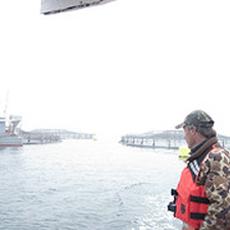
BILL THOMPSON SR: "Even if the wild stocks came back to their fullest capacity they still wouldn't feed the world. So this is the way of the future. And it's feasible for a family to run a business also."
BARBARA KLEIN: That is why Mr. Thompson's son is also a student at the academy. Thirty-nine year old Bill Thompson Junior has been a working fisherman for much of his life. He earns a living diving for urchins and fishing for lobster. But he notes that he has a wife and four children to support, so it was time for a change.
BILL THOMPSON JR: "Well I've seen a depletion of the source of everything I have been harvesting over the years. I look into the future, I can't see my kids set up in what I'm doing right now as far as, you know, lobstering, urchining. I don't want to see them get a source that's depleting every year."
MARIO RITTER: Becoming a fish-farmer has its own financial risks. Sebastian Belle says students need to develop a business plan before they can graduate. They will be expected to raise about half of the money they would need for any farm they want to create. Mr. Belle says the "Cod Academy" is based on successful programs started in Japan and Norway more than 30 years ago. Those programs were created to retrain fishers who once caught tuna and herring.
SEBASTIAN BELLE: "It's never been done before in America and we're trying to see if it's a model that has some potential.
MARIO RITTER: Mr. Belle says he hopes the program will help people in Maine realize the huge promise that cod farming holds. He admits aquaculture has its critics. Critics say that crowding fish together in a farm can spread disease and produce unhealthy fish.
But Mr. Belle says Maine's fish farmers have learned from those mistakes. And he says state inspectors make sure that fish farms obey environmental rules.
The first students of the "Cod Academy" graduated this month. They are now permitted to seek financial aid from the Maine Aquaculture Association to start their own cod-farms.
(MUSIC)
BARBARA KLEIN: This program was written and produced by Dana Demange, with reporting by Tom Porter and Jeff Swicord. I'm Barbara Klein.
MARIO RITTER: And I'm Mario Ritter. You can find our programs online with transcripts, MP3s, podcasts and pictures at voaspecialenglish.com. Join us again next week for EXPLORATIONS in VOA Special English.
echolocation: a process for determining the location of objects by emitting sound waves and analyzing the waves reflected back to the sender by the object 回波定位
codfish: 鱈魚
urchin: 海膽
herring: 鯡(又稱青魚)
Fish farms may soon supply more than half the world's catch
(來源:VOA 編輯:崔旭燕)
 |
 |
 |
 |
 |
 |


 主站蜘蛛池模板:
99热在线免费观看|
日韩国产精品无码一区二区三区
|
日本在线观看视频一区二区三区|
四虎国产精品成人免费久久|
国产精品无码无卡在线播放|
热久久美女精品天天吊色|
久久69国产精品久久69软件|
四虎亚洲一区二区三区|
亚洲av成人一区在线|
亚洲色欲色欲www成人网|
亚洲国产日韩伦中文字幕|
久久久久人妻精品一区三寸|
波多野结衣久久一区二区|
精品成人免费自拍视频|
亚洲欧美不卡高清在线|
无码日韩做暖暖大全免费不卡|
国产精品成人网址在线观看|
国内不卡不区二区三区|
日韩精品少妇无码受不了|
久久精品国产99亚洲精品|
亚洲国产日本韩国欧美MV|
国内揄拍国内精品对久久|
国产区成人精品视频|
亚洲超碰97无码中文字幕|
国产999久久高清免费观看|
97se亚洲综合自在线|
伊人久久精品无码麻豆一区|
大香伊蕉在人线国产免费|
1000部拍拍拍18勿入免费视频|
麻豆成人传媒一区二区|
午夜毛片精彩毛片|
亚洲日韩精品伊甸|
日夜啪啪一区二区三区|
伊人精品无码AV一区二区三区
|
国产999久久高清免费观看|
少妇被无套内谢免费看|
中文字幕av无码免费一区|
av网站可以直接看的|
亚洲中文久久久精品无码|
亚洲av无码一区二区三区人|
东京热一精品无码av|
主站蜘蛛池模板:
99热在线免费观看|
日韩国产精品无码一区二区三区
|
日本在线观看视频一区二区三区|
四虎国产精品成人免费久久|
国产精品无码无卡在线播放|
热久久美女精品天天吊色|
久久69国产精品久久69软件|
四虎亚洲一区二区三区|
亚洲av成人一区在线|
亚洲色欲色欲www成人网|
亚洲国产日韩伦中文字幕|
久久久久人妻精品一区三寸|
波多野结衣久久一区二区|
精品成人免费自拍视频|
亚洲欧美不卡高清在线|
无码日韩做暖暖大全免费不卡|
国产精品成人网址在线观看|
国内不卡不区二区三区|
日韩精品少妇无码受不了|
久久精品国产99亚洲精品|
亚洲国产日本韩国欧美MV|
国内揄拍国内精品对久久|
国产区成人精品视频|
亚洲超碰97无码中文字幕|
国产999久久高清免费观看|
97se亚洲综合自在线|
伊人久久精品无码麻豆一区|
大香伊蕉在人线国产免费|
1000部拍拍拍18勿入免费视频|
麻豆成人传媒一区二区|
午夜毛片精彩毛片|
亚洲日韩精品伊甸|
日夜啪啪一区二区三区|
伊人精品无码AV一区二区三区
|
国产999久久高清免费观看|
少妇被无套内谢免费看|
中文字幕av无码免费一区|
av网站可以直接看的|
亚洲中文久久久精品无码|
亚洲av无码一区二区三区人|
东京热一精品无码av|