Regions and cities
Wuwei city
Updated: 2013-11-20( chinadaily.com.cn )
Population: 1,918,300
Area: 33,200 square kilometers
Nationalities: Han, Hui, Mongolian and Tujia
Zip Code: 733000 Area Code: 0935
Administrative Division: one district (Liangzhou district), three towns (Minqin town, Gulang town, Tianzhu town)
Location: Wuwei city is situated in the central part of Gansu province, on the east end of Hexi Corridor. It lies between north latitude 37°23' - 38°12' and east longitude 101°59' - 103°23'
Neighboring Areas: Qinghai province and Inner Mongolia autonomous region
Overview: Wuwei is situated on the east end of the Hexi Corridor in Gansu province. It is an important part of the Silk Road. Wuwei is the birthplace of Chinese wine and the only native home of white yaks in the world. It has witnessed the historical reunification of Tibet and China.
The elevation of Wuwei city is higher in the south and lower in the north. Oases, alpine grasslands and natural water sources interweave with deserts and mountains, forming the city’s complex landform. The city covers an area of 33,200 square kilometers. It has eight rivers, with annual runoff of 1.43 billion cubic meters. It has a typical inland dry climate with 2,200 to 3,030 hours of sunshine annually and 85 to 165 frost-free days. Average annual precipitation is 60 to 610 mm, while average evaporation is 1,400 to 3,040 mm. The average annual temperature is about 7.8 C. A total of 38 ethnic groups, including Han, Hui, Tibetan and Mongolian, inhabit Wuwei.
Physical Features: The hypsography of Wuwei city is higher at south and lower at north, sloping from southwest to northeast. It leans on Qilian Mountain in the south and borders the Tengger Desert in the north. It is also the juncture of Qinghai-Tibet Plateau, Loess Plateau and Mongolian-Xinjiang Plateau.
History: Wuwei has a very long history since there were people living here 5,000 years ago. Emperor Wu of Han Dynasty (206BC - 220AD) sent General Huo Qubing (140 - 117BC) to attack the Hexi Corridor in 121BC After successfully defeating the Huns and seizing the territory by Qilian Mountain, Emperor Wu named Wuwei as a city's name in order to cite the heroic exploits and great contribution of General Huo. During the period of Three Kingdoms, Wu Kingdom set its government here, later, the Former Liang (317 - 376 AD), the Later I.iang (386 - 403 AD), the Southern Liang (397 - 414 AD) and the Northern Liang (401 - 439 AD) and some other dynasties all had their capitals here, therefore, the town of Wuwei got another name 'Liangzhou' .
Resources: Wuwei was once the capital of several dynasties including the former Liang (317 - 376 AD), the Later Liang (386 - 403 AD), the Southern Liang (397 - 414 AD) and the Northern Liang (401 - 439 AD) , as well as a provisional capital of the Western Xia regime (1038-1277). It houses an ancient bronze statue, Matafeiyan (a galloping horse’s hoof stepping on a flying swallow), which has becomes the logo of Chinese tourism. The city has six important units of cultural relics under national protection and more than 540 units of cultural relics under the provincial or municipal level, including the Western Xia Monument and the Tiantishan Grottoes that were created in the Northern Liang Dynasty.
Now Wuwei is home to a collection of more than 47,000 cultural relics, a national nature reserve, two national 4A-level scenic spots and Asia's largest desert reservoir. Wuwei has more than 30 kinds of minerals and over 100 mines. There are proven reserves of 15 minerals in the region. The reserves of ilmenite and graphite are large . The city has 703,000 tons of graphite reserves, 19.87 million tons of gypsum reserves and 429.44 million tons of cement limestone reserves. The coal and limestone reserves are significant in Wuwei. It has enormous wind energy resources.
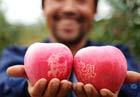
Wuwei is the most competitive production base of natural pollution-free food and high-quality agricultural specialties. It is a desirable planting area for grapes because of its hours of sunshine.. It has gained the reputation of "China's Bordeaux" among experts. The agricultural and sideline products are high quality and numerous. The city has a number of specialty brands, including wine, black melon seeds, white yak products and pollution-free vegetables with local characteristics.
Wuwei borders Lanzhou in the east, Xining in the south, Yinchuan and Hohhot in the north, and the Xinjiang Uyghur autonomous region in the southwest. It enjoyed an extremely important military position in ancient times and has now become a crucial market for business. Wuwei is also the gateway of the Hexi Corridor in the east. The Lanzhou - Urumqi Railway, Gantang - Wuwei Railway and the No 312 national highway run through the city. It is criss-crossed by the No 308 and No 211 provincial expressways as well as other traffic lines.
Economy: Wuwei's economy saw steady and rapid growth in 2011 thanks to guidance from the Scientific Outlook on Development. Accelerating transformation of the development model as well as implementing policies and measures has also helped the economy. The city's GDP totaled 27.28 billion yuan ($4.46 billion) in 2011, up 13.1 percent year-on-year. The primary industry's added a value was 6.7 billion yuan, an increase of 5.3 percent year-on-year. The second industry's added a value was 11.55 billion yuan, an increase of 18.6 percent over the previous year. This amount included the industrial sector added value of 8.1 billion yuan, up 24.3 percent year-on-year. The tertiary industry realized an added value of 9.03 billion yuan, up 12.7 percent over the previous year. Living: The city had a population of 1.82 million by the end of 2011, and average annual disposable income of each resident was 13,261 yuan.
Social undertakings: The city implemented 101 scientific projects, including five at the national level, 20 at the provincial level and 76 at the municipal level. A total of 75 scientific and technological achievements have been authenticated. It has won five provincial awards. There are 133 private technology enterprises in Wuwei. There are 1,091 schools and kindergartens, a decrease of 222 over the previous year.
The number of students in these schools and kindergartens has reached 370,900, which was 10,100 less than the previous year. The city has three art performance troupes, four libraries, 12 historical relics institutions and 93 culture service centers in its townships. It has four radio stations covering 94.25 percent of its population. Its four TV stations cover 96.89 percent of the population. The city has 153 health institutions and 6,514 hospital beds, including 3,664 beds in hospitals at the county level or above.
There are 11,810 practitioners in the health industry, 5,345 of which are clinical physicians (or assistants). Wuwei has won a total of 26 medals, including 10 gold, five silver and 11 bronze medals, in provincial-level (or above) sports events.
News