Two-handed techno-tussle
Technology competition between China and the US is driving the evolution of international relations









Technology is traditionally viewed as being naturally affiliated with the economy and military and its role as a vital variable that influences international relations in its own right is often overlooked. After decades of rapid development, technologies, especially disruptive technologies, have been embedded in every aspect of politics and economic activities, to such an extent that they have restructured the patterns of global technological competition and even spurred substantial changes in international relations.
Currently, the new generation of technologies, exemplified by artificial general intelligence, exhibits the classic "Medici Effect" of innovations that appear when disciplines and ideas intersect. The combination and deep integration of various new technologies, and the technological interactivity that arises are sparking a new wave of international technological competition.
The current technological competition is characterized by high entry barriers, a strong sense of competitive confrontation and the unprecedented strategic importance of industry and value chains.
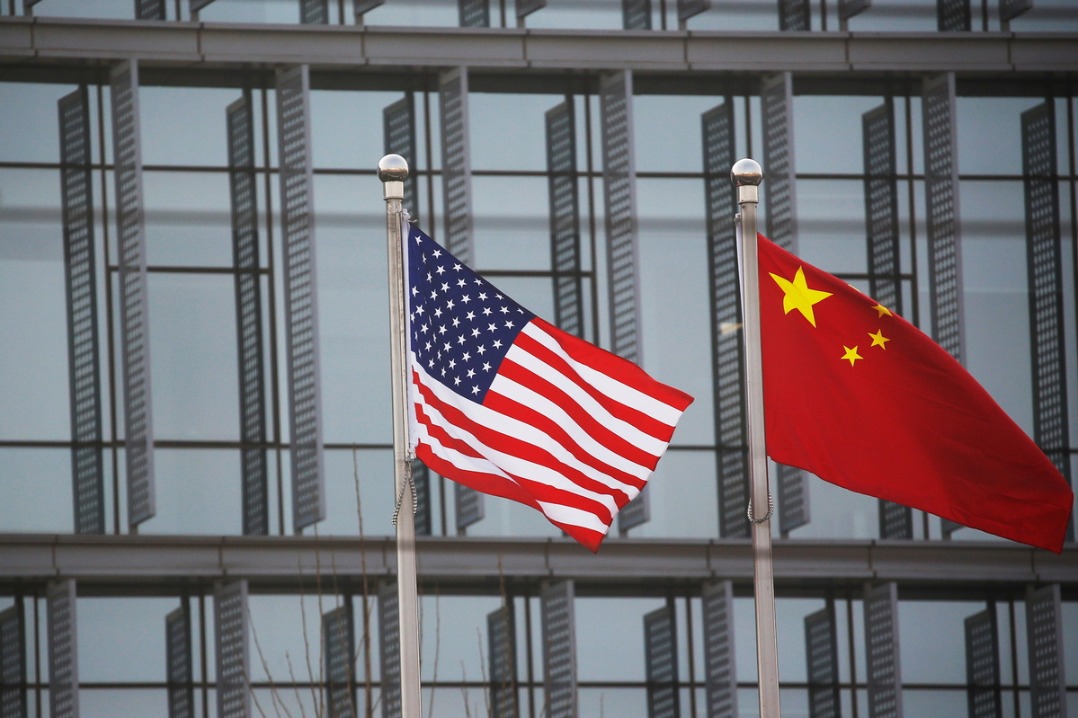
The technological competition among countries is unfolding vigorously, with the US-China technological rivalry the most emblematic. The United States' global hegemony in the early 1990s was the result of its unmatched economic scale and technological superiority. However, the restructuring of global production systems driven by multinational capital and the expansion of global value chains in the process of economic globalization was accompanied by the transfer of technology, and as a result the economic and technological landscape began to shift.
Some developing countries, by actively participating in globalization, have enhanced their production and technological capabilities in many ways, thereby challenging the global economic and technological dominance of the US. As the Center for Security and Emerging Technology analyzes in a report, many believe that Chinese AI publications are increasingly influential. Accordingly, the US has launched purposeful collective actions, and its strategic techno-blueprint against China is now very clear. For instance, former White House chief strategist Steve Bannon warned: "It requires a new American consensus regarding the policies and priorities required to defeat this threat… China's arsenal for global supremacy includes economic, informational, political, and military warfare."
In the technological competition in cutting-edge fields such as artificial intelligence and quantum computing, the US has promised clear government planning and financial support for technologies. Since the Joe Biden administration came to office, the support for developing future emerging strategic industries has increased and the pace has significantly accelerated. On the one hand, a series of policy measures around emerging industries, such as semiconductors, biotechnology and new energy, have been implemented, including the Infrastructure Investment and Jobs Act, the Chips and Science Act of 2022, the National Strategy for Advanced Manufacturing, and the National Biotechnology and Biomanufacturing Initiative. On the other hand, the US' efforts to constrain China's development of frontier technologies never stops. During the Donald Trump administration, the US repeatedly rejected Chinese companies' acquisition applications citing national security reasons, even adding multiple Chinese companies and research institutions to the "Red Flags" list. The Biden administration has doubled down on this by implementing stricter measures in key technology areas, adopting the "small yards with high fences "strategy.
It is clear that the current situation initiated by the US is essentially a game between a technology-leading country and a technology-chasing country, in which the former will pose all-round strategic containment over the latter. Under this circumstance, technology is triggering a series of substantial geopolitical and ideological evolutions and confrontations in international relations.
On the operational level, the US has actively eliminated any hardware or software dependency in the cyberspace sphere, ending the product and technology sharing between the two countries, thereby elevating the competition into a more intense stage. It can be predicted that in the future, the US will continue its competition and confrontation policies in relation to cutting-edge technologies, and will mobilize everything in its toolbox, including legislation, industry, market and allies, to launch a comprehensive technological containment to maintain its hegemony.
Of course, while the development of the new-generation artificial intelligence brings unpredictable risks to the world, it also offers opportunities. The emergence of AI governance as a global issue has endowed AI technology with the additional role of being a "buffer zone" and "testing ground" in the context of US-China relations. Given the interconnections within the global innovation industry, many countries have made valuable attempts to explore models for addressing AI-related risks. This also presents a window of opportunity for cooperation between the US and China. As highlighted in the US-China presidential meeting on Nov 16, 2023, the necessity of addressing the risks of advanced AI systems and enhancing AI safety was a priority of the agenda. As Michael Froman, who heads the Council on Foreign Relations, said in an interview, "they (China) are looking for ways to work with the US and the rest of the world on AI, and potentially there's something there that the US and China could do together".
In the face of such common challenges, the US and China can strengthen their cooperation in technology research and development through resource sharing. This collaboration could even pave the way for the creation of a unified global framework and standardized regulations for AI governance.
Technology is leading, driving, and influencing international political changes with its disruptiveness, iterativeness and eruptiveness. For China and the US, the question is: will their economic interdependence and technological competition produce "peaceful competition" like that between the US and the Soviet Union during the Cold War? Or will it produce a "magnetic field theory "effect in technology and market scope on a global scale?
Yu Nanping is a professor at the School of Politics and International Relations at East China Normal University. Zhang Yiran is a doctoral student at the same school. The authors contributed this article to China Watch, a think tank powered by China Daily. The views do not necessarily reflect those of China Daily.
Contact the editor at editor@chinawatch.cn.