Manila must be warned against horrors of war









In June 1914, the major European powers were forced into a war by the shooting down of Archduke Franz Ferdinand, heir to the throne of Austria-Hungary, in Sarajevo, which was part of the relatively small country of Serbia at the time. The ensuing World War I was one of the darkest moments in history, leaving indelible scars that still haunt many countries across the world.
Exactly 110 years later, another relatively small country, the Philippines, has been making provocative moves and engaging in reckless brinkmanship, in an attempt to draw major powers into a conflict, which will have unprecedented consequences for the Asia-Pacific region.
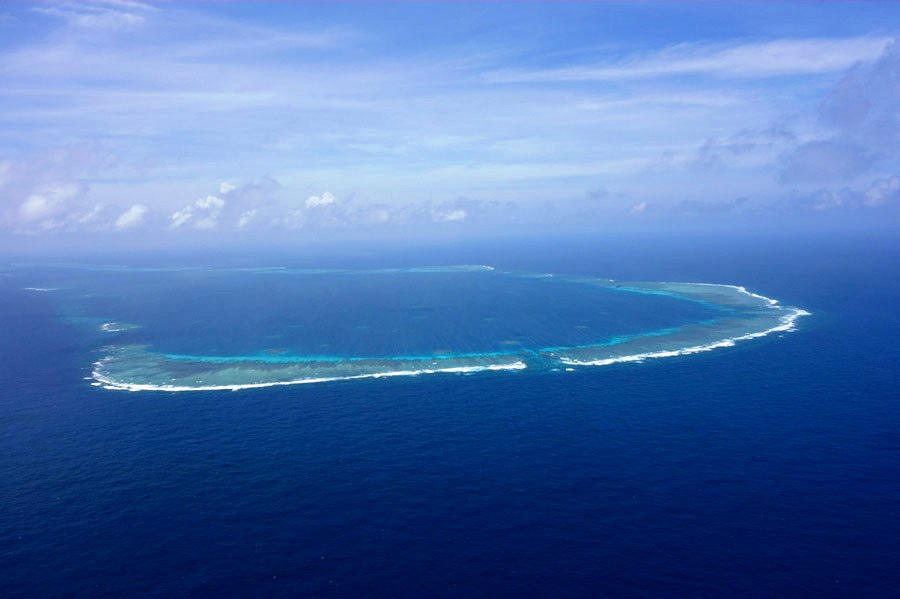
The Philippines’ provocative moves are targeted some islands and reefs in the South China Sea, including Ren’ai Jiao (Reef), Huangyan Dao (Island) and Tiexian Jiao (Reef). For example, Manila’s “abnormal rotation and resupply” to Ren’ai Jiao far exceeds the normal humanitarian supply, encouraging fake fishermen to live on maritime features around Huangyan Dao.
In total violation of the commitment it has made in the Declaration on the Conduct of Parties in the South China Sea on “refraining from action of inhabiting on the presently uninhabited islands, reefs, shoals, cays, and other features”, Manila has organized a large number of personnel to raid Tiexian Jiao.
Although the Philippines has launched several such assaults, there is a common feature to them: they all highlight the military factor, in order to test whether the United States will fulfill the promises it has made in the US-Philippines Mutual Defense Treaty of 1951. To put it simply, the Philippines has been resorting to military aggression, on the pretext of its armed forces being attacked by their Chinese counterparts, in a bid to prompt the US military to intervene in the matter, without bothering that this could spark a confrontation, leading to a war between the two major powers.
On Tuesday, Philippine Secretary of Defense Gilberto Teodoro publicly “consoled” the Philippine soldiers wounded during the Ren’ai Jiao “abnormal resupply” mission and claimed that “the Armed Forces of the Philippines are under attack”. By declaring that these actions and injuries will have “strategic implications”, Manila, it seems, is preparing to play the trick-and-trap game.
On March 21, a Philippine Coast Guard brigadier general led a team to land on Tiexian Jiao and claimed China had launched “helicopter airflow attack” on the Philippines’ maritime features. And on March 5, Manila announced that the commander of the Western Military Region of the Philippines was reportedly “wounded” in a “Chinese water cannon attack” while hiding in the “resupply vessel”.
Apart from selling misery to the international community and blackmailing Beijing, Manila has a lot more dirty tricks up its sleeves, such as claiming its “armed forces (are) under attack” to test the commitment of Washington to intervene on its behalf in any military conflict.
The 1951 US-Philippine security treaty, a remnant of the Cold War era, provides the Philippines with the US’ security umbrella and says that “joint action should be taken against armed attacks”. But the Philippines’ provocative actions targeting China has prompted the US to gradually extend its interpretation from the geographical scope to cover the disputes over the islands and waters in the South China Sea, and the Philippines’ official vessels. As a matter of fact, the US has repeatedly confirmed that it is committed to helping the Philippines in case of a conflict.
Philippine politicians’ flirtation with the US in the hope of gaining the upper hand in the maritime dispute with China is extremely dangerous. The lessons of World War I should be heeded, especially by small states, because triggering a conflict will serve no country’s interest.
As for the US, it will commit a grave mistake if it intervenes in any confrontation between Beijing and Manila. The US has no incentive in backing the Philippines’ in the latter’s illegal, aggressive territorial ambitions. Also, falling into the trap of a regional conflict laid by Manila would be detrimental to the US’ national strategy.
US decision-makers should realize that before Gavrilo Princip fired that fateful shot in Sarajevo, no one had imagined that Europe would be caught in a bloody World War I. They should also realize that the US’ military intervention on behalf of the Philippines would also be disastrous for neighboring countries. The South China Sea has been a sea of peace and cooperation. Thanks to the Association of Southeast Asian Nations and the Regional Comprehensive Economic Partnership, the countries around the South China Sea are seizing the opportunities to advance their economic development, improve the livelihoods of their peoples, and maintain peace in the region.
Only a handful of leaders in the Philippines, ignoring the increasing challenges, such as rising prices, at home, are stirring up the extreme sentiments of the people by feeding them anti-China rhetoric. What they don’t realize is that once the “Sarajevo gunshot” is fired in Asia, the innocent people in East and Southeast Asian countries will become the biggest victims of war.
China follows the principles of peace, development and win-win cooperation. And its exemplary restraint in the face of the Philippines’ brinkmanship has prevented the situation in the South China Sea from spiraling out of hand. Therefore, the international community should persuade the Philippines to stop playing the dangerous game and, instead, return to the path of peace, cooperation and development.
The “Sarajevo gunshot” should not be heard in the 21st century — in Asia or elsewhere.
The author is deputy director of the Institute of Maritime Strategy Studies at the China Institutes of Contemporary International Relations.
The views don’t necessarily reflect those of China Daily.