|
|
President Xi Jinping addresses the opening of the Second World Internet Conference in Wuzhen, Zhejiang province, on Wednesday. WU ZHIYI/CHINA DAILY |
Recently President Xi Jinping made some strong statements that some in the West take to be contradictory. On the one hand, Xi called for "internet sovereignty", so the Chinese government can regulate what its citizens can and cannot access online. On the other hand, Xi asked officials to "trust intellectuals, welcome their criticism and try not to interfere in their creative work".
Exploring the temporal proximity of these two big ideas-which is unlikely a coincidence-may discern the depth of Xi's thinking.
Regarding internet sovereignty, while it feels good to proclaim that the internet should be open and free and without the impedance of international borders or national controls, the world just doesn't work that way. The more deeply the internet becomes enmeshed in the economic and social fabric of contemporary life, the more intensely nations are extending their regulating powers so that the rules of the actual world apply in the virtual world.
The internet is no longer the innocent cyberspace of diverse and outrageous speech, where John Philip Barlow could declare (in 1996), "Governments of the Industrial World, you weary giants of flesh and steel ... You are not welcome among us. You have no sovereignty where we gather."
Today, the internet facilitates massive financial flows and e-commence, on the one hand, and pornography, terrorism and all manner of crimes, on the other. As all these are (and should be) regulated in the physical world, it was inevitable that as they have become more consequential online, they would also become more regulated in the virtual world.
The fact that some nations go further in regulating political dissent or religious diversity is simply a function of the differences among nations in how they regulate the physical world. While one person's "regulation" is another person's "censorship", there is nothing unusual going on here. This is a neutral fact.
I cannot say that, in an ideal world, internet sovereignty, with its restrictions, would be a good thing-but I do know that China's leaders hold the belief that regulating the internet is a good thing for the country, because they believe such regulations will help keep its society stable and thereby maintain a political system which suits China's current conditions and level of development.
Regarding trusting intellectuals, Xi's instructions are obviously meant to alter the status quo. There is something about current conditions of intellectuals that, for the good of China, he wants to improve. But Xi does set boundaries-"when opinions are well meant." By this he means he expects intellectuals to put the country and people first, uphold "the right path" and "not repeat others' words without thinking".
Nonetheless, Xi's emancipating words are vivid and energetic, and because they are expressed in multiple ways, their meaning cannot be missed. Party and government departments, the president said, should trust intellectuals and create a favorable environment, so that they can exercise their talents and develop their careers. Officials should welcome advice and criticism from intellectuals and become their "true friends," he said.
Continuing, Xi advised officials to "take in constructive opinions and be more tolerant and inclusive even though some of them [intellectuals] are biased or incorrect", stressing that intellectuals should not be blamed or punished for expressing their opinions, and urging officials not to "interfere in the creative work of intellectuals so that they can concentrate on their work".
Some Western critics think that Xi was reacting to Western criticism that China is becoming more restrictive. I disagree. I think the motivation lies in China's need for economic transformation and for solving a host of complex, interdependent problems that China's society faces. Because if China's best and brightest feel that they cannot do their best, cannot be creative, cannot criticize-if they feel threatened, if they fear-the whole enterprise will suffer.
Xi has set the bar high: Fulfilling the Chinese dream and achieving national rejuvenation requires reform and reform requires the creative engagement of China's intellectuals. Reform means change; change means doing things differently, and doing things differently means criticizing the way things are done now.
The consistency is clear. To harmonize the temporal proximity of internet sovereignty and trusting intellectuals should be to recognize that maintaining collective political stability and unleashing individual creative power are simultaneously essential as Xi seeks to actualize his grand vision for China.
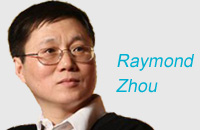
The author is a public intellectual, political/economics commentator, and international corporate strategist.


I’ve lived in China for quite a considerable time including my graduate school years, travelled and worked in a few cities and still choose my destination taking into consideration the density of smog or PM2.5 particulate matter in the region.
Copyright 1995 - . All rights reserved. The content (including but not limited to text, photo, multimedia information, etc) published in this site belongs to China Daily Information Co (CDIC). Without written authorization from CDIC, such content shall not be republished or used in any form. Note: Browsers with 1024*768 or higher resolution are suggested for this site.
License for publishing multimedia online 0108263 Registration Number: 130349