The Nobel Prize for Medicine awarded this week focuses on three dreadful parasitic diseases - elephantiasis, river blindness and malaria - that still ravage mankind, "debilitating diseases that affect hundreds of millions people annually", the Nobel Committee said in its citation.
Parasitic diseases have plagued humankind for millennia and persist as major global health problems, especially for the world's poorest populations, those who can least afford exotic cures.
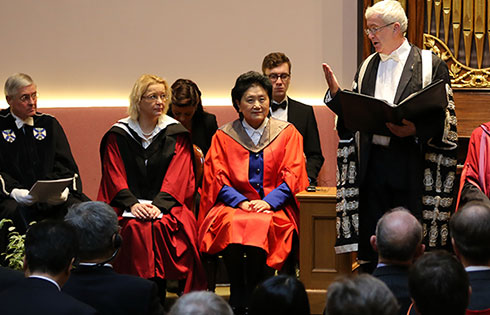
Chinese scientist Tu Youyou was awarded half the prize and the other half went to two scientists who also came up with "powerful new means to combat" these afflictions.
Japanese microbiologist Satoshi Omura focused on a group of bacteria, streptomyces, that live in the soil and were known to produce a plethora of compounds with bacteria-fighting powers. Omura, who has two PhDs in pharmaceutical sciences and chemistry and is professor emeritus at Kitasato University in Japan, was said to carry a plastic bag with him, even when he played golf, to collect soil samples.
He was able to isolate and mass-reproduce literally thousands of bacteria that showed promise fighting parasites, picking the 50 best. Working in the US, William C. Campbell tested Omura's cultures against parasites in animals and purified the most effective into an agent and finally a compound called Ivermectin, which was tested in humans with parasitic infections and effectively killed parasites' eggs. 
As of 2012, more than 200 million people have received Ivermectin, which only needs to be taken once or twice a year, and has become a key part of WHO's strategy to eliminate elephantiasis and river blindness.
Malaria, the target of Tu's research, has affected human survival for as long as anyone knows. It is documented in ancient Greek and Egyptian records dating back to 2,000 BC, and appears in the earliest Chinese writings. The name malaria is derived from Medieval Italian for "bad air," from Roman superstitions that the fever came from the stinking fumes that came off swamps.
Of course we now know that malaria is caused by the single-celled Plasmodium parasite which is transmitted to humans by female Anopheles mosquitoes. The sporozoite form of the parasite nests in the liver, massively reproducing before being released into the bloodstream. There they infect red blood cells, rupturing them in their continued reproduction and releasing new active forms of the parasite that are then sucked up by other mosquitoes and further transferred to other human hosts, continuing the deadly cycle.
The symptoms for humans are violent attacks of shivering, fever, sweating and crippling aches in every joint of the body (something this writer can attest to having once survived a bout of malaria in Kenya).
According to WHO, about 3.4 billion people are at risk of being infected with malaria each year. In 2013 alone, 198 million cases occurred globally, leading to 584,000 deaths. The burden is heaviest in Africa, where about 90 percent of all deaths occur, mainly among children under five years old.
Tu's malaria research is part of a long line of intense research to mitigate the devastating scourge. In 1902, Ronald Ross, a British army surgeon working in India, was awarded the Nobel Prize for discovering that malaria was transmitted by mosquitoes. In 1907, Charles Laveran, a French physician working in Algeria, won the Nobel for identifying the parasites in the red blood cells of malaria patients and going on to show that quinine removed them from the blood. Swiss chemist Paul Herman Mueller won the Nobel in 1948 for discovering that DDT was highly effective in controlling insect populations (although DDT was later found to cause too much collateral damage in the war against mosquitoes).
Despite progress, by the 1960s, however, when Tu was beginning her work, resistant strains of the parasite had evolved and mortality rates from malaria were widespread and on the rise.
Turning to the archives of traditional Chinese medicine, Tu and her team saw that for thousands of years, literally hundreds of the potion recipes prescribed for malaria had one thing in common: Artemesia annua, or sweet wormwood. They tested an extract from the plant and found that it significantly inhibited malaria parasites in rodents, but sporadically, only 12-to-40 percent of the time.
Again turning to the ancients - in this case Jin Dynasty (340 AD) physician Ge Hong - she found that using cold rather than boiling water to extract the "juice" of the leaves resulted in a potion that worked 100 percent of the time in mice and monkeys and led to the discovery of the drug Artemisinin, which, when used in combination with mosquito netting and indoor spraying, has reduced the mortality rate of malaria worldwide by 47 percent between 2000 and 2013, and by 54 percent in Africa in the same time frame.
Both discoveries represent what the Nobel Committee called "a paradigm shift in medicine".
"The global impact of their discoveries and the benefit to mankind is immeasurable," it said.
Contact the writer at chrisdavis@chinadailyusa.com.
Copyright 1995 - . All rights reserved. The content (including but not limited to text, photo, multimedia information, etc) published in this site belongs to China Daily Information Co (CDIC). Without written authorization from CDIC, such content shall not be republished or used in any form. Note: Browsers with 1024*768 or higher resolution are suggested for this site.
License for publishing multimedia online 0108263 Registration Number: 130349