Plug legal loopholes in housing rental market









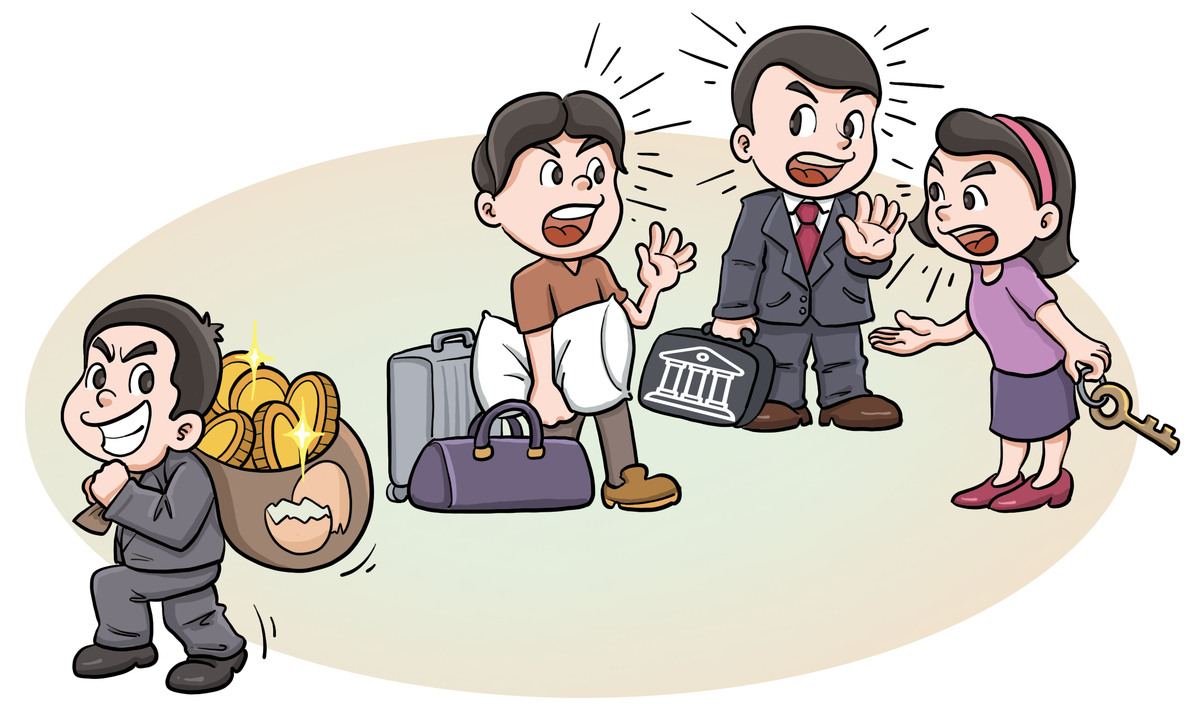
Danke Apartment, one of the country's largest housing rental platforms, has been running short on liquidity and therefore defaulting on rents since September in major cities including Beijing, Shanghai and Hangzhou, leaving its clients-property owners and tenants-jostling with each other.
Danke, owned by New York-listed Phoenix Tree Holdings Ltd, offers "affordable" houses to young people in metropolises through co-living spaces by sourcing apartments from property owners and landlords and then renting them out to tenants.
Enraged by Danke defaulting on payment, many apartment owners are forcing (or have already forced) the tenants to vacate their properties. But since many of the tenants, who have been made to pay months of rent (even a full year's rent) in advance are loath to leave, some landlords are resorting to intimidating tactics such as cutting off water and power supplies or changing the locks of the apartments, leading to more conflicts. Worse, the tenants cannot withdraw the security money they deposited in banks to rent the apartments.
Things should not have come to such a pass had every party in the contract fulfilled its legal obligations. As Danke Apartment signed the lease with tenants after being authorized by the landlords, according to China's General Rules of the Civil Law, the latter are obliged to allow the tenants to live in the houses till the expiry of their contracts. Which means the tenants rather than landlords should get legal protection if the dispute is taken to the court.
The problem is that both the homeowners and tenants are victims of Danke's easy moneymaking business model. But aren't there checks and balances that should have prevented the situation from reaching such a stage?
To begin with, the law applicable to the housing rental market is far from perfect despite the government taking measures in recent years to boost the industry. Since house leasing is a complicated business compared with traditional rental business, and financing and property services, problems will always pop up unless the responsibilities of the three parties in the Danke-style rental business are clearly laid out in a specific law.
Due to the lack of clear legal provisions, if rental agencies or platforms misappropriate the collected funds or use them for other purposes as Danke Apartment has done, both lessees and tenants have to suffer.
To ensure the healthy development of the rental market and better protect the rights and interests of all the parties, the government should enact a specific law for housing rentals that delineates the duties and responsibilities of all those involved. The law should also cover rent management to prevent the infringement of the interests of landlords and tenants.
Second, lease payments, in installments, should be considered as recurring monthly, quarterly, half-yearly or annual debt obligation till the expiry of the lease. Many countries have explicit legal provisions for installment payments, which also cover defaults on recurring payments or arrears. China too has such provisions in the Contract Law and the Civil Code, but it does not have specific regulations for housing lease contracts.
Many of Danke's tenants took bank loans to pay a whole year's rent upfront in order to get some discounts, and repay those loans in monthly installments. But by investing the bulk of the tenants' money in other areas instead of using them to improve its housing rental business, Danke failed to pay the landlords on time.
Even though the case is under investigation and is yet to be taken up by a court, one thing is for sure: if Danke received the rentals from the tenants and still didn't pay the landlords, both the landlords and tenants can file lawsuits in courts.
The case has exposed the loopholes in the legal system as far as the housing rental market is concerned. So if a law is introduced to ensure home rental agencies deposit the rents collected from tenants in a special account supervised by the authorities, such disputes can be prevented.
Danke Apartment raised money from banks on customers' credits to do business and expand its market. But since it had no strategy to prevent or overcome financial risks, it ended up being short on liquidity and causing financial losses to its clients-both tenants and landlords.
It is time the market regulatory authorities intervened in the dispute to protect the tenants' interests in accordance with the Advertisement Law, Law on the Protection of Consumer Rights and Interests, and the Contract Law. And if Danke is found to have deliberately misused the funds or violated other financial regulations, the market regulators should duly penalize it.
The authorities should also strengthen the supervision of the "sharing economy", because consumers couldn't withdraw the security money even when some bike-sharing businesses collapsed as those companies had withdrawn the money and used it for other purposes. Without strict fund management, customers' rights and interests cannot be protected.
There is also a need for clear regulations requiring companies to use their own money or honestly acquired bank loans, rather than payments from new clients, to run their businesses. And housing market regulators and financial watchdogs should learn a lesson from the Danke case and take measures to ensure publicly traded companies do not fool the people through their crafty schemes and cause them financial losses.
The author is a professor at the Law School of Zhongnan University of Economics and Law. The views don't necessarily reflect those of China Daily.