



Biomass energy to provide heat, fuel









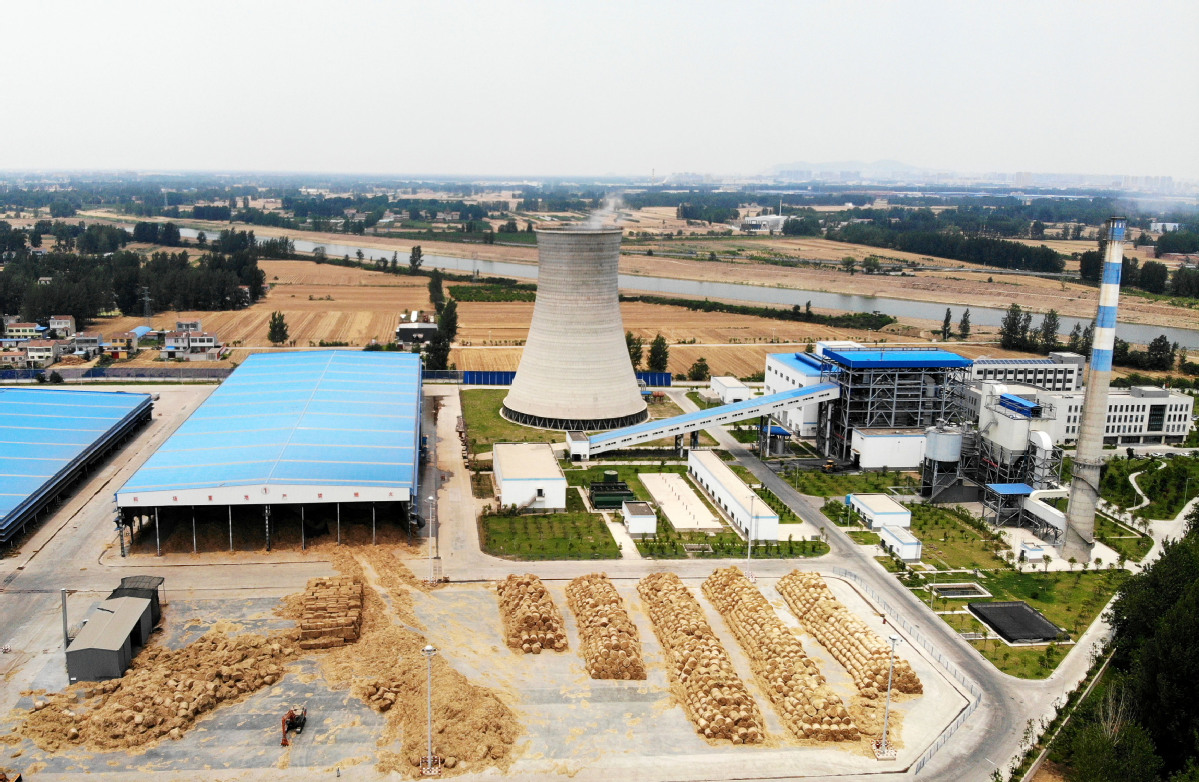
By 2030, the proportion of biomass energy in renewable energy will increase to about 8 percent, according to the report.
"At present, China's development of biomass is still at an early stage but is developing at a fast pace," Zhang said.
Currently, a total of 466 projects have been put into operation or are under construction.
Last year, installed capacity of biomass power generation increased 5.43 million kilowatts to 29.52 million kW.
Biomass power generation reached 132.6 billion kilowatt-hours during the same period, a 19.4 percent increase year-on-year.
"The industry's development faces a lot of challenges. Currently, only about 5 percent of organic waste is processed into bioenergy-electricity and gas generated from biomass," Zhang said.
He explained that there are various reasons behind the relatively low processing rate of bioenergy. "The installed capacity of biomass power generation is very low, at about 30,000 kW on average per project, compared with 600,000 kW to 1 million kW for that of coal power generation, which means that the amount of electricity generated through a certain amount of biomass is far less than the same amount of coal, or other mainstream energy sources.
Lin Boqiang, head of the China Institute for Studies in Energy Policy at Xiamen University, said: "Insufficient collection of raw materials, such as crops, is another problem that hinders the industry's development.
"Sometimes the cost of transport and storage is even higher than the money farmers can get from selling crops, so many would rather burn the crops instead of hauling them to power generation plants.
"It is unlikely that they could sell the crops at higher prices considering current stable electricity prices."
High costs of collecting raw materials and relatively low generation rates of electricity compared with coal and other mainstream energy sources have made government subsidies an important support for the industry's development. However, the subsidies began to phase out in recent years, according to Lin.
Han Xiaoping, chief researcher at industry and energy website china5e.com, said new business models are expected, such as innovation in cooperation between power generation companies and farmers.
"More efforts are needed to improve the transportation, storage and sales networks of raw materials, as well as develop products with high added value and extend the industrial chain," Han said.
In addition to high costs of collecting raw materials and relatively low generation rates of electricity compared with coal and other mainstream energy sources, the development of biomass is also challenged by factors like low added value of biomass electricity generation, electricity generation and sales centered profit models as well as restrictions on bioenergy trading in the electricity market, said Li Yin, chairman of Jiuzhou Electronics.
"More diversified revenue sources of biomass energy aside from electricity generation, such as heating, are called for by government, industry experts and executives," Zhang said.
A recent document by the National Energy Administration called for support from local governments for biomass energy projects, with heating being a priority.
"It is very meaningful to promote biomass for heating especially in counties and rural areas, where there are abundant raw materials like crops and animal waste. Through cogeneration of heat and power from biomass, and biogas production during the process of anaerobic fermentation, heating in those areas will have cleaner sources," Li said.



















