Balance point










In general, Southeast Asian countries' relations with China are stable and progressive
Economic growth in Southeast Asia in 2024 is expected to be between 4.5 percent and 5 percent, signaling the continued recovery and expansion of the region's economy. Notably, countries such as Vietnam, Malaysia and the Philippines are achieving big growth rates. In terms of industrial development, the overall manufacturing sector in Southeast Asian countries is trending positively, and the tourism industry is continuing to recover. The digital economy, in particular, is growing rapidly, with an expected year-on-year increase of 15 percent. The investments in clean energy and electric vehicles are also increasing at a fast pace, potentially bringing new growth points to the regional economy.
Last year, Laos served as the rotating chair of the Association of Southeast Asian Nations, coordinating among member states to reach a broad consensus on the future development of the ASEAN with the theme "ASEAN: Enhancing Connectivity and Resilience". Its efforts included enhancing connectivity through economic integration, jointly creating an inclusive and sustainable future, transitioning toward the digital age, and supporting the ASEAN Community Vision 2024 and ASEAN-advocated strategic plan to strengthen the association's resilience and central role in the region. It is evident that closer regional economic cooperation remains the core agenda for the organization. The success of the series of leaders' meetings on East Asian cooperation in October also marked the support of both regional and external countries for this core agenda, as well as their recognition of ASEAN's central position in regional cooperation.
However, as many international media outlets have noted, ASEAN still faces the challenge of properly addressing regional security hotspot issues. The first is Myanmar. The country's economy has stagnated, and in 2024, it suffered from severe natural disasters and a worsening refugee problem, and its civil war has intensified, drawing widespread attention from both regional and external countries. Although the ASEAN proposed a Five-Point Consensus on the Myanmar crisis in 2021, it has never been accepted by the Myanmar military government, and there are also disagreements among ASEAN members. This has led to doubts about the ASEAN's regional leadership.
Furthermore, the Philippines has not only frequently provoked China on the South China Sea issue at the bilateral level but also attempted to exert pressure on China through the ASEAN platform. In response, the joint statement of the ASEAN Summit noted that the ASEAN had discussed the South China Sea issue, calling for better mutual trust among all parties to show self-restraint, avoid the escalation of disputes and further complicating the situation, and settle disputes through peaceful means, among other things. In practice, ASEAN states and China have continued to advance consultations on a Code of Conduct for the South China Sea, striving to maintain stability in the region.
In 2024, China's relations with Southeast Asian countries remained stable and progressive, with fruitful economic cooperation. Head-of-state diplomacy reached new heights, leading to deeper bilateral relations. According to available statistics, China held multiple head-of-state meetings with most Southeast Asian countries throughout the year. This was partly due to the good bilateral relations, such as mutual visits between China and Indonesia, Vietnam and Malaysia. Indonesian President Prabowo Subianto visited China twice, once before taking office and once shortly after he started his presidency, reaching important consensuses with China on building a community of shared future with regional and global influence. In addition, long-established regional and subregional dialogue mechanisms created favorable conditions and provided convenience for bilateral meetings between leaders of China and Southeast Asian countries. During the series of leaders' meetings on East Asian cooperation in October, Chinese Premier Li Qiang met with the heads of several ASEAN countries and visited Laos and Vietnam. In November, during the Lancang-Mekong Cooperation meeting, leaders from Cambodia, Laos, Myanmar, Thailand and Vietnam gathered in China to attend the event.
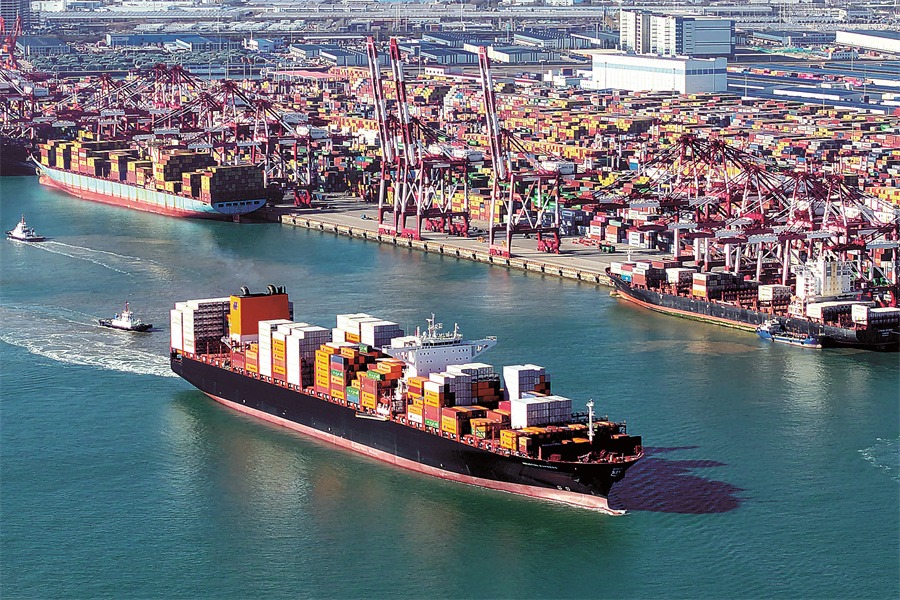
Southeast Asia has always been a priority in China's diplomacy and rich fruits of regional cooperation have been harvested. In 2024, China and Southeast Asian countries achieved new progress in the field of connectivity. The Jakarta-Bandung High-Speed Railway, which officially opened in 2023, has transported over 6 million passengers. The China-Laos Railway has shown strong growth in both passenger and cargo traffic, continuously unleashing its value as a golden corridor. The East Coast Rail Link project in Malaysia is proceeding smoothly, and the China-Laos-Thailand freight train services have officially started. The China-ASEAN Free Trade Area 3.0 upgrade negotiations have been substantially concluded. New quality productive forces such as the digital economy and the green economy are becoming new opportunities for China to explore cooperation with most Southeast Asian countries.
In general, regional economic cooperation remains the greatest consensus between China and ASEAN countries. China and major Southeast Asian countries are forging deep cooperation and a healthy competitive landscape in the new industrial and technological revolution. At the same time, China and ASEAN states can face their maritime disputes squarely, maintain strategic communication through advancing consultation on the Code of Conduct for the South China Sea, and jointly safeguard the peace and stability of the region.
Most Southeast Asian countries are concerned that the Donald Trump administration of the United States might further intensify the comprehensive strategic competition between China and the US, which could make it difficult for them to maintain a balance between China and the US. They also worry that the new US administration might raise tariffs disrupting their economic growth. As a result, these countries are trying to establish contact with the president's team on the one hand, and on the other, they are attempting to diversify their diplomacy to mitigate the impact and risks of the administration's proposed policies.
The year 2024 marked the 70th anniversary of the Five Principles of Peaceful Coexistence, while 2025 commemorates the 70th anniversary of the Bandung Conference and the 75th anniversary of diplomatic relations between China and Indonesia, as well as the 50th anniversary of the establishment of diplomatic relations between China and Thailand and the Philippines. In the face of common challenges, China and Southeast Asian states should jointly promote Asian values centered on peace, cooperation, inclusiveness and integration, and endow the Five Principles of Peaceful Coexistence and the Bandung Spirit with new connotations. Not only should they continue to advance cooperation through the dual-track approach, but also, as more Southeast Asian countries join the G20, they should collaborate on a broader international stage to promote cooperation among the Global South nations, injecting positive energy into regional and global peace and stability.
The author is a researcher at the National Institute of International Strategy at the Chinese Academy of Social Sciences. The author contributed this article to China Watch, a think tank powered by China Daily.
The views do not necessarily reflect those of China Daily.
Contact the editor at editor@chinawatch.cn.