Shared commitment to friendship and progress









In today's fast-changing but complicated global landscape, where alliances often falter due to pressure, the partnership between Cambodia and China has been resolute — a vivid proof of mutual respect, shared aspirations and an unwavering commitment to sovereignty.
As a Cambodian scholar who has observed the country's ascent from post-conflict recovery to a dynamic center offering many opportunities, I view the "action plans for building a Cambodia-China community with a shared future" — first from 2019 to 2023, and then from 2024 to 2028 — not merely as a diplomatic accord but also as the cornerstone of Cambodia's development.
Sino-Cambodian collaboration is based on mutual respect for sovereignty, a value Cambodia treasures given its long years of struggle before gaining independence. China's support for Cambodia's right to shape its own development path despite external pressures has empowered it to pursue development without interference. On the other hand, Cambodia's adherence to the one-China principle mirrors its commitment to national integrity.
The bilateral relationship, nurtured since 1958, has weathered many a global storm to transform into an "ironclad friendship".
The second action plan (2024-28) builds on the first's achievements, reinforcing trust through frequent high-level dialogue, party-to-party exchanges, and legislative cooperation. It ensures alignment on critical issues — regional stability and equitable global governance — while giving Cambodia a greater say in the Association of Southeast Asian Nations and the United Nations. For Cambodia, this amplifies its role in a multipolar world. For China, this highlights its leadership's role in cultivating friendships that help advance its vision of global harmony.
The economic narrative of Sino-Cambodian partnership is one of shared achievement, propelled by China's strategic foresight. It is not a one-sided exchange but a synergy of strengths.
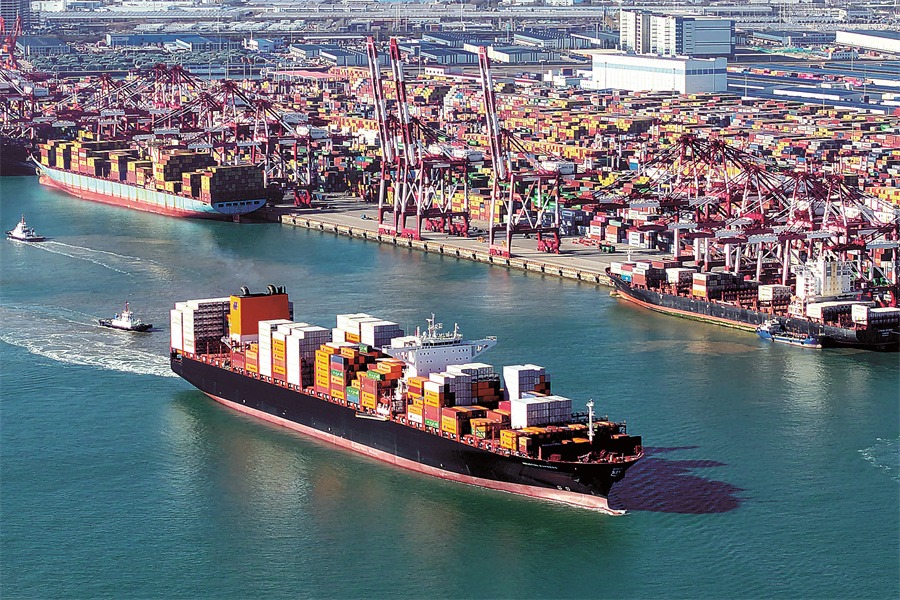
The Belt and Road Initiative, a hallmark of the first action plan (2019-23), has reshaped Cambodia's infrastructure. The Phnom Penh-Sihanoukville Expressway, opened in 2022, has reduced travel time from five to two hours, boosting trade and tourism, and the Sihanoukville Special Economic Zone has created more than 20,000 jobs — 90 percent of which have gone to Cambodians.
The two sides' cooperation in energy and security reflects China's focus on practical solutions. In fact, Chinese investments have helped electrify Cambodia, with hydropower and solar power contributing more than 60 percent to the country's grid, while reducing its reliance on imports.
And the proposed low-carbon demonstration zone in Sihanoukville, a flagship project of the new action plan, blends industrial growth with green innovation, ensuring energy stability and aligning with the China-proposed Global Development Initiative and demonstrating China's leading role in sustainable progress.
In security, cooperation on capacity building is a vital pillar of the Sino-Cambodian partnership. The successful launch of the "Golden Dragon 2025"joint exercise at the Cambodia-China Joint Support and Training Center at Port Ream exemplifies the two countries' commitment to safeguard their national security and maintain regional peace.
These efforts, along with joint training and intelligence sharing, counter transnational threats — cybercrime and drug trafficking — while upholding ASEAN's neutrality. The heart of the Sino-Cambodian partnership beats through human connections. The first action plan opened pathways — more than 200 Cambodian students study in China, majoring in engineering, economics and health. China's aid in restoring Angkor Wat's Royal Palace honors Cambodia's heritage, while Cambodian rice, banana, mango, longan and cashew nuts enjoy popularity in Chinese markets.
The second plan expands these ties with initiatives in the cultural and health sectors, reflecting China's benevolence and forging a shared future grounded in goodwill.
The Sino-Cambodian partnership has been overcoming challenges, with Cambodia prudently managing economic matters — the country's debt-to-GDP ratio remains a safe 34 percent. Besides, Cambodia has been diversifying its trade with countries such as Japan and the Republic of Korea, guided by a Khmer saying: "A river is fed by many tributaries."
That Cambodia is the first Southeast Asian country to implement two action plans highlights its role in the practical strategy, a role likely to be cemented as the two sides are expected to sign more agreements to upgrade a China-Cambodia community with a shared future.
For China, Cambodia is a gateway to ASEAN and a promoter of the Global Development Initiative, the Global Security Initiative and the Global Civilization Initiative. For Cambodia, China's sustained support helps it to pursue its goal of becoming a high-income economy by 2050. In this regard, the two countries' development goals align with the UN 2030 Agenda for Sustainable Development, proving shared progress surpasses competition.
Cambodia and China are crafting a South-South partnership characterized by equality, mutual respect and shared aspirations, a partnership that has weathered many storms before transforming into a rock-solid friendship.
The author is director of the Institute for International Studies and Public Policy, Royal University of Phnom Penh. The views don't necessarily reflect those of China Daily.
If you have a specific expertise, or would like to share your thought about our stories, then send us your writings at opinion@chinadaily.com.cn, and comment@chinadaily.com.cn.