Tangible heritage provides compass for higher education









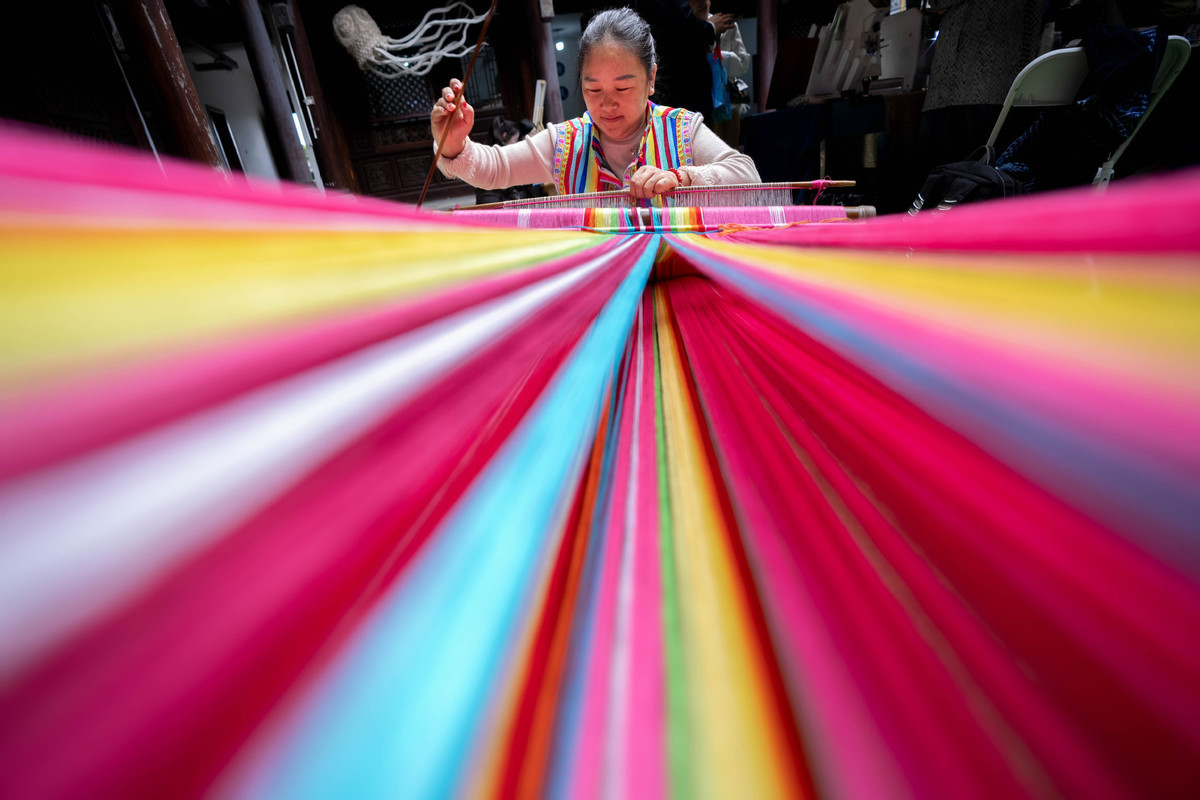
When Sobirov Mustakim, a student from Tajikistan who has a Chinese name Meng Ke, first held a piece of embroidered silk in a Zhejiang Sci-Tech University workshop, he wasn't just learning a craft but stepping into centuries of Chinese tradition. Months later, Meng appeared on the TV show Chinese Poetry Conference and launched EGTP, a cross-border platform promoting Chinese embroidery and ceramics.
Meng's journey illustrates a larger transformation. Chinese universities are turning intangible cultural heritage into a bridge between cultures, a living curriculum and a strategic asset for internationalization.
Intangible cultural heritage — including traditional arts, crafts, culinary rituals and living skills — is more than a relic of the past. It is a living repository of human creativity and collective wisdom, a crystallization of a nation's spirit and a vivid marker of cultural identity. China currently leads the world with more than 40 UNESCO-recognized intangible cultural heritage items, ranging from exquisite silk embroidery to performance arts. These traditions serve as a dynamic link between China and the world, helping universities cultivate cultural literacy, creativity and global competence.
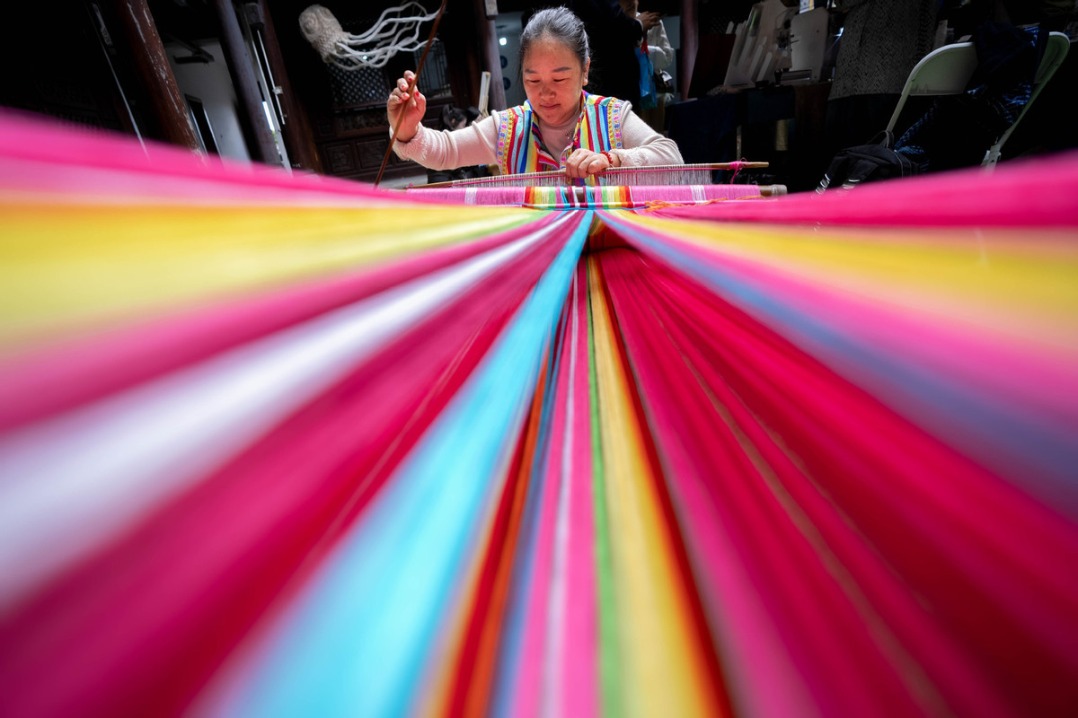
Universities are redefining how heritage is shared. Static museum displays are giving way to immersive, hands-on experiences that engage students and the public alike. Soochow University's "splendid silks" exhibition, for example, doesn't just showcase beautiful silks — it invites international participants to try weaving one themselves. Similarly, Zhejiang Sci-Tech University offers international workshops on silk weaving and modern silk product innovation design, blending historical knowledge with creative practice. Beijing Language and Culture University has introduced a minor in disciplines related to the international communication of intangible cultural heritage, combining theory, intercultural methods, and digital technology applications.
Digital innovation further amplifies the impact. Platforms like Tsinghua University's "Digital Twin Platform for Intangible Cultural Heritage" use virtual reality and augmented reality to reconstruct traditional crafts, from making of guqin to ancient dyeing techniques, allowing students and audiences worldwide to experience them firsthand. Technology has lifted heritage beyond time and place, creating a new dimension for cultural exchange and reinforcing its vitality on the global stage.
Integrating heritage into education goes beyond skills training and fosters a deep cultural understanding. Chinese universities are adopting "cognition-experience-innovation" models that guide students from awareness to active participation and creative application. International students gain not only knowledge but also cultural identification, while domestic students develop the ability to translate traditional skills into globally relevant products.
Through systematic exposure to Chinese martial arts, tea ceremonies and embroidery, Meng has not only embraced the culture but also become a conduit for it abroad. Similarly, Yiwu Industrial & Commercial College has partnered with Zhejiang's Lizu village to create an international maker and study base, merging tie-dye and bamboo weaving with modern design and e-commerce. Students learn the full chain — from craft inheritance to product development to international marketing — equipping them with cross-cultural communication skills and a capacity to transform heritage into competitive cultural products.
Intangible heritage research is inherently interdisciplinary, offering universities a platform to integrate expertise across anthropology, art and sociology. Dedicated centers, such as Sun Yat-sen University's Institute of Chinese Intangible Cultural Heritage, study preservation, transmission and innovation systematically. This cross-disciplinary approach breaks the limitations of individual fields and produces innovations in digital preservation and craft revitalization, creating a shared knowledge base for international dialogue.
Global collaboration extends the influence further. Chinese universities should actively co-develop research projects with foreign institutions. International conferences, lectures and student-faculty exchanges establish a two-way flow of ideas. They strengthen China's academic voice, positioning the country not as a participant but as a leader in the global heritage landscape.
Looking ahead, Chinese universities are poised to deepen the internationalization and innovative application of intangible heritage. Building comprehensive digital infrastructure, creating shared databases, and contributing to international standards will extend China's heritage preservation philosophy worldwide. Systematic and innovative heritage education instils both cultural confidence and global vision in students, amplifying China's voice in global educational governance.
By integrating tradition with innovation, universities turn heritage into more than cultural artifacts — they become tools for cultivating globally competent leaders, for fostering cross-cultural understanding and for projecting China's cultural soft power. In this way, intangible heritage becomes both a foundation and a compass for China's higher education, guiding a distinctive path of internationalization that honors the past while shaping the future.
The author is Party Secretary of Zhejiang Sci-Tech University.
The views don't necessarily reflect those of China Daily.
If you have a specific expertise, or would like to share your thought about our stories, then send us your writings at opinion@chinadaily.com.cn, and comment@chinadaily.com.cn.