China's most famous baijiu is writing new chapter with major industrial park
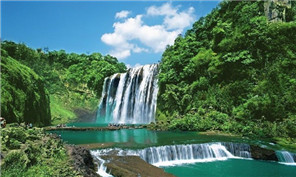
The main Moutai factory complex is located in a valley surrounded by fertile hills, the steep slopes carved into terraces covered in green crops, nestled in an early morning mist the day we visit. The soil looks rich and loamy, its dark color hinting at a volcanic lushness I recognize from my homeland of New Zealand. The Chishui River, which flows through the town of Maotai, a different spelling from the historic liquor brand, passes by a plaza with fountains and children's play equipment, filled with locals enjoying the early spring temperatures and the company of their neighbors.
The aroma of China's most famous baijiu, or distilled white liquor, permeates the town in Guizhou province, which our hosts, the Kweichow Moutai Group, assure us receives ample rainfall and sunshine to allow for lush year-round growth.
That aroma is part of an often-told story of Moutai's introduction to Western palates in 1915 at the Panama-Pacific International Exposition in San Francisco. Legend has it, as portrayed in a film shown on constant rotation at the town's National Liquor Culture Museum, that a Moutai representative at the fair, frustrated at his product being ignored by participants, deliberately smashed a jar of the alcohol to release its pungent scent.
The aroma attracted the judges, the story goes, and Moutai left the expo with a gold medal and much-wanted international recognition.
There are many such myths associated with the liquor often referred to as "the essence of China" - that it was used to treat the Red Army's wounded during the Long March in the 1930s, that the "morning after" a night of overindulging will not result in a hangover (untrue, a fellow guest on the distillery trip confides) and that it protects the stomach and liver from the ill-effects caused by the over-appreciation of other alcohols.
Moutai has also become expected at the numerous diplomatic events involving China, and has been sampled by rulers and regents around the world.
Perhaps fittingly, the latest chapter in this rich and chaptered history is taking place in the city of Zunyi, an important location in the history of Mao Zedong and the Communist Party of China. Here, the residue from producing the high-priced liquor is used as another resource. It is distilled three more times and sold as a lower-grade liquor targeted at less wealthy consumers, as well as being converted into methane and then natural gas, and used to make organic fertilizer.
There is an industrial park, a joint venture between the Moutai Group and partners. It aims to create a circular economy using waste water and residue to extract and purify water, while providing some of its own energy needs, creating new brands of baijiu and lighter wines and producing fertilizer that can be used to grow more wheat and red sorghum - the main ingredients of Moutai.
"The purpose is to take from the soil and return to the soil again," said Yang Mingkai, deputy manager of the plant.
The first phase, which includes a distillery, fertilizer and natural gas plant, is complete, although finishing touches are still being applied, with the second phase scheduled to be done by 2018.
Labor intensity
Part of what makes the traditional Moutai so expensive (800 yuan and up for 500 milliliters of the 53-percent proof version, a little more than $122) is the labor intensity of its production. Liu Qinghang, manager of the packaging factory at the Moutai distillery, tells his guests several times that there are nine separate steps involved in simply adding the resplendent red ribbon to the Moutai bottles, and it is not possible to do without the many staff we watch from a walkway above the packaging lines.
The young women packers, and most are young as the older women have moved on to less physical jobs, are surreal to watch because of their speed. It feels as if a movie has been filmed and sped up for our viewing, as they place bottles in boxes, add a pair of official tasting glasses in its own box, then instantly reach for the next grouping.
Further down the line, we watch as men spread the mash of boiled wheat and red sorghum, adding in yeast for fermentation as they work barefoot on the vast stone floor.
We are told at the museum that another legend says an emperor from the Han Dynasties (206 BC-AD 220) discovered the town and liquor and was much pleased by both. In keeping with such a long tradition, the jobs are segregated by gender - women work in the packaging factory and as tasters, because they are thought to have a softer touch and a more discerning palate, while men do the shoveling of the mash and are the brewmasters, overseeing the fermentation and blending of the final product.
Liu tells us that Moutai is a highly sought-after employer, paying more than most jobs in the region. Everyone on the packaging floor has graduated at least from high school, and many have university degrees.
At the industrial park, where the liquor products are priced at a much-reduced 50 yuan to 100 yuan, most processes are automated, with huge steel vats for fermentation rather than the clay pots at the traditional factory.
The aroma is the same, a heady scent, but there are few employees to be seen. What does impress, especially for this writer from an organic farm in south New Zealand, are the preparations to place solar panels on the distillery roofs, and a thriving hydroponic farming operation covering another roof. The second phase will include greenhouses and the cultivation of even more produce, as well as the planting of fruit trees throughout the park, with the crops to be used in the cafeterias that feed the workers.
I breathe in deeply as I walk through the crops, feeling positive that such a historic group is investing heavily in sustainability.
traciebarrett@gmail.com
|
Located in the scenic Maotai town, Kweichou Moutai Group produces one of the best liquors in China. Zhang Wei / China Daily |
|
An organic farm in Moutai's industrial park in Zunyi uses residue from the distillery as crop fertilizer. Jiang Dong / China Daily |