



More private capital urged for marine conservation









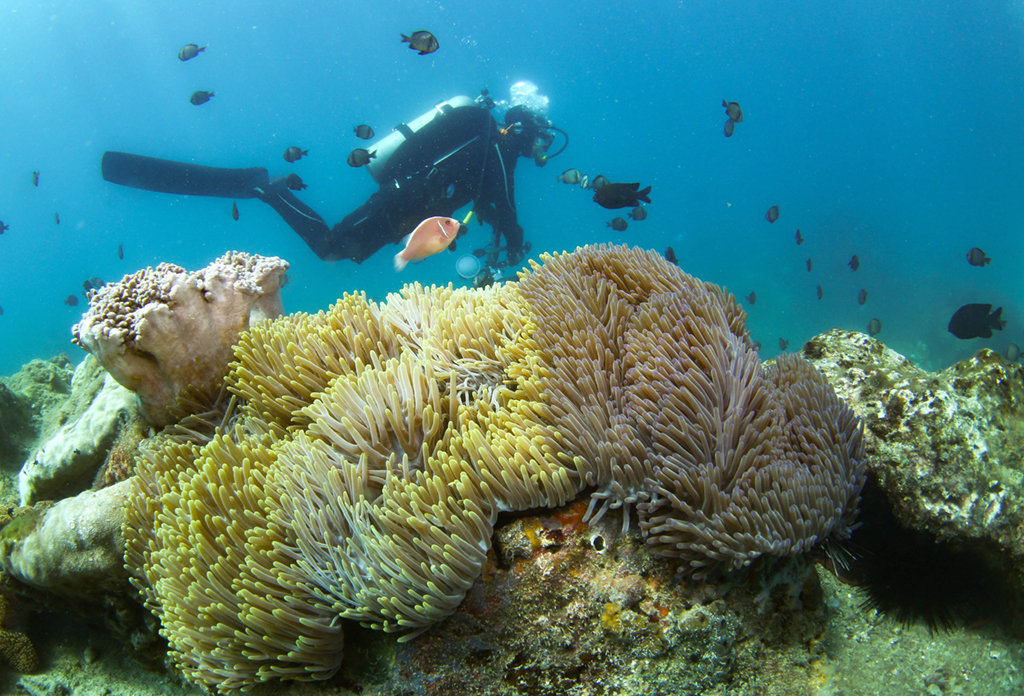
Experts have called for more policy efforts to draw private capital into marine conservation, as the country pushes ahead with the arduous task of repairing its damaged marine environment.
They made the remarks at a forum on marine protection in Rongcheng, Shandong province, on Saturday.
Yu Yonghai, a researcher with the National Marine Environmental Monitoring Center, said the country faces a series of challenges in conserving the marine environment.
About 70 percent of the sand seacoast and most of the mud tidal flats in open sea areas in China have been eroded, which are major factors in the degradation of the country's coastal ecosystems, he said.
The intensive development in offshore areas has resulted in a sharp decrease in coastal wetlands and natural shorelines and seriously damaged the habitats of some key marine organisms, Yu added.
From 2002 to 2018, a total of 275,000 hectares of land were reclaimed from the sea for industrial development and the construction of ports and towns, he said. China's coastal wetland areas decreased by about 57 percent since the 1950s.
"This has damaged some key habitats and the interconnection between the land and sea, posing severe threats to biodiversity," he said.
However, the country has rolled out a series of measures to enhance coastal ecological conservation since the turn of the new millennium, Yu said.
From 2016 to 2017, for instance, the country invested almost 5.7 billion yuan ($776 million) in a remediation campaign targeting bay areas, he said. Some 270 kilometers of shorelines, 130 hectares of sand beaches and 5,000 hectares of coastal wetland were restored.
The marine remediation programs, however, are highly scattered and the work has not yet been done in a systematic and comprehensive manner, he said.
The country, for example, still has a long way to go in restoring its mangrove and sea grass ecosystems, he said.
The size of mangrove forests in China decreased to about 22,000 hectares in 2001, compared with 42,000 in the 1950s, he said. Despite the country's efforts in artificial cultivation and remediation work, the size of mangrove forests has since increased to only about 27,000 hectares.
Marine remediation programs in many regions are highly dependent on government investment, he said. With little private capital involved, the overall investment in marine remediation work is still very limited.
Aside from introducing a mechanism to compensate marine conservation efforts, Yu said he looks forward to seeing the government take more measures to broaden financing channels for such efforts.
While encouraging financial institutes to engage in more marine remediation programs, the government should also strive to explore viable ways to mobilize the participation of private capital, he said.
The country's current funds for marine conservation are insufficient to cope with marine environmental problems, said Wang Guang, a researcher from South China Institute of Environmental Sciences.
Wang said eco-environmental oriented development has the potential to help address the problem.
Known as EOD, the mode integrates lucrative business programs with environmental projects that yield few economic returns. The gains from the lucrative businesses are invested in the environmental programs to strike a balance between development and protection.
A total of 52 prefecture-level coastal cities across the country have seen their marine economies boom over the past 10 years. The marine economy now represents about 9 percent of their overall GDP, Wang said.
These cities need to boost economic development and enhance conservation in their 283 bay areas, which will offer a solid foundation to introduce eco-environmental oriented development, Wang said.


- Guangdong police prevent and recover billions from telecom fraud
- Chongqing rolls out late-night trains for Spring Festival travel
- Chinese healthcare innovations debut at World Health Expo Dubai 2026
- Senior CPC official stresses advancing peaceful relations across Taiwan Strait
- Shanghai hosts Spring Festival reception for intl media
- Former senior Chinese defense official charged with bribery












