

|
|

NPC & CPPCC Annual Sessions > Biz & Economy > Backgrounder
|
People's Congress system and NPCBy (Xinhua)
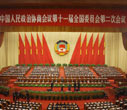
Updated: 2009-03-04 08:03 The Second Session of the 11th National People's Congress (NPC) is scheduled to open in Beijing on March 5, 2009. The People's Congress system is the fundamental political system of the People's Republic of China (PRC), the organizational form of state power of the people's democratic dictatorship in China, and the system of government of the country. The system most directly reflects the nature of the PRC, indicating the status of the Chinese people of various ethnic groups as masters in the country's political life. The NPC is the highest institution through which the Chinese people exercise their state power. In 1953, China held people's congresses at different levels. In1954, the First National People's Congress was convened, marking the establishment of the people's congress system in China. The NPC exercises legislative power, amends the Constitution and supervises its enforcement, formulates and amends basic statutes and other laws; elects and decides on the leading personnel of state-level administrative, judicial, procuratorial and military bodies, and has the right to recall them; supervises government work in accordance with the Constitution and laws; and examines and decides on the fundamental, long-term and key issues of the state. All administrative, judicial, procuratorial and military organs and other state-level institutions are responsible to the NPC and supervised by it. The NPC Standing Committee, the permanent organ of the NPC, is elected by the NPC and exercises the legislative power of the state together with the NPC. Liu Shaoqi, Zhu De, Ye Jianying, PengZhen, Wan Li, Qiao Shi and Li Peng successively served as chairmen of past NPC Standing Committees. Wu Bangguo is chairman of the 10th and 11th NPC Standing Committees. Among the ten terms of the NPC, nine had special committees except the Fourth NPC, which was in sessions during the period of the "Great Cultural Revolution" (1966-1976). The special committees are permanent bodies under the leadership and supervision of both the NPC and its Standing Committee. The NPC's delegation to the Inter-Parliamentary Union (IPU) is known as "the NPC Delegation." On Dec. 8, 1983, the Third Meeting of the Sixth NPC Standing Committee decided to join the IPU. In April 1984, the IPU Council's 134th meeting made an official announcement to accept the NPC Delegation as its member. The NPC Delegation is aimed to promote mutual understanding and friendly exchanges with parliamentary members of different countries, develop friendship and cooperation with peoples of different countries, and safeguard world peace.
|
       |
主站蜘蛛池模板: 精品无套挺进少妇内谢| 精品无人区无码乱码毛片国产 | 国产精品中文字幕自拍| 久久五月丁香合缴情网| 国产女人喷潮视频免费| 色国产视频| 狠狠色香婷婷久久亚洲精品| 国产成人久久精品二区三区| 亚洲人成网站在线播放动漫| 在线看片免费人成视频久网| 丰满少妇被猛烈进出69影院| 亚洲高清国产拍精品5G| 日本久久久www成人免费毛片丨| 欧美日韩国产草草影院| 国产色婷婷精品综合在线| 毛片亚洲AV无码精品国产午夜| 国产欧洲欧洲久美女久久| 国产精品中文字幕久久| 精品久久久久久无码免费| 少妇厨房愉情理伦片BD在线观看| 91九色系列视频在线国产| 国产免费网站看v片元遮挡| 精品亚洲一区二区三区四区| 久久亚洲精品情侣| 国产精品成人一区二区三区| 免费观看又色又爽又黄的韩国 | 久久精品娱乐亚洲领先| 精品无人区卡一卡二卡三乱码| 少妇尿尿一区二区在线免费| av天堂精品久久久久| 国产农村老熟女国产老熟女| 国产小受被做到哭咬床单GV| 88国产精品视频一区二区三区| 国精品无码一区二区三区在线看| 人人超碰人人爱超碰国产| 国产日产免费高清欧美一区| 亚洲中文字幕亚洲中文精| 国产永久免费高清在线观看 | 亚洲欧美丝袜精品久久| 在线永久看片免费的视频| 亚洲日韩国产精品第一页一区|





